


London Diary: UK trust to return rare Jain manuscripts to the community
More than 2,000 manuscripts dating from the 15th to 19th centuries are finally back where they belong
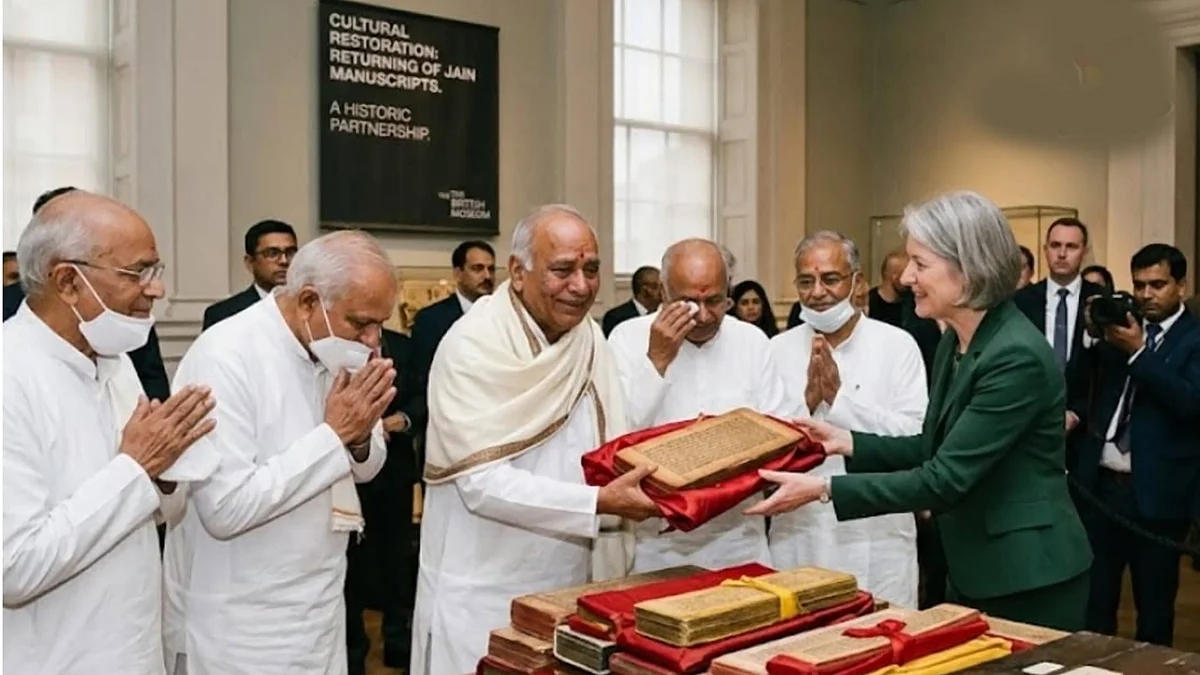


A treasure trove of ancient Jain texts acquired by colonial-era British pharma tycoon and philanthropist Henry Solomon Wellcome during his global travels are to be returned to the Jain community.
More than 2,000 manuscripts dating from the 15th to 19th centuries were among the million-plus objects he bequeathed to the Wellcome Trust set up after his death in 1936.
The trust said the move demonstrated its “commitment to supporting a more equitable future”.
The manuscripts include what could be the earliest surviving copy of the first medical treatise written in Hindi, A Celebration of Physicians (1592) and the 19th-century text on Indian independence that inspired Mahatma Gandhi.
They are being transferred to the Dharmanath Network in Jain Studies at the University of Birmingham. Mehool Sanghrajka, from the Institute of Jainology, said, “We recognise that some of these manuscripts may not have survived the turmoil in India post-independence, and we are grateful to Wellcome for the care and respect they have shown these texts.”
A report in The Times quoted trust officials as saying that its colonial agents “purchased more than half of the manuscripts for a few rupees each, just under a century ago from a single Jain temple in Punjab (in modern-day Pakistan) which no longer exists”.
Adrian Plau, an archivist with the Wellcome Collection who worked on the restitution, has previously revealed how the magnate used his colonial power to amass much of his collection. Led by a retired army officer, agents made “full use of colonial social structures and colonial power relations” — once forcing a seller to part with rare artefacts at a reduced price by exploiting a loophole in ongoing legal proceedings.
Wellcome ended up building a collection of one million books, paintings and other objects with the aim of telling the story of global health and medicine, with his name on it.
****
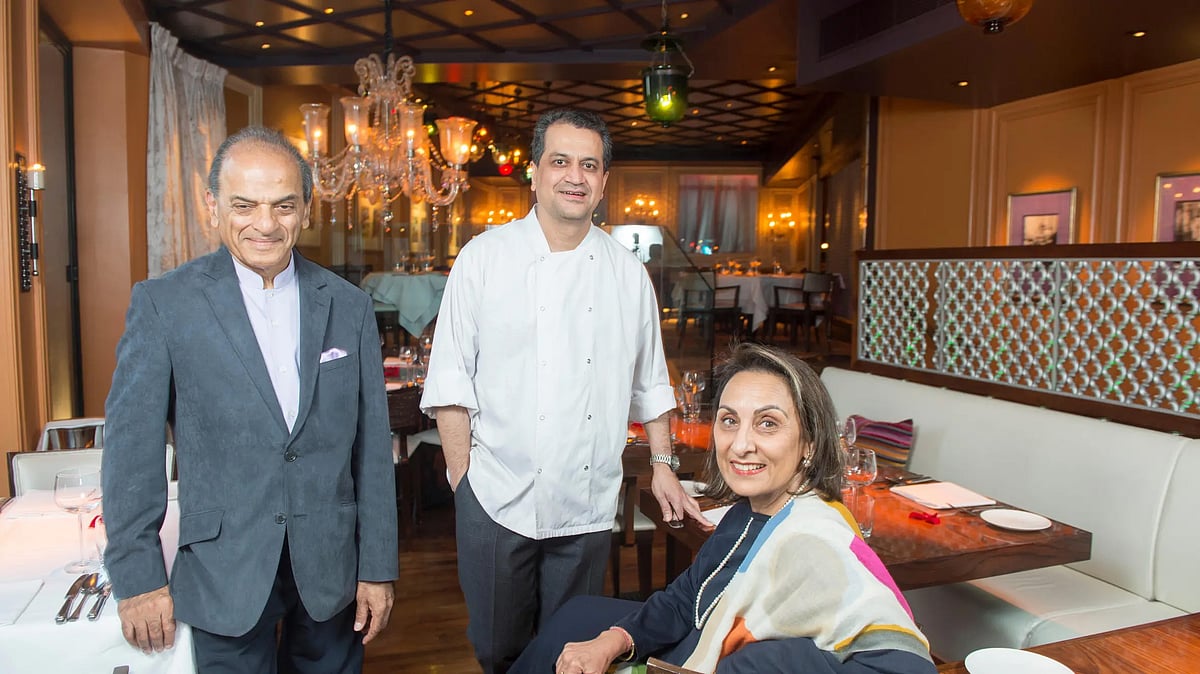
London’s oldest Indian restaurant faces closure
Over the years, London has become a favourite hunting ground for Indian-origin restaurateurs. Today there are an estimated 1,800 Indian restaurants across the city — ranging from low-brow street corner joints to exclusive upmarket chains managed by award-winning chefs.
At last count, of the nine Michelin-star Indian restaurants in Britain, eight were in London. Now, the oldest and most famous is facing closure over a legal dispute with the property’s landlord.
The century-old Veeraswamy’s — located in the heart of central London — has served generations of prominent guests, including members of the British and Indian royalty (ex-maharajahs, political and business elite). It is threatened with eviction by no less than the King’s Crown Estate, which wants to convert the space occupied by the restaurant into a modern office block. One commentator saw the affair as a case of “profits before poppadoms”.
Describing the restaurant as “an important part of the history of Indian cuisine in Britain” he said, “Seems to me the Crown Estate is run by joyless functionaries, which reflects badly on the King.”
Veeraswamy’s has challenged the Crown Estate’s claim amid a mounting campaign to save it. Three years ago, another historic Indian landmark — the India Club — was forced to shut down over a similar dispute.
****
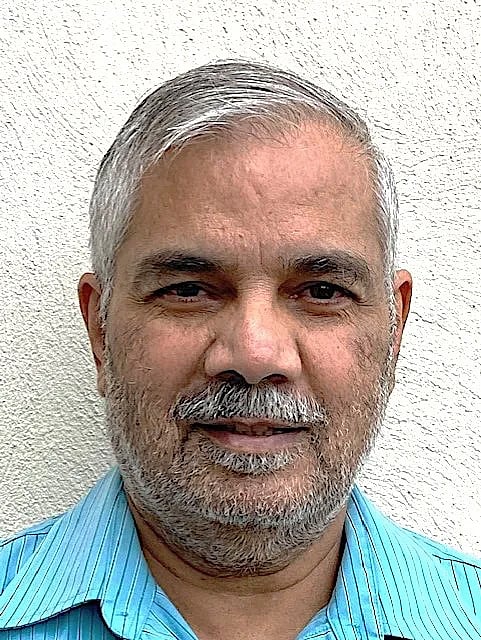
A laudable gesture by an AMU alumnus
Ahmed Waseem, an alumnus of Aligarh Muslim University, spent more than 30 years teaching biochemistry in British universities and is currently professor emeritus at Queen Mary University, London. He has now decided to acknowledge his debt to his alma mater and set up a charity, Friends of Researchers in the Indian Subcontinent, to “encourage and support [the] advancement of biomedical sciences through research collaboration”. He says this could “take the form of supporting postgraduate students in the UK/EU from the Indian subcontinent.”
A separate ring-fenced corpus, the AMU Development Fund, is to be created especially for the benefit of AMU students. “This arrangement will help the society I came from and also the society I integrated into,” says Prof. Waseem.
****

Santa who?
Bye-bye Santa Claus, welcome Santa Claude — the AI shopping assistant named after Anthropic’s AI tool ‘Claude’.
This year, British parents and grandparents are increasingly consulting chatbots for advice on what to give children for Christmas after a John Lewis department store ad went viral. The ad featured a grandmother who takes the advice of an anthropomorphised toy dog.
According to a survey, more than a third of British shoppers have used or intend to use artificial intelligence to buy Christmas gifts. One in ten people aged 65 and above said they planned to use AI for their Christmas shopping.
Nothing, it seems, is sacred any more. Not even good old Santa.
And, lastly, guess what’s the latest status symbol that every well-heeled Brit is scrambling to acquire? A standalone wine fridge — which can cost up to £3,000 a piece, and indicates a fat bank account.
A life-style survey of its clients by HSBC found that of those earning £100,000 or more, some 23 per cent owned a wine fridge.
Of course, you need some very expensive wines to deserve such a special home.
Join our official telegram channel (@nationalherald) and stay updated with the latest headlines