


Over 500,000 displaced as Israel–Hezbollah fighting intensifies in Lebanon
Beirut strike marks major escalation as civilian casualties mount and fears grow of a wider ground invasion
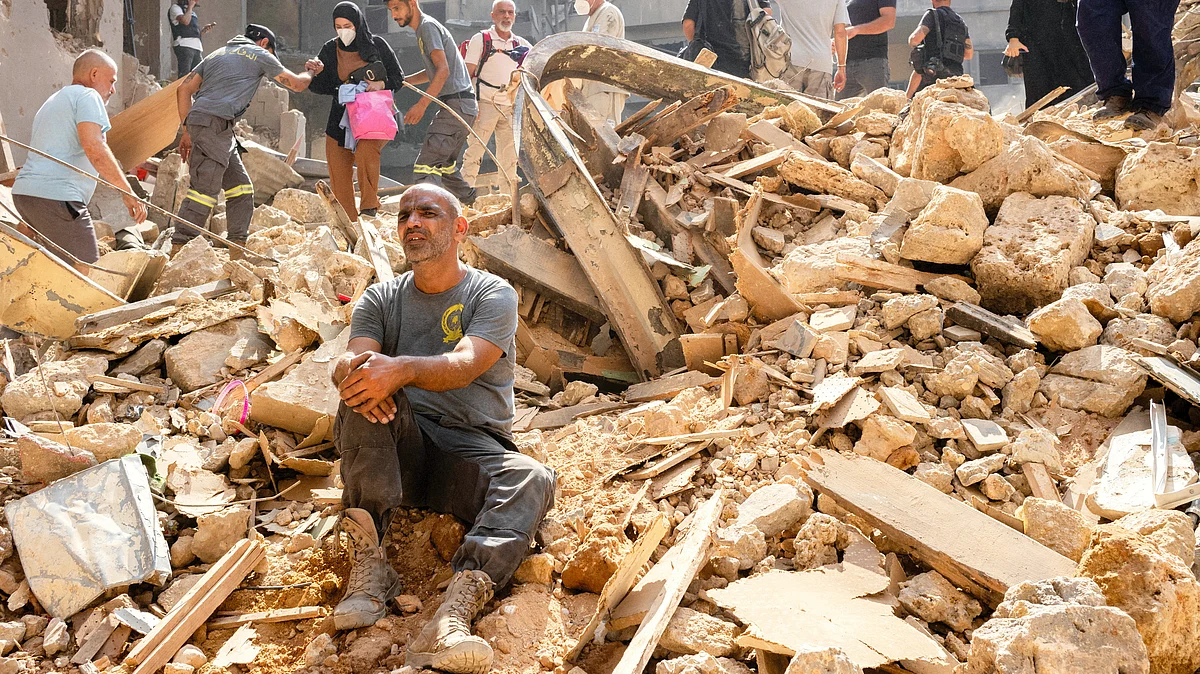


More than half a million people have been displaced in Lebanon after fighting between Israel and Hezbollah reignited last week, authorities said, as Israel expanded its military operations and struck central Beirut for the first time in the current conflict.
Al Jazeera reported that Lebanon’s Social Affairs Minister Haneen Sayed said on Sunday that 517,000 people had registered as displaced through a government platform since hostilities resumed earlier in the week. Of those, more than 117,000 are currently staying in government-run shelters.
The announcement came as Israel widened its military campaign across Lebanon, carrying out air strikes in multiple areas including the capital. Lebanese health authorities say 394 people have been killed in the country within a week of renewed fighting, including 83 children, 42 women and nine rescue workers.
In the early hours of Sunday, an Israeli drone struck a hotel room in Raouche, a coastal district of Beirut known for its tourist attractions and, more recently, for hosting thousands of displaced people who had fled other parts of the country.
Lebanese health officials said the attack killed at least four people and wounded 10 others.
Israel said the strike targeted senior members of Iran’s Quds Force, the external operations branch of the Islamic Revolutionary Guard Corps. According to the Israeli military, five senior commanders were killed in the attack.
In a statement, the Israeli army said the commanders had been involved in coordinating attacks against Israel from Lebanon.
The strike marked a notable escalation in the conflict. Raouche had not been targeted during the last war between Israel and Hezbollah, which ended with a ceasefire in November 2024, although tensions and sporadic violations of the agreement continued afterwards.
Meanwhile, the Israeli military reported the deaths of two soldiers during fighting in southern Lebanon, the first Israeli fatalities since the latest round of hostilities began.
The army identified one of the soldiers as Master Sergeant Maher Khatar, 38, from Majdal Shams, adding that a second soldier died in the same incident
The renewed conflict erupted after Hezbollah launched rockets and drones into Israel earlier in the week. The group said the attacks were in response to the killing of Iran’s Supreme Leader Ali Khamenei in joint United States and Israeli air strikes last month.
Israel responded with extensive air strikes targeting southern and eastern Lebanon as well as Beirut’s southern suburbs, areas where Hezbollah maintains a strong presence. Israeli ground forces have also moved towards southern Lebanon, capturing strategic hilltops near the border.
Armoured vehicles and bulldozers have reportedly been gathering along the frontier, raising fears that Israel could launch a larger ground offensive.
Hezbollah has continued firing rockets and drones towards northern Israel on a daily basis. The group said its fighters were engaged in clashes with Israeli troops near the border town of Aitaroun on Sunday.
The attacks have raised concerns inside Israel about the safety of northern communities, some of which have only seconds to reach shelters after sirens sound.
Hezbollah has also demonstrated the ability to strike deeper into Israel, including the northern coastal cities of Nahariya and Haifa, both of which hold significant strategic and military importance.
Lebanese Prime Minister Nawaf Salam warned that the country had been dragged into a destructive conflict it did not seek. He cautioned that the scale of displacement could produce severe humanitarian and political consequences.
Israel has said it has killed around 200 Hezbollah fighters since the fighting resumed, though the armed group has not released its own casualty figures.
Join our official telegram channel (@nationalherald) and stay updated with the latest headlines