


Most incidents involving minorities in 2025 'non-communal', Bangladesh says
India's MEA spokesperson pushes Dhaka for action as minorities report rising fear ahead of polls
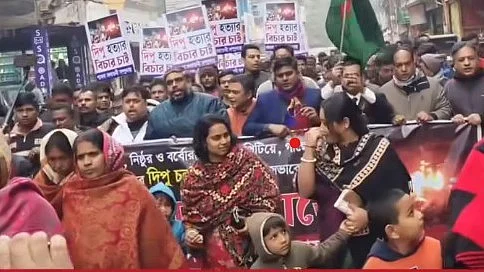


In a new assessment that has stirred debate at home and abroad, Bangladesh’s interim government said on Monday that most incidents involving minority communities in 2025 were “criminal in nature” rather than driven by communal animus.
The clarification followed India’s 9 January call for Dhaka to “swiftly and firmly” tackle attacks on minorities, after New Delhi described as “troubling” the attempts to pin recent violence on “extraneous reasons”. India’s reaction came in the wake of several Hindu citizens being killed in Bangladesh in recent weeks.
Drawing on what it described as a yearlong review of police data, the office of Chief Adviser Muhammad Yunus reported that 645 incidents concerning minority communities were logged nationwide between January and December 2025. “While every incident is a matter of concern, the data presents a clear and evidence-based picture: the overwhelming majority of cases were criminal in nature rather than communal,” the statement said.
Of the 645 incidents, 71 were tagged as having communal elements, a category that included 38 cases of temple vandalism, eight arson attacks, one theft, one murder and 23 other incidents ranging from threats to break idols to provocative social media posts and damage to worship pavilions. Police cases were filed in 50 of these and arrests made in the same number, while 21 drew other preventive or investigative action.
The remaining 574 incidents were linked to criminal or social disputes unconnected to religion, including neighbourhood rows, land conflicts, theft, prior personal enmity, rape and 172 instances classed as unnatural deaths. Police registered 390 cases in this group, filed 154 unnatural death reports and made 498 arrests, with additional steps taken in 30 other incidents.
The interim administration stressed that the report “does not deny challenges, nor does it claim perfection; rather, it seeks to provide a factual, evidence-based picture of crime trends affecting minority communities within the broader national context”.
It argued that “while all crimes are serious and demand accountability, the data demonstrates that most incidents involving minority victims were not driven by communal hostility, but by broader criminal and social factors that affect citizens across religious and ethnic lines”.
The figures have not convinced everyone. Bangladesh Hindu Buddhist Christian Unity Council (BHBCUC) leader Kajal Debnath challenged the government’s categorisation of many cases as “non-communal”, asking, “If the government thinks these are not communal incidents, the question then is whether anyone can take the law into their own hands.” Debnath warned that such framing could embolden wrongdoers and create a sense of impunity.
According to the 2022 census, Hindus number roughly 13.13 million (7.95 percent of the population), Buddhists about 1.01 million (0.61 percent), Christians nearly 500,000 and other smaller faiths, including Sikh and Animist groups, around 200,000 (0.12 percent).
The BHBCUC recently claimed that communal violence has surged as the 12 February parliamentary elections approach, arguing that attacks are intended to deter minority voters from supporting candidates of their choice and reporting 51 communal incidents in December 2025 alone.
It points to a grim sequence of cases in the final weeks of the year: a 42-year-old jeweller, Prantosh Sarkar, shot dead at a school field in Narshingdi on 2 December; a 25-year-old garment worker, Dipu Chandra Das, lynched over alleged blasphemy in Mymensingh on 18 December, his body later set on fire.
Another Hindu man, Amrit Mondal, lynched over alleged extortion in Rajbari’s Pangsha upazila on 24 December; and the 31 December attack on 50-year-old shopkeeper Khokon Chandra Das, who was hacked and set ablaze by miscreants while returning home, dying in hospital on 3 January.
The violence spilled into the New Year, with 40-year-old grocery trader Moni Chakraborty murdered with a sharp weapon in Palash upazila on 5 January, and Rana Pratap Bairagi, a 38-year-old ice-factory owner and acting editor of the newspaper Dainik BD Khabar fatally shot in the head in Jessore district the same day.
On 6 January, 25-year-old Mithun Sarkar died after jumping into a canal in Naogaon to escape a mob accusing him of theft. Earlier, on 7 December, the bodies of Liberation War veteran and retired headmaster Jogesh Chandra Roy (70) and his wife Shubarna Roy were found bloodied on the kitchen floor of their Rangpur home.
The interim administration nonetheless reiterated that ensuring safety and justice for citizens of all faiths is both a constitutional and moral duty.
India has voiced public unease over the situation. On 9 January, external affairs ministry spokesperson Randhir Jaiswal said, “We continue to witness a disturbing pattern of recurring attacks on minorities as well as their homes and businesses by extremists.”
Such communal incidents, he argued, must be handled decisively. “We have observed a troubling tendency to attribute such incidents to personal rivalries, political differences, or extraneous reasons. Such disregard only emboldens the perpetrators and deepens the sense of fear and insecurity among minorities,” Jaiswal said.
Relations between New Delhi and Dhaka have been strained since the Yunus-led interim government took charge following the collapse of the Sheikh Hasina administration in August 2024, with Hasina sheltering in India and the latter repeatedly raising concerns about attacks on minorities, especially Hindus, in Bangladesh.
With PTI inputs
Join our official telegram channel (@nationalherald) and stay updated with the latest headlines