


‘My morality, not international law’: Trump after Venezuela strike
Experts warn US stance risks global instability as Washington signals readiness to use force to secure interests
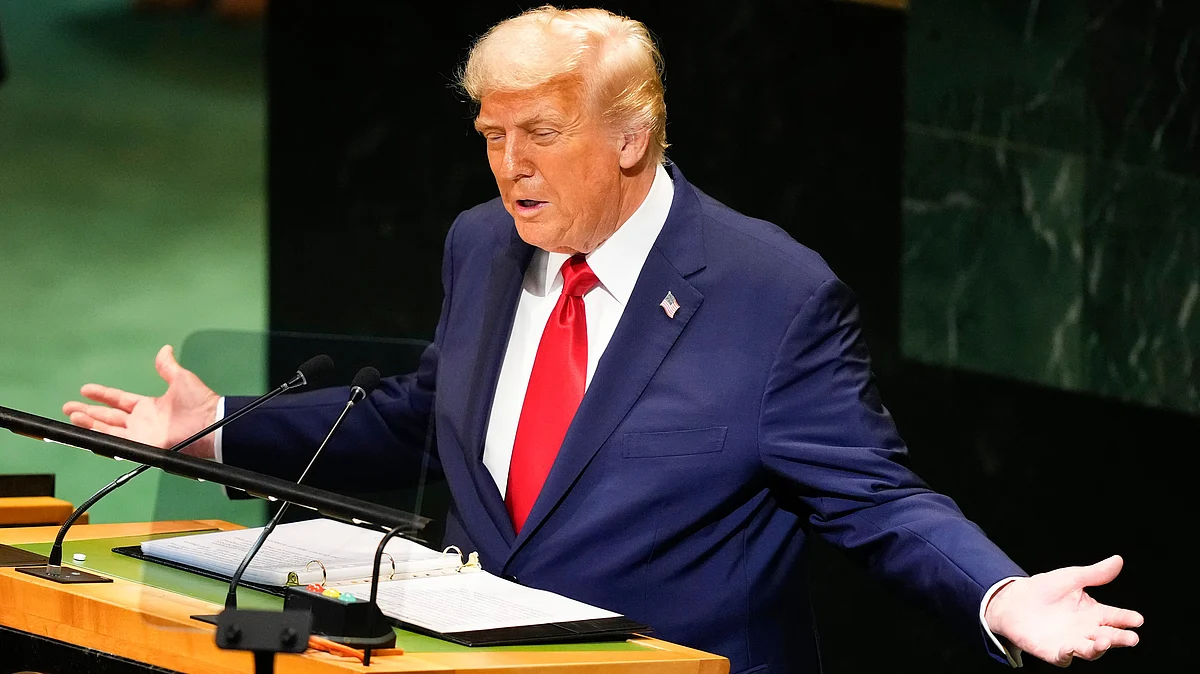


United States President Donald Trump has played down the role of international law in shaping American foreign policy, saying his actions are guided primarily by his “own morality”, following the US military operation in Venezuela that led to the capture of President Nicolas Maduro.
In an interview with The New York Times, Trump said he did not require international law to restrain his actions, adding that whether he must abide by it “depends on what your definition of international law is”. He insisted that he was not seeking to harm people, even as his administration signalled a willingness to use military force to pursue US objectives abroad.
The remarks came days after US forces launched a surprise pre-dawn assault on Venezuela, with explosions reported in Caracas and at military installations across the country.
American troops subsequently took Maduro into custody, a move widely criticised by legal experts as a violation of the United Nations Charter, which bars the use of force against the territorial integrity or political independence of sovereign states.
In the immediate aftermath of the operation, Trump said the United States would effectively “run” Venezuela and tap its vast oil reserves. While Washington has stated it would work with interim President Delcy Rodríguez, senior officials have made it clear that US policy would be dictated to the new leadership.
Trump also warned of further military action if US demands were not met, publicly threatening severe consequences if Rodríguez failed to comply.
The Venezuela operation appears to have emboldened the US president’s broader foreign policy posture. Trump has recently suggested the possibility of action against Colombia’s left-wing President Gustavo Petro and has renewed efforts to bring Greenland under US control. Earlier this year, he also ordered air strikes on Iran’s key nuclear facilities, joining Israel’s military campaign against Tehran.
Senior administration figures have echoed Trump’s rejection of the post-war international order. Stephen Miller, a close aide to the president, said the United States would now “unapologetically” deploy its military power to secure its interests, particularly in the Western Hemisphere.
“We’re a superpower, and under President Trump, we are going to conduct ourselves as a superpower,” Miller said in a television interview.
Legal scholars and international observers have expressed alarm at the tone and direction of US policy. Margaret Satterthwaite, the UN special rapporteur on the independence of judges and lawyers, warned that dismissing international law was “extremely dangerous” and risked pushing the world back towards an era of imperialism.
She cautioned that undermining global legal norms could embolden other powers to pursue aggressive actions of their own.
Yusra Suedi, an assistant professor of international law at the University of Manchester, said the suggestion that power alone determines legitimacy sends a troubling signal, potentially encouraging countries such as China and Russia to justify military action against their neighbours.
Ian Hurd, a professor of political science at Northwestern University, said the Venezuela intervention fits a long pattern of US involvement in Latin America, where decades of interventions and US-backed coups have often resulted in instability, repression and human rights abuses.
“History shows these interventions rarely end well, and the United States has often come to regret them,” he said.
Experts warn that sidelining international law not only threatens global stability but could also undermine long-term US interests, weakening the very system of rules that has shaped international relations since the Second World War.
Join our official telegram channel (@nationalherald) and stay updated with the latest headlines