


Nepal backs bilateral talks, historical evidence to settle border issue with India
Foreign minister tells Parliament Kathmandu remains committed to bilateral mechanisms and historical agreements to settle the long-pending boundary dispute
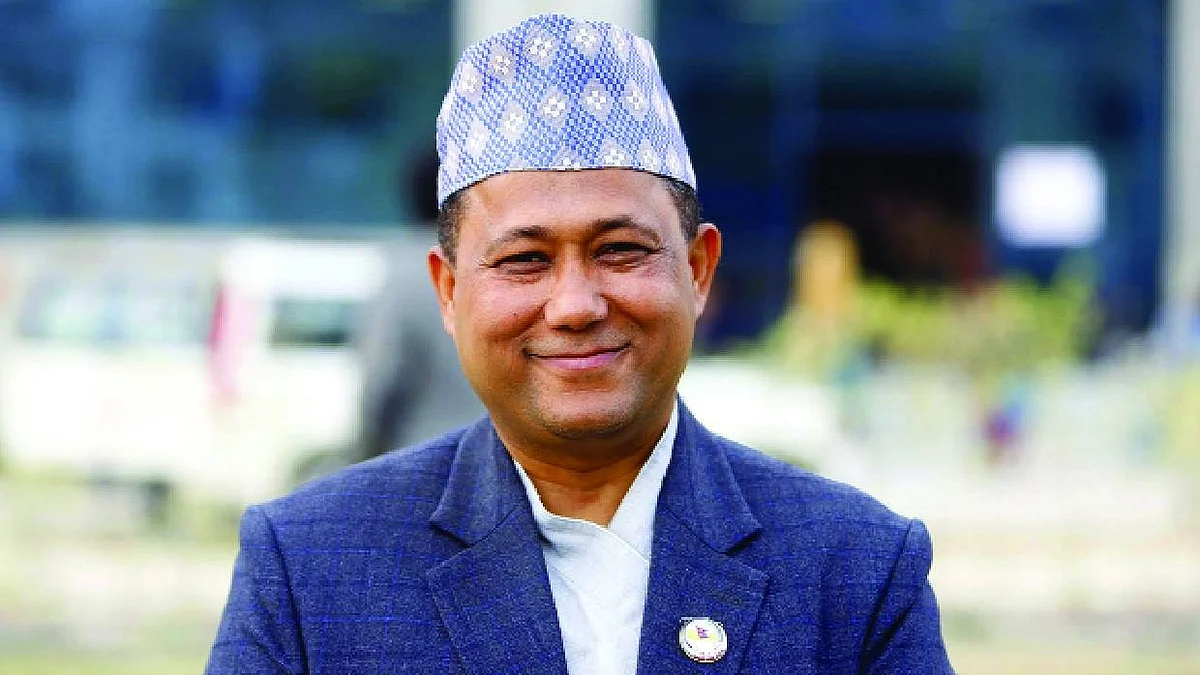


Nepal is ready to resolve its border dispute with India through diplomatic dialogue based on historical agreements and maps, foreign minister Shisir Khanal told Parliament on Wednesday, reaffirming Kathmandu's commitment to bilateral mechanisms for settling the long-pending issue.
Responding to questions from lawmakers in the National Assembly, Khanal said Nepal remained committed to resolving the boundary dispute in the spirit of the close ties shared by the two neighbours.
"The Nepal government is always ready to resolve the border issue with India through diplomatic dialogue on the basis of historical agreements and maps, while abiding by the spirit and sentiments of the close relationship between Nepal and India," he said.
Khanal also referred to Prime Minister Balendra Shah's remarks in Parliament in May, which had sparked controversy in both Nepal and India.
Shah had said on 31 May that Nepal had also encroached upon Indian territory at certain locations and that China and the United Kingdom had been involved in efforts to resolve the issue. India rejected any role for third parties, reiterating that all outstanding boundary issues should be resolved bilaterally. The remarks also drew criticism from Nepal's opposition parties.
The Nepalese foreign ministry later clarified that the prime minister had been referring to cross-border occupation by people living on both sides of the frontier.
Addressing the Susta border issue on Wednesday, Khanal said institutional mechanisms established by Nepal and India were actively working to address concerns in various border areas.
"Any work being carried out in and around the international border is undertaken through coordination between the two sides," he said.
Referring to the construction of a 132-metre embankment in the Susta area of southern Nepal, Khanal said the project had moved forward only after coordination between officials of both countries.
"The concerned bodies of both countries are in close contact and carrying out the necessary work," he added.
India and Nepal have a longstanding boundary dispute over the Lipulekh, Limpiyadhura and Kalapani areas. Nepal claims the territories as part of its sovereign territory, while India maintains they fall within Uttarakhand and has consistently said the dispute should be resolved through bilateral dialogue.
Last month, Khanal told Parliament that the Nepal-India Joint Working Group (JWG) on Border Management would deal with issues relating to cross-border occupation. He also said the next meeting of the JWG is scheduled to be held in India in August.
Join our official telegram channel (@nationalherald) and stay updated with the latest headlines