


Nepal disaster: Death toll crosses 900 as rescuers battle floods, landslides
Rescue ops enter their fifth day as Nepal reports 781 deaths and 2,502 missing, while China says 16 people have died and 546 remain unaccounted for in Tibet
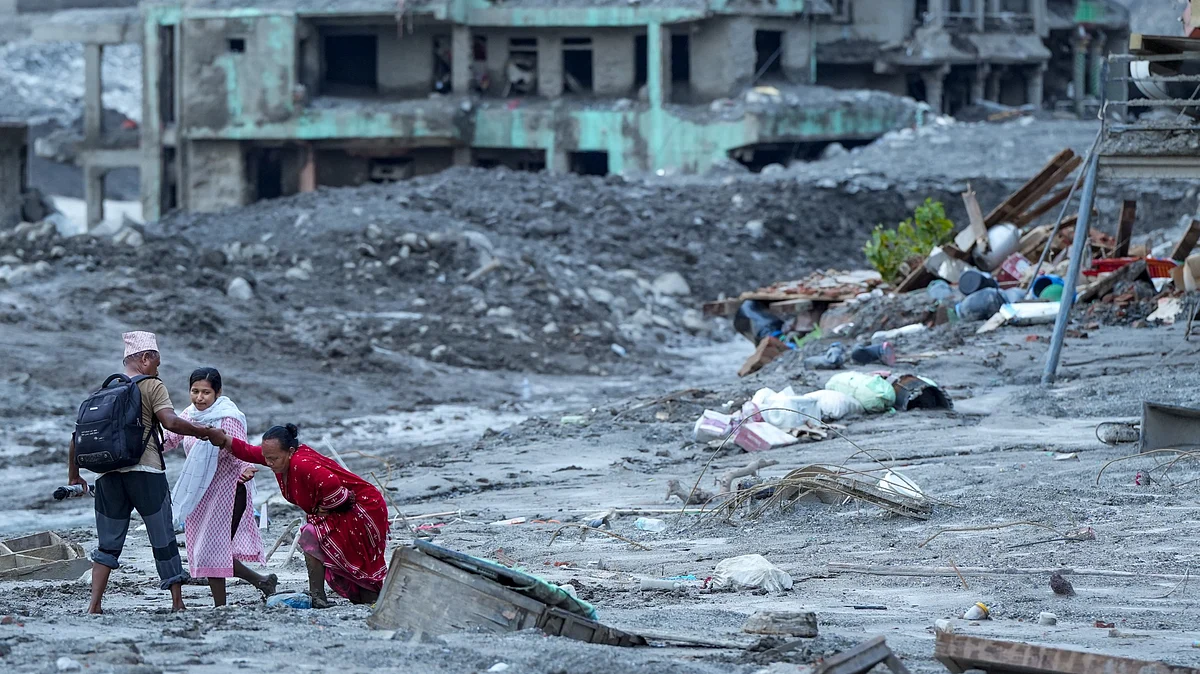


Rescue teams in Nepal and China are racing to locate thousands of people still missing after a glacier collapse triggered a catastrophic mudslide and flash floods across the Himalayas, with difficult terrain, fresh rainfall and the threat of further flooding hampering operations.
Nepal authorities said on Sunday that more than 900 people had died and 2,502 remained missing on the fifth day of rescue efforts. Chinese state media reported 16 deaths and 546 missing people in Tibet, taking the combined toll to 797 dead and 3,048 unaccounted for.
The Red Cross estimates that more than 90,000 people may have been affected by the disaster, which has devastated communities, damaged infrastructure and disrupted roads and communication links across the mountainous border region.
Chinese Foreign Minister Wang Yi described the disaster as one of the most severe cross-border emergencies between Nepal and China in recent years. He said the rescue operation had reached an unprecedented level of difficulty and complexity, according to Chinese state broadcaster CCTV.
Beijing also said 261 foreign nationals from 23 countries were unaccounted for in Tibet near a key border crossing with Nepal.
Rising waters threaten rescue operations
The scale of the disaster has made rescue efforts particularly difficult across the rugged Himalayan terrain.
Police in Nepal said residents and rescue workers had moved to higher ground after the Trishuli River rose following fresh rainfall, raising fears of another round of flooding downstream.
Rescue operations have been suspended several times since Friday because of poor weather and concerns over a lake that formed along the Nepal-China border following the disaster.
The lake had begun overflowing into Nepal's Lhende Khola and Trishuli rivers, prompting warnings for communities downstream.
Although Chinese state media reported that the threatening lake had largely drained by Saturday evening, drones later detected another landslide about 2.8 km downstream, creating a new natural dam and a fresh pool of water.
The development has raised concerns that another sudden release of water could endanger people and rescuers in downstream areas.
Additionally, search operations have increasingly focused on hundreds of people believed to be trapped inside tunnels at hydropower projects damaged by the floods.
Nepal's Foreign Ministry said the country needed specialised international assistance, particularly for tunnel rescues.
Bodies swept downstream
As hopes of finding some of the missing alive diminish, authorities have begun dealing with another grim consequence of the disaster: large numbers of unidentified bodies being recovered far from the worst-hit areas.
In Chitwan district, which was spared the direct impact of the initial disaster, bodies swept downstream from flood-hit Rasuwa have been carried through the river system into the Narayani River.
Authorities are photographing the bodies, collecting DNA samples and recording identifying information before burial in the hope that relatives will eventually be able to establish their identities.
Police officer Anil Thapa said more than half of the bodies recovered so far were beyond recognition.
Some victims were missing their faces, while in other cases only parts of their bodies could be recovered, he said.
Mass burials begin
With bodies rapidly decomposing and families continuing to search hospitals, morgues and relief centres for missing relatives, authorities began mass burials of unidentified victims.
More than 100 unidentified bodies were buried on Saturday, while additional graves were being prepared on Sunday for hundreds more.
The authorities are preserving photographs, DNA samples and other identifying information so that families can potentially match their relatives with the buried victims later.
The disaster has left communities across the region facing a dual emergency — continuing rescue operations while simultaneously trying to identify and respectfully bury those who did not survive.
With more rainfall possible and unstable slopes and newly formed water bodies continuing to pose risks, rescuers remain under pressure to reach isolated areas and locate those still missing before conditions deteriorate further.
Join our official telegram channel (@nationalherald) and stay updated with the latest headlines