


People in Tehran call Trump and Western media’s bluff
Free public transport, no shortages, falling prices, no panic-buying, 60 per cent increment for government employees — say voices from Tehran
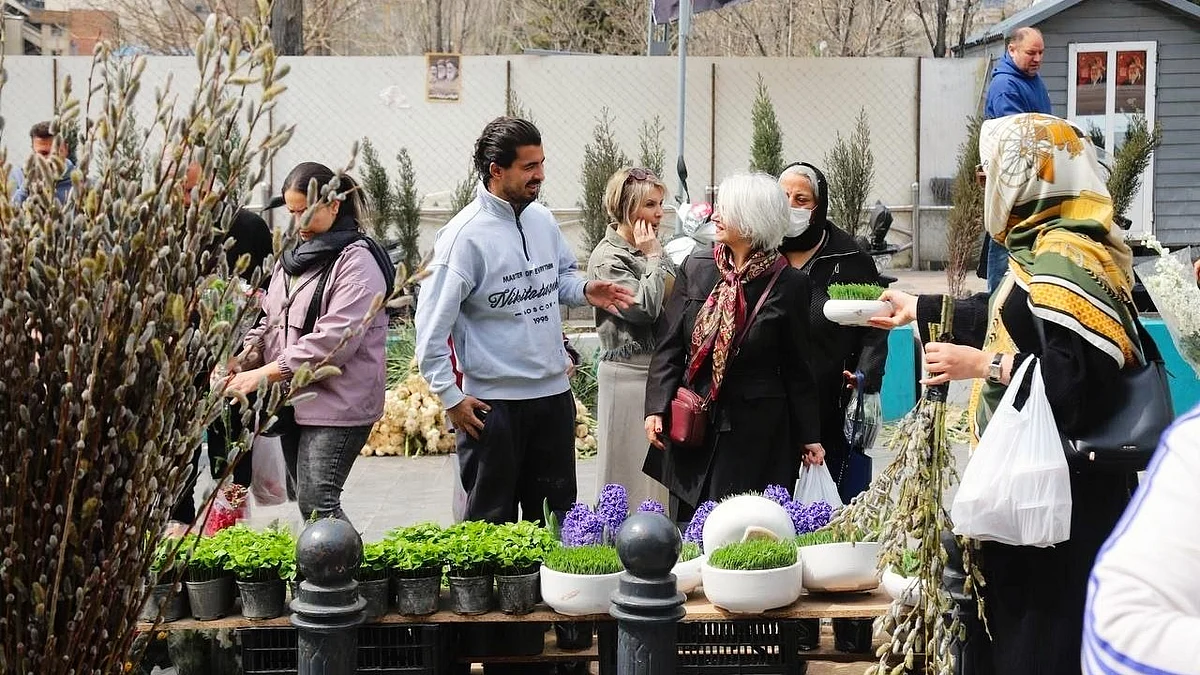


“Many in the world think Iran is totally destroyed and Tehran is in ruins!... they cannot believe that life is going on and people are much more concerned about Nowruz rather than war or death,” exclaimed Hamid Reza of the Tehran Municipality and secretary-general of the Asian Mayors’ Forum.
He was sharing a video of a public garden in Tehran being decked up with spectacular flowers for the new year festival of Nowruz, which coincided with Eid this year on Saturday, 21 March. Watch the video here for yourself.
Earlier this week, Ladakhi activist Sajjad Kargili shared a video statement from Syed Akif Zaidi, possibly from Kashmir, who spoke in Hindi on the situation within Iran. He did not gloss over the damages inflicted on Tehran and other Iranian cities thanks to relentless bombing by the US and Israel. The Western powers were trying to reduce Iran to rubbles like Gaza, he stated as a matter of fact — before proceeding to provide an astonishing account of normalcy and resilience.
His account suggests a government in complete control and a people standing in support of the government, contrary to the propaganda being fed by Western media.
Public transport, Zaidi claimed, had been made completely free in Tehran to help people during the war. Office-timings in government offices were extended, instead of being reduced during the month of Ramzan. Licenses, permits etc which were about to lapse, it was announced, were being automatically renewed for three months and more so that people do not have to even apply online.
Even more remarkably, the annual increment of government employees, announced ahead of Nowruz, was also announced and enhanced. Normally, he said, the increment ranged between 25 and 30 per cent. This year, the increment announced is 60 per cent. This is designed to boost the morale of people and demonstrate the government's confidence about the future and outcome of the war.
Zaidi was equally lavish in his praise of the people. While the government ramped up import of essential goods through land borders — arranging for border customs to work round the clock — to prevent shortages, people too did not resort to panic buying.
Instead, they have adapted to change, preserving fuel, walking long distances and resolving not to travel during Nowruz to conserve fuel. Prices of several goods, he claimed, have actually fallen even as people modified their lifestyle and habits. You can listen to him here.
Canadian journalist Dimitri Lascaris, one of four foreign journalists invited by the Iranian state broadcaster, reported from Tehran on Saturday on people assembling at Mosalla mosque for Eid prayers. “In a time of war, an extraordinary scene this morning at the Mosalla Mosque in Tehran,” he posted on X.
The visiting journalists had reached Tabriz on Friday morning through the Turkish border by road after flying to a border town in Turkiye from Ankara. During the four-hour drive from the border to Tabriz, he reported, he did not see any bombed structures. In fact, they stopped to eat at a restaurant well past midnight and were astonished to find two women at different tables smoking a hookah while chatting with friends.
The group reached Tehran on Saturday morning after a nine-hour drive through the night. This is what Lascaris posted on Iranians praying in Tehran:
Also Read: Lessons from a mindless ‘war of choice’
Professor Seyed Mohammad Marandi, a professor at Tehran University and a former media advisor to the government, also told interviewers that while devastation and damage are undeniable, life has been as close to normal as possible.
On the very first day of the war on 28 February, he claimed, the government had shut down schools and universities and asked those who could leave Tehran to do so. Most shops were indeed closed as US and Israeli war planes continued bombing schools, hospitals, police stations and apartment blocks.
Not only did the bombings kill 167 children, teachers and parents at a girls’ school in northern Iran, as many as 21 girls were killed while playing volleyball at a gym, he pointed out.
Yet, every evening, people in large numbers were coming out and staging rallies in support of the government’s war efforts. Several of these rallies have been bombed during daytime as well, he pointed out.
Join our official telegram channel (@nationalherald) and stay updated with the latest headlines