


Protests erupt as Japan weighs move away from pacifist constitution
Thousands rally nationwide to defend pacifist charter as debate over Article 9 intensifies
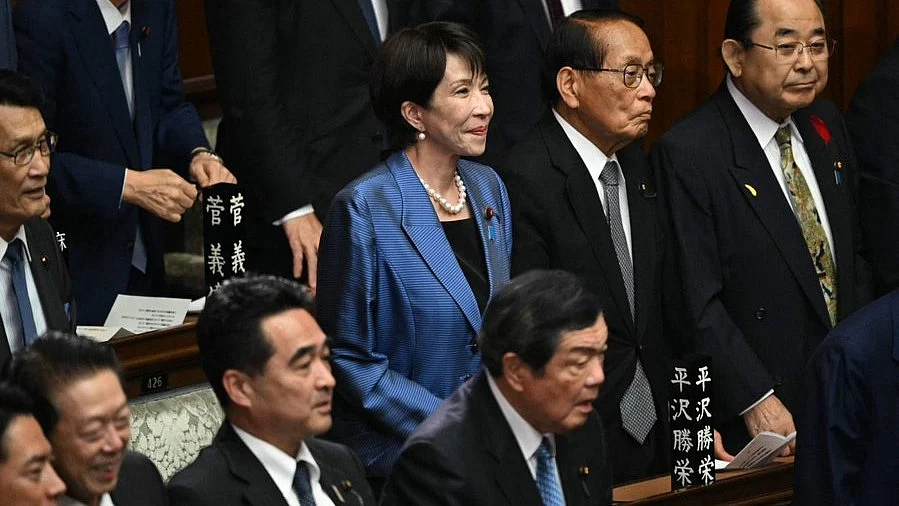


Japan witnessed its largest wave of protests in support of its pacifist Constitution in recent years as prime minister Sanae Takaichi renewed her push for revising the country’s post-war charter, triggering a sharp political and public backlash.
Speaking during a visit to Vietnam, Takaichi called for “advanced discussions” on constitutional reform, arguing that the document — drafted under US occupation after World War II — should be updated to “reflect the demands of the times”.
Article 9 at centre of political battle
At the heart of the debate is Article 9, the so-called pacifist clause, which renounces war and prohibits Japan from maintaining traditional military forces.
Takaichi and conservative leaders within the ruling Liberal Democratic Party have long argued that the provision limits Japan’s ability to respond to rising security challenges from China and North Korea.
While legislative changes in recent years have allowed limited collective self-defence, the prime minister has made formal constitutional revision a central agenda of her administration.
Any amendment would require a two-thirds majority in both houses of Japan’s parliament and approval in a national referendum.
Tens of thousands rally in defence of pacifism
On Constitutional Memorial Day, an estimated 50,000 people gathered in Tokyo, with similar demonstrations reported across multiple cities, reflecting growing public mobilisation against proposed changes.
Protesters argued that the Constitution has preserved peace and prevented Japan from being drawn into overseas conflicts.
“Under Takaichi, Japan is following America like a dog follows its owner,” said Hiroko Maekawa, a Tokyo ward councillor.
“The LDP wants to turn the self-defence forces into a traditional military, because they know the constitution, as it is, prevents them from doing that.”
Another councillor, Megumi Koike, described the Constitution as “a national treasure and a treasure to the world”, opposing any fundamental changes.
Public opinion remains divided
Recent opinion polls indicate a split among Japanese citizens over constitutional reform.
A survey by the conservative Yomiuri Shimbun showed 57 per cent support for revision, while a poll by the liberal Asahi Shimbun found support at 47 per cent, underscoring a deeply polarised public debate.
Many protesters emphasised the Constitution’s role in maintaining stability since its enactment in 1947, with some older participants recalling its significance in rebuilding a war-ravaged nation.
“I want to cherish the constitution like I do my own child, and pass it on to the next generation,” said 87-year-old protester Haruka Watanabe in Osaka.
Security tensions shaping the debate
The constraints of Article 9 were recently highlighted when Takaichi reportedly declined a request from Donald Trump to deploy Japan’s maritime self-defence forces to the Strait of Hormuz, citing constitutional limitations.
Despite mounting pressure from allies and regional security concerns, critics argue that revising the Constitution risks eroding Japan’s long-standing pacifist identity.
Debate enters decisive phase
Takaichi signalled that prolonged deliberation was no longer viable, saying policymakers must move towards a decision.
“We mustn’t have discussion just for discussion’s sake,” she said, stressing the need for political consensus.
With protests intensifying and public opinion divided, the push to revise Japan’s Constitution is shaping up as one of the most consequential political battles in the country in decades.
Join our official telegram channel (@nationalherald) and stay updated with the latest headlines