


After Rahul Gandhi, Halifax forum chief warns of USA's waning global role
Peter Van Praagh says the world can no longer count on Washington as a predictable leader of the democratic order
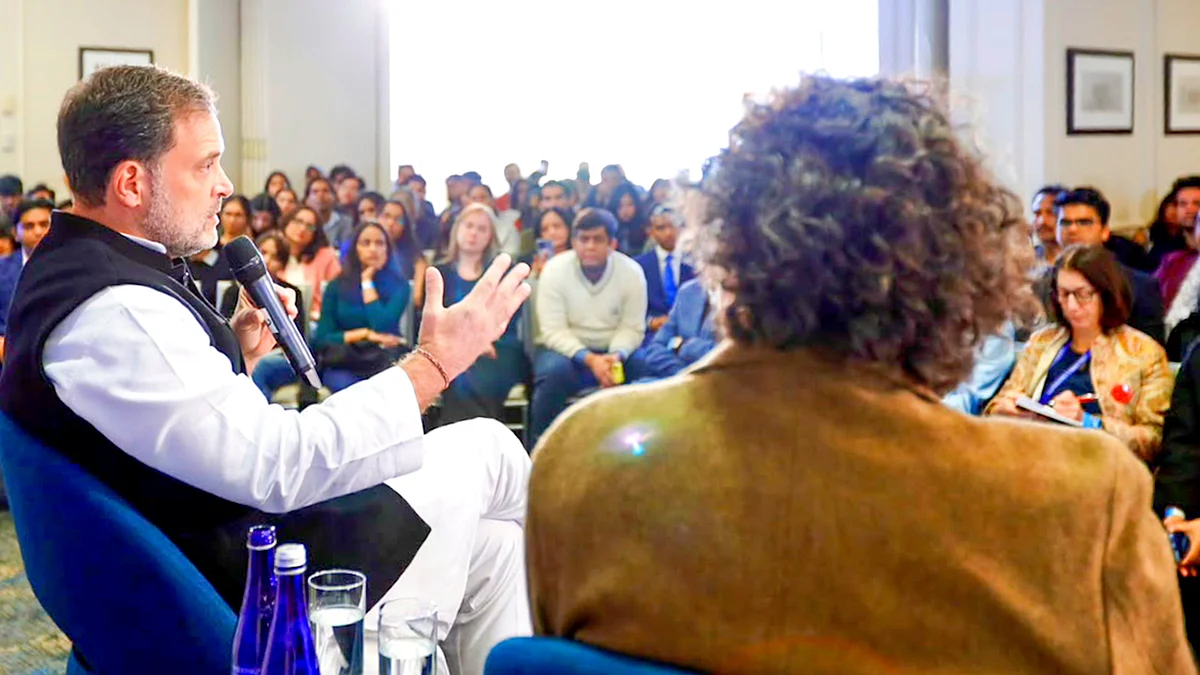


Rahul Gandhi questioned US ability to act as global stabiliser on 18 November
Halifax forum chief Peter Van Praagh warns two days later that Washington is no longer a predictable democratic leader
Trump's tensions with Canada and shifting alliances underscore concerns over the changing global order
The United States' ability to act as a stabilising force in an increasingly volatile world is coming under growing scrutiny. On Wednesday, 18 November, Lok Sabha Leader of Opposition Rahul Gandhi expressed concern over Washington's ability to continue playing that role. Two days later, the head of a major international security conference warned that the US could no longer be relied upon as a predictable leader of the democratic world.
At the University of Chicago on 18 November, Gandhi expressed concern over the US potentially losing its role as a global stabilising force, saying India had benefited enormously from the stability Washington provided, particularly between the 1990s and 2010.
"One of the things... that I worry about is that the United States has provided a very stabilising effect on the world. And we as a country have benefited from it hugely. So between the ’90s and 2010, we benefited hugely. Our IT infrastructure, a whole host of things," he said. Gandhi added that he worried about the US no longer being able to hold its position as a stabiliser, citing the challenges confronting it at home and abroad and the uncertainty surrounding the situation involving Iran.
"Without the United States as a predictable leader, people, institutions and countries are looking for a new course. A North Star," Peter Van Praagh, president of the Halifax International Security Forum, said in his opening remarks on Friday, 20 November.
"No single country can replace the heft of the United States, but maintaining those ideals are up to us," he said, urging countries to step up as President Donald Trump's policies strain longstanding alliances and unsettle the international order.
Van Praagh's remarks at the Halifax International Security Forum echoed concerns raised by Rahul during his interaction at the University of Chicago earlier this week over Washington's ability to maintain its position as a global stabiliser, and the implications of its shifting role for countries such as India.
Now in its 18th year, the Halifax International Security Forum brings together around 300 military officials, US lawmakers, diplomats and scholars at the Westin Nova Scotian hotel.
The uncertainty over Washington's leadership has also been reflected in its increasingly strained relations with longstanding allies, including Canada. Trump renewed his criticism of Canada on Friday, following Prime Minister Mark Carney's meeting with Chinese leaders, accusing Ottawa of becoming emboldened in its dealings with Washington.
"For some reason they feel emboldened. We can't let them feel that way anymore," Trump said.
Trump has repeatedly threatened to make Canada the 51st US state and imposed tariffs that have strained relations between the neighbours. Carney, meanwhile, has sought to diversify Canada's partnerships, strengthening ties with Europe, China and other countries to reduce its dependence on the US.
Van Praagh had flagged concerns over the US political climate even before the 3 November midterm elections. In an essay circulated among foreign policy and security officials, he warned that Trump could attempt to undermine the results if Republicans suffered significant losses.
"If these efforts are successful, it will be the end of the United States as we know it," Van Praagh wrote.
A former senior adviser to Peter MacKay, who served as foreign affairs minister under Conservative prime minister Stephen Harper, Van Praagh was notably absent from the customary joint opening news conference with Canadian defence minister David McGuinty on Friday — breaking with the forum's longstanding practice.
McGuinty echoed Carney's warning at Davos that the global order was undergoing a fundamental transformation, arguing that traditional alliances could no longer be the only basis for international security cooperation.
"Institutions like NATO have always been vital to our collective security. They just can't be our only way of working together. Those days are over," McGuinty said.
The Trump administration has also kept Pentagon officials away from the Halifax forum, barring their participation under restrictions introduced in 2025 on attending think tank events. Previous Republican and Democratic administrations had sent senior military officials, including defence secretaries, to the gathering.
A bipartisan congressional delegation is attending the forum this weekend.
With AP/PTI inputs
Join our official telegram channel (@nationalherald) and stay updated with the latest headlines