


Rubio defends fresh US sanctions on Cuba targeting military-run business empire
New restrictions on GAESA and foreign partners deepen pressure on Havana amid worsening economic crisis
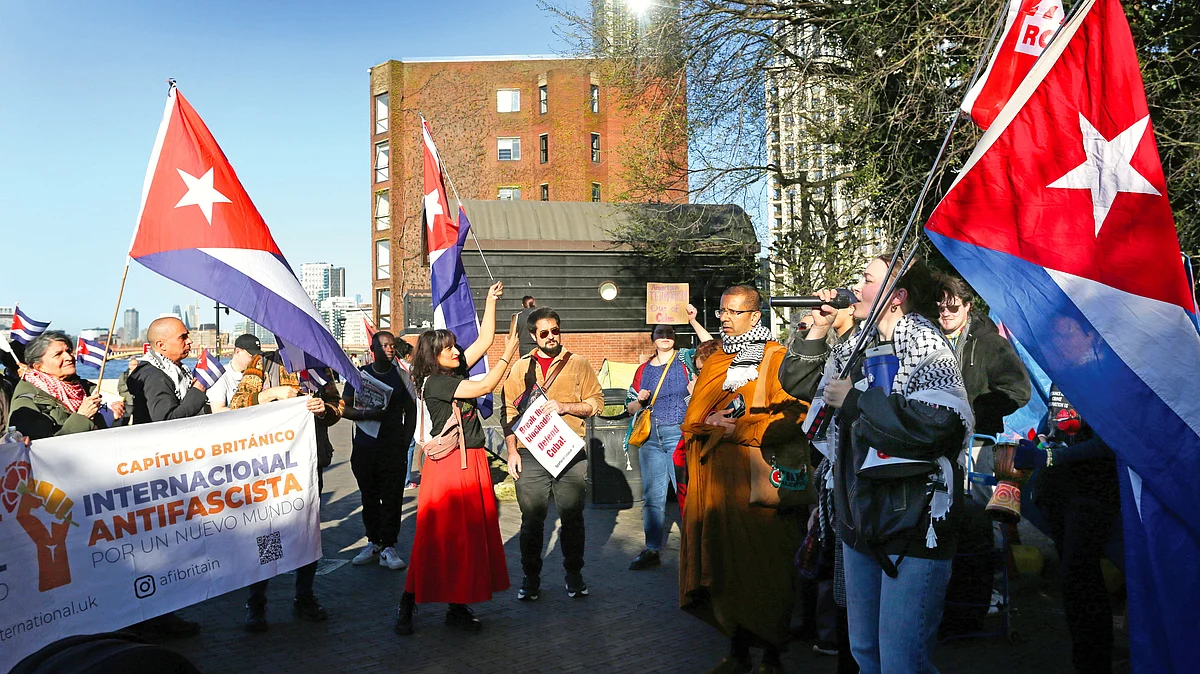


US Secretary of State Marco Rubio on Friday defended the Trump administration’s decision to impose sweeping new sanctions on Cuba, including major restrictions targeting GAESA, the military-run conglomerate formally known as Grupo de Administración Empresarial S.A.
The sanctions announced on Thursday also targeted Moa Nickel, a Cuban joint venture involving Canadian firm Sherritt International, which promptly announced it would exit the business after more than three decades of operations on the island.
According to Lee Schlenker, a research associate at the Quincy Institute’s Global South programme, the 1 May executive order and the additional sanctions unveiled on 7 May significantly broaden Washington’s legal authority to penalise foreign individuals and companies linked to Cuba.
“Not only are they subject to having their assets frozen but their US accounts as well as their travel to the US, that of their shareholders, investors or employees,” Schlenker said. “This is bound to have an extremely significant impact of the presence of foreign companies” in Cuba.
Also Read: Cuba next on Trump’s imperial hitlist
Economist Pavel Vidal, a Cuba specialist at Pontificia Universidad Javeriana, described the measures as “very concerning” for an economy he said was already “practically paralysed”.
The US has blocked fuel shipments to Cuba since January, further worsening the island’s prolonged economic crisis. Vidal said the new sanctions were likely to discourage GAESA’s remaining international partners, warning that “very few will risk defying them”.
He described the measures as amounting to “total isolation”, driven largely by the fear they generate among global banks, insurers and multinational corporations.
Vidal, who has studied internal GAESA documents, said the conglomerate’s extensive involvement across nearly every major sector of the Cuban economy means that virtually any business engagement with Cuba could now become a liability under the new US rules.
Based on reports analysed by Vidal, GAESA controls close to 40 per cent of Cuba’s gross domestic product. By early 2024, the conglomerate reportedly held liquid reserves worth $14.5 billion, while generating annual revenues estimated at three times the size of the Cuban state budget.
GAESA was created in the 1990s under military oversight as Cuba sought to respond to the severe economic fallout following the collapse of the Soviet Union and tighter US sanctions imposed during that period.
Although state-owned, GAESA’s finances are exempt from oversight by Cuba’s Office of the Comptroller General. Gladys Bejerano, the agency’s former director, acknowledged the absence of audits in a 2024 interview before later retiring.
Until his death in July 2022, Luis Alberto Rodríguez López-Calleja headed GAESA as its general manager. As the son-in-law of former Cuban president Raúl Castro, he was considered a central figure within the ruling establishment. His son, Raúl Guillermo Rodríguez Castro, has since emerged as an influential intermediary in sensitive discussions with the United States while officially serving as his grandfather’s chief bodyguard.
The latest sanctions package also blacklisted Ania Guillermina Lastres, who succeeded López-Calleja and currently serves as GAESA’s executive president, overseeing the conglomerate’s vast international financial operations.
Based on publicly available information, GAESA controls a wide range of businesses across Cuba, including retail chains selling food, clothing and household appliances, as well as car rental services, travel agencies, financial institutions, currency exchange offices and many of the country’s major hotels.
Speaking to reporters on Friday, 8 May, Rubio insisted the sanctions were not directed at ordinary Cubans and accused GAESA of monopolising the island’s revenue streams. “It is taking anything that makes money in Cuba and illegally putting it into the pockets of a few regime insiders,” Rubio said.
Cuban authorities, however, condemned the measures as “collective punishment” intended to suffocate the country’s economy. Havana has argued that the Trump administration is prioritising political pressure over the wellbeing of the Cuban people.
The latest sanctions come amid an ongoing US energy blockade that has contributed to widespread water and electricity outages across Cuba, alongside severe shortages of fuel and drinking water.
With AP/PTI inputs
Join our official telegram channel (@nationalherald) and stay updated with the latest headlines