


Russia plans tax increases as war spending strains 2027–2029 budget
Mining companies and wealthier citizens face higher levies as Moscow seeks to fund military commitments amid slowing growth and shrinking reserves
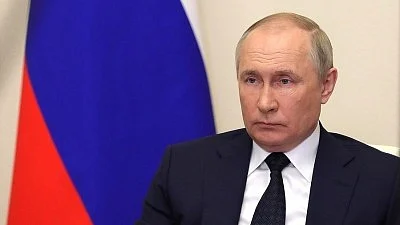


Russia’s proposed 2027–2029 budget comes with tax increases targeting mining companies, investment income and foreign online purchases
Heavy military spending and weak growth have widened the deficit, while sanctions restrict access to international borrowing
Analysts say Moscow can meet its near-term financing needs, but households, businesses and civilian development face mounting pressure
Russia is seeking additional revenue from mining companies, investors and consumers as President Vladimir Putin’s government prepares its 2027–2029 budget against the backdrop of mounting war costs and pressure on public finances.
The three-year spending plan, scheduled for consideration in parliament on Thursday, is accompanied by tax proposals announced after September’s parliamentary elections. The measures would place a greater burden on selected industries and wealthier taxpayers as the war in Ukraine continues to absorb state resources.
The draft budget envisages expenditure of about 48.8 trillion roubles against revenue of 43.3 trillion roubles in 2027. It projects a deficit of 5.443 trillion roubles, or 2.2 per cent of gross domestic product, followed by shortfalls equivalent to 1.9 per cent of GDP in both 2028 and 2029, according to Interfax.
Unlike last year’s broader tax increases, which raised value-added tax and brought more small businesses within its scope, the latest proposals focus on mining windfalls and income from investments, savings and property transactions.
The government proposes levies of 20–30 per cent on additional income earned by mining companies following increases in commodity prices. Producers of gold, nickel and iron ore are among those facing higher payments.
Proposed rates on interest, dividends and proceeds from property sales would range from 13 per cent to 22 per cent. Such income is currently taxed at 13 per cent below an annual threshold of 2.4 million roubles and 15 per cent above it.
Other measures proposed from 1 January include a charge of 100 roubles per parcel and 22 per cent VAT on imported online purchases worth less than €200 that previously qualified for tax-free treatment. Dividends paid into restricted accounts held by investors from countries Moscow designates as “unfriendly” would face a 35 per cent tax.
Russia’s invasion of Ukraine has increased military expenditure while sanctions, labour shortages and high borrowing costs weigh on businesses outside the defence sector. Ukrainian attacks on refineries and export terminals have added to the economic pressures.
According to the Kyiv School of Economics, the budget deficit reached 5.8 trillion roubles through August, exceeding an already revised target of 4.8 trillion roubles.
Chris Weafer, chief executive of consultancy Macro-Advisory, said Russia had sufficient financing options to cover its deficit in 2027 and probably 2028. However, he warned that doing so would require higher taxes and greater costs for households and companies, leaving fewer resources for infrastructure and civilian economic development.
He said state spending was supporting military-linked industries while much of the wider economy struggled.
The government forecasts economic growth of 0.6 per cent this year. Low unemployment, limited public debt and oil export earnings have helped sustain its finances. Finance Minister Anton Siluanov expects this year’s revised deficit to be around 3 per cent of GDP, compared with 1.6 per cent last year.
However, sanctions prevent Moscow from accessing international bond markets, increasing its dependence on domestic banks and reserves.
Government bond sales encountered difficulties during the summer when banks resisted the interest rates offered. Borrowing resumed after the authorities improved the terms.
The Kyiv School of Economics also says lending by banks to defence companies has transferred part of the war’s financial burden from the federal budget to banks and state-controlled businesses.
Meanwhile, readily available assets in the National Wealth Fund, accumulated from oil and gas earnings, have fallen to the equivalent of 1.7 per cent of GDP.
Foreign businesses face additional uncertainty. The Russian subsidiary of German retailer Metro, placed under temporary administration, committed one billion roubles to a fund supporting Russian troops. Metro’s German headquarters said it neither authorised nor endorsed the contribution.
The Kyiv School of Economics assesses Russia’s finances as stable for now, but warns that falling energy prices or weakening confidence in the financial system could upset that position.
With agency inputs