


Lessons from Serbia, and Lula’s pushback against Trump, media, money
Student List's triumph over Aleksandar Vučić and Lula da Silva's comeback in Brazil challenge entrenched political power and expose limits of establishment support
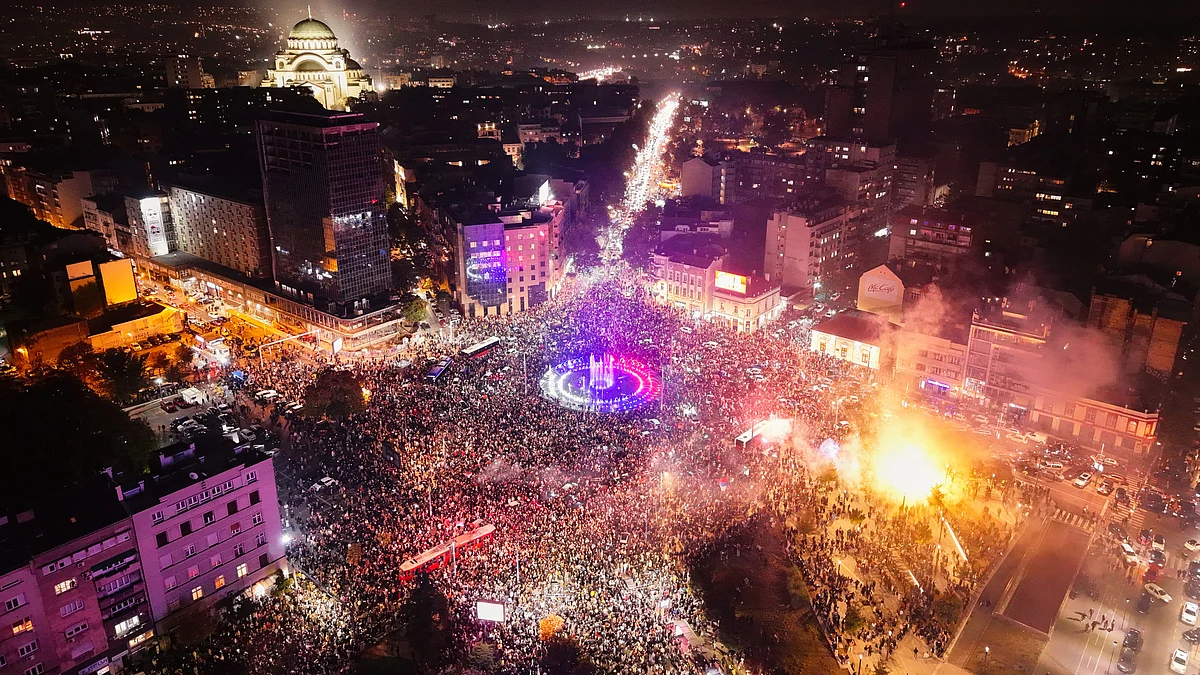


Student List wins a parliamentary majority in Serbia after two years of anti-corruption protests.
Lula overturns his first-round deficit to defeat Flávio Bolsonaro in Brazil's presidential runoff.
Both results fuel debate over entrenched political power, foreign influence and the future of the global left.
In both Serbia, where the Student List staged an upset victory, ending Aleksandar Vučić's 12-year dominance of Serbian politics, and Brazil, where Luiz Inácio Lula da Silva defied predictions after trailing in the first round, electoral victories were won against the tide of mainstream media, corporate power and influential countries seen as backing the establishment.
The Student List, a political movement that emerged from the two-year anti-corruption protests led by students, won 52.65 per cent of the vote and is projected to secure 139 of the 250 parliamentary seats.
In Brazil, a runoff was held after neither presidential candidate secured more than 50 per cent of valid votes in the first round. Flávio Bolsonaro led with 47.03 per cent, against Lula's 45.16 per cent.
In the second round, Lula surged ahead to win 51.79 per cent of valid votes, leaving Bolsonaro with 48.21 per cent.
Nobody thought it was possible. In Brazil, political obituaries of Lula were being written, while in Serbia, the Progressives led by Vučić called a snap election to put an end to sustained student protests, hoping to defeat the relatively inexperienced candidates of the Student List. The results defied predictions. In both countries, celebrations broke out. The outcomes were seen as nothing short of political revolutions, rather than mere upheavals, and are expected to bring far-reaching changes.
The victory of the students in Serbia demonstrated how a student-led protest movement could convert street mobilisation into control of the country's parliament. Lula's victory in Brazil is considered particularly significant because US President Donald Trump, sections of the American media and American technology companies such as Meta were seen as opposing Lula and supporting Flávio Bolsonaro, son of former president Jair Bolsonaro, who is under house arrest.
While commentators differ on the implications, the results have electrified left-wing and socialist circles across Europe and beyond. The United States has been seeking to expand its influence across Latin America, where several governments aligned with and supported by Trump are now in power. Brazil was widely expected to join their ranks, but Lula is credited with staging a remarkable comeback in the three weeks between the first and second rounds of voting.
European commentators view the outcome in Serbia as an opportunity for democratic reforms, stronger rule-of-law institutions, greater media freedom and anti-corruption measures, as well as potentially renewed momentum towards EU integration. Their elation partly stems from Russian President Vladimir Putin's support for Vučić.
'Belgrade in rapture as Serbian students topple Vučić in historic election' was the headline in The Straits Times, while Balkan Insight highlighted how European leaders welcomed the Student List's victory. Much of the media coverage focused on one of Europe's most significant anti-establishment electoral victories in recent years, as protests triggered by the Novi Sad railway station tragedy translated into a parliamentary majority.
Most of the Student List's 250 candidates are not career politicians but professionals and experts from diverse fields, including academia and the arts.
The victory in the snap election came after nearly two years of anti-government protests sparked by the collapse of a canopy at Novi Sad railway station in 2024, which killed 16 people. The disaster was widely blamed on corruption and triggered some of Serbia's largest protests since the fall of strongman Slobodan Milošević in 2000.
Voters turned out in large numbers on Sunday, with turnout reaching 68.78 per cent, the highest for a Serbian parliamentary election in more than three decades. Vučić conceded defeat on Sunday, triggering jubilant scenes in Belgrade as supporters of the movement celebrated the defeat of a government they blamed for deep-rooted corruption.
As supporters celebrated Lula's victory in Brazil, strategic affairs expert Brahma Chellaney wrote on X: 'Brazilian President Lula da Silva’s decisive election victory, securing an unprecedented fourth term, makes him one of the world’s longest-serving democratically elected leaders. More importantly, it represents a setback for Trump’s "Donroe Doctrine" (a blend of Donald Trump and the historic Monroe Doctrine), which seeks to reassert explicit US hegemony over Latin America.'
Chellaney pointed to the Trump administration's military operation to abduct Venezuela's sitting president and its active support for conservative figures across Latin America, including Argentina's Javier Milei, while targeting Lula's Brazil. Lula's victory is also seen as a win for the BRICS bloc, of which Brazil is a founding member.
Under Lula, Brazil has strongly advocated a multipolar world order, greater use of local currencies in trade, higher taxes on the wealthy and deeper ties with the Global South. Had Flávio Bolsonaro won, Brazil would likely have moved closer to US-led security frameworks while scaling back its participation in BRICS, or potentially withdrawing from the bloc, Chellaney argued.
No Brazilian presidential candidate had previously finished second in the first round and then gone on to win the runoff. The first-round leader had always prevailed in the second round. Lula has now broken that pattern.
He has also become the first person to be elected Brazil's president four times. When his new term ends, Lula will have governed Brazil for 16 years, making him the country's longest-serving democratically elected president.
Join our official telegram channel (@nationalherald) and stay updated with the latest headlines