


Tensions and talk: Navigating the rising storm in Indo-Bangladesh ties
With anti-India rhetoric and street violence surging in Bangladesh, voices of reason call for dialogue and restraint


Amidst reports of shrill anti-India rhetoric in Bangladesh met with equally aggressive responses from India, a few reasonable voices have surfaced on Bangladesh’s television and social media platforms. Some of these—prominent journalists, retired bureaucrats—have openly blamed sections within Bangladesh’s interim government for failing to contain mob violence following the attack on Sharif Osman Hadi on 12 December 2025. It is these same sections, they say, who are stoking anti-India sentiments.
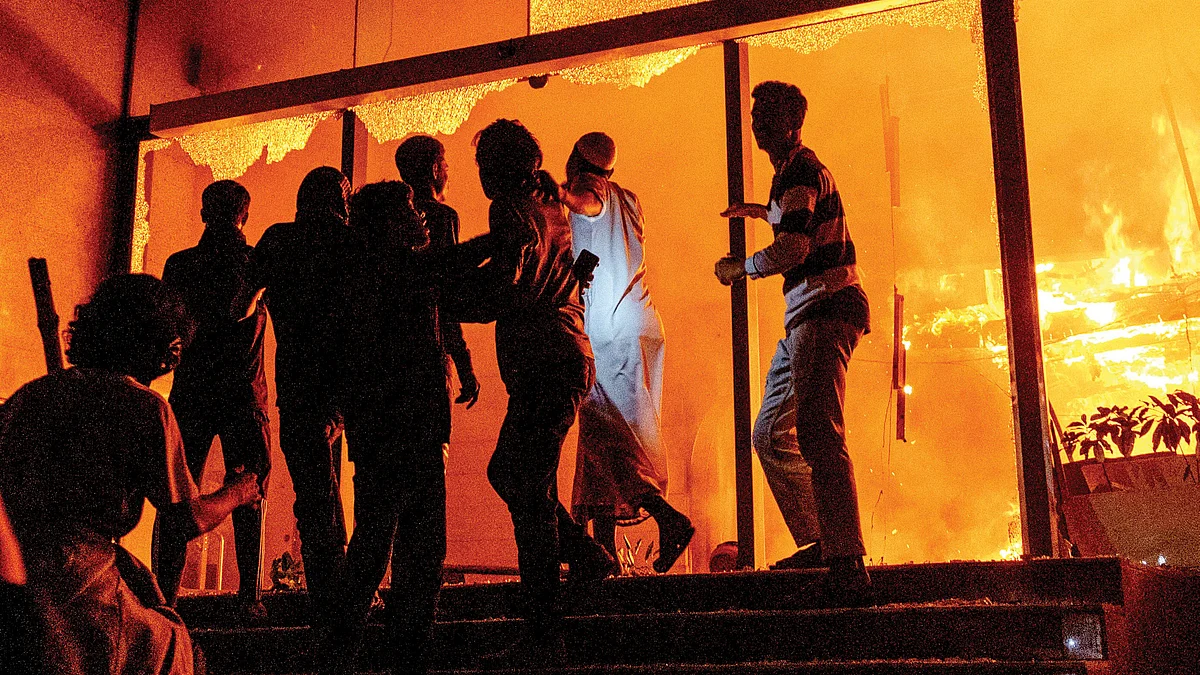
After Hadi’s death in a Singapore hospital on 18 December, violence eruoted in Dhaka, Chittagong and other cities. Protesters ransacked and set fire to offices of Prothom Alo and Daily Star. Even organisations like Chhayanot and Udichi, which house Bangladesh’s cultural and heritage assets, were not spared. The unrest claimed more victims. The unrest claimed more victims. On 22 December, Motaleb Shikdar, a student leader associated with the July uprising against Sheikh Hasina, was shot in Khulna.
The rise in anti-India sentiment had another tragic consequence. On 18 December, one Dipu Chandra Das was lynched in Dhaka. Though investigations later revealed this was the result of personal grudges involving his co-workers, the ministry of external affairs issued a statement on 21 December condemning the killing and demanding the perpetrators be brought to justice. This lent credence to the theory that India is meddling in Bangladesh’s internal affairs by playing the ‘minority card’.
Anti-India rhetoric in Bangladesh is not new, including from Hadi. In a television interview, the founder-leader of Inquilab Mancha warned that turmoil in Bangladesh would destabilise India’s north-east. “India plays two cards against us—one is the minority card, the other involves the Chittagong Hill Tracts (CHT). Earlier, we did not react to the minority issue. But if India continues to interfere in the CHT, remember we too can foment trouble at the ‘chicken’s neck’. [A reference to the 22 km Siliguri Corridor that connects the northeast with the rest of India.] We want to be good neighbours, not slaves.”
The Chittagong Hill Tracts, located within Bangladesh, are inhabited by non-Muslim indigenous Chakmas. In the 1970s and 80s, India provided sanctuary, training and arms to the Shanti Bahini (CHT insurgents), viewing it as a strategic tool to keep the heat on Bangladesh and counter the growing influence of China and Pakistan. India also hosted thousands of CHT refugees (chiefly Chakmas), later facilitating their return to Bangladesh after the 1997 peace accord. While the accord brought some peace, key provisions for demilitarisation, land rights and self-governance remained unimplemented.
Beyond historical baggage, contemporary political dynamics have also fuelled anti-India feeling. Jamaat-e-Islami and other right-wing outfits have seized on India’s internal policies—such as the National Register of Citizens (NRC) in Assam, the handling of Bengali speakers labellled ‘illegal migrants’ and the Special Intensive Revision (SIR) of electoral rolls in Bihar and West Bengal—to portray India as unfriendly, even hostile.
Delhi’s decision to shelter former president Sheikh Hasina has emerged as another bone of contention. Many equate this with India acting out its regional hegemony by interfering overtly in Dhaka’s affairs.
Hadi had predicted this. In the same interview he said, “India will be inclined to resort to maximum force to rehabilitate Sheikh Hasina. It has invested heavily in her and is now trapped with limited options.” Many believe Hasina is abusing her hospitality by continuing to be in touch with her supporters from Indian soil.
A counter to the anti-India narrative is developing though, specifically against the claim of Bangladesh’s ability to choke the ‘chicken’s neck’ and foment trouble in the northeast.
Leaders like Shamim Haider Patwary have appeared on television talk shows arguing that taking an anti-India position is only a ploy to ensure political dividend for Jamaat and extended Jamaat groups. Patwary is the secretary general of the Jatiya Party and a member of parliament from 2018 to 2024.
In the fragile balance characterising South Asia’s geopolitics, diplomacy remains India and Bangladesh’s best bet to defuse tensions, address grievances and chart a path toward stable, cooperative coexistence. The question is: will they take that path?
SOURABH SEN is a Kolkata-based independent writer and commentator on politics, human rights and foreign affairs
Join our official telegram channel (@nationalherald) and stay updated with the latest headlines