


Fresh fighting displaces thousands months after uneasy Thai-Cambodian truce
Evacuations resume along 100-km stretch; mistrust, landmines and political instability fuel renewed hostilities
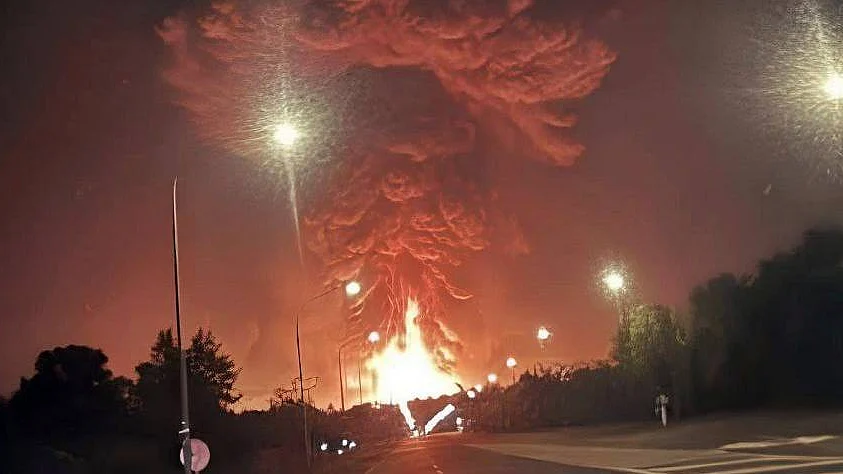


Renewed artillery, rocket fire and air strikes have once again shaken the Thai-Cambodian border, forcing villagers across a long frontier corridor to flee their homes for the second time in five months. Families are now crowded into temporary shelters, unsure when it will be safe to return — or when they may have to run again.
The sudden resurgence of violence comes despite the high-profile ceasefire negotiated in July by US President Donald Trump, a deal billed as “historic” at the time but viewed by regional observers as fragile from the outset.
A fragile truce collapses
The immediate trigger for the latest hostilities appeared minor: on Sunday, a Thai engineering team improving an access road in the disputed zone reportedly came under fire from Cambodian troops, injuring two Thai soldiers.
In previous years, such incidents were often defused through quick diplomatic engagement. But this year, relations between the neighbours have deteriorated so sharply that even small provocations now risk spiralling.
The July ceasefire itself was born of pressure rather than consensus. Thailand agreed reluctantly after Trump threatened punitive tariffs on Thai and Cambodian exports just days before deadlines for renegotiated trade terms. Bangkok feared the economic fallout of a tariff standoff even as it resisted internationalising the border dispute.
Cambodia, the weaker military power, welcomed outside mediation — but has since continued aggressive manoeuvres on the ground.
Rising tensions and accusations
Since the ceasefire, mistrust has deepened. Thailand has accused Cambodia of acting in bad faith by laying new landmines in contested areas, presenting photographic evidence and noting that at least seven Thai soldiers have lost limbs. Cambodia denies wrongdoing.
Tensions also remain high over 18 Cambodian soldiers captured by Thailand during clashes in July, whom Bangkok has refused to release.
Border skirmishes have persisted throughout the year as both sides tried to strengthen access roads, supply lines and fortifications around strategic hilltop positions.
These ridgelines, though remote and sparsely populated, offer commanding views and tactical control for any future confrontation — making them central to military planning on both sides.
Thailand’s domestic politics fuel escalation
Since July, the Thai military has operated with greater autonomy. Prime Minister Anutin Charnvirakul, weakened by a minority coalition and embroiled in domestic political challenges, has ceded broad authority to the armed forces to “manage” the conflict.
The military leadership has openly stated its goal: to inflict enough damage on Cambodian positions to ensure border communities are never again threatened, and to secure key high-ground locations once and for all.
Commanders argue that the ceasefire stalled their momentum in July just as they believed they were close to pushing Cambodian forces back from contested areas — and that they intend to complete that mission now.
Phnom Penh maintains that external mediation is necessary because bilateral talks place it at a disadvantage. But on the ground, Cambodian troops have repeatedly tested Thai defences, prompting fierce exchanges.
The symbolism of the conflict — tied to territorial nationalism, wartime legacy issues and unresolved demarcation — resonates deeply in both countries. For Thailand’s military, defending territorial claims is framed as a sacred duty. For Cambodia, resisting Thai influence carries historical and political significance.
For civilians along the frontier, the geopolitical calculations matter little. Entire villages have again been evacuated along a stretch of several hundred kilometres. People and livestock are huddled in makeshift centres, facing uncertainty as heavy weaponry echoes in the background.
With trust between Bangkok and Phnom Penh at a modern low, and with both armies pursuing tactical gains on the ground, the months ahead could see continued instability — despite Trump’s ceasefire and the absence of meaningful diplomatic engagement.
Join our official telegram channel (@nationalherald) and stay updated with the latest headlines