


Ukraine: Trains offer warmth and relief as Kyiv battles winter outages amid Russian strikes
Zelensky has accused Russia of deliberately exploiting winter to cripple power stations, energy storage facilities and heating networks
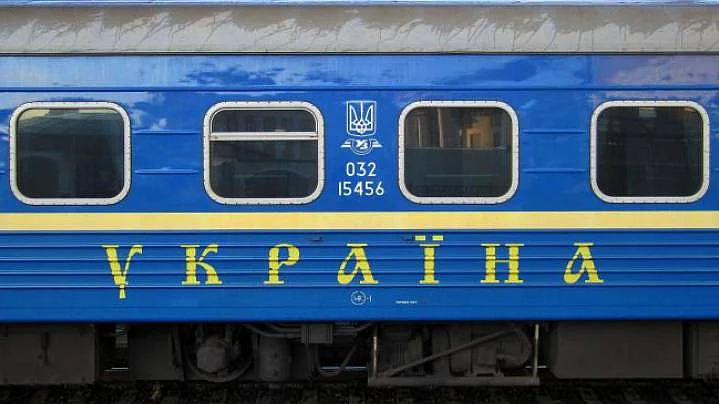


As snow blankets the outskirts of Ukraine’s capital and temperatures plunge below minus 15 degrees Celsius, a stationary train at a suburban railway platform has become an unlikely lifeline for residents struggling with power cuts, freezing homes and disrupted water supply.
Painted in the blue-and-white colours of Ukrainian Railways, the so-called “Invincibility Trains” do not travel anywhere. Instead, their running diesel engines provide heat, light and a sense of safety to dozens of people affected by intensifying Russian attacks on energy infrastructure.
Inside one of the carriages, Alina watches her infant son Taras play with toys supplied by international charities that support the initiative. Living on the 17th floor of a new apartment block without electricity, elevators or running water, she says the train offers rare comfort.
“It’s winter and it’s very cold,” she says, understatedly, as Kyiv grapples with wind-chill temperatures touching minus 19 degrees Celsius this week. “Here at least, it’s warm and safe for my children.”
Her voice falters as she speaks about her father, who was killed two years ago near Bakhmut during a summer offensive. For families like hers, the train is not only a refuge from the cold but also from the emotional weight of war.
Ukraine’s President Volodymyr Zelensky has accused Russia of deliberately exploiting winter to cripple power stations, energy storage facilities and heating networks. Kyiv Mayor Vitali Klitschko recently suggested that residents who can afford to leave the city temporarily should do so to ease pressure on strained resources — a comment seized upon by Moscow as a sign of weakness, but defended locally as a practical measure.
Across the city, the reality of the energy crisis is stark.
In a Soviet-era apartment block east of the Dnipro river, Yulia Mykhailiuk and Ihor Honcharuk try to keep their one-year-old son warm by heating bricks on a gas stove. Their family moved there after their own home was damaged in a Russian strike last August.
“We had electricity today for about four minutes,” Ihor says. “All our power banks are empty.”
“With this kind of cold and no heating, the apartment becomes freezing very quickly,” Yulia adds. The couple plans to temporarily move to her parents’ home outside Kyiv, not because of official pressure, she insists, but out of necessity.
Recent drone and missile strikes have worsened the situation. According to city officials, attacks earlier this week caused the worst power outages Kyiv has seen so far this winter, leaving more than 500 residential buildings without electricity.
Olena Pavlenko, president of the Kyiv-based DiXi Group think tank, said the damage is becoming harder to reverse.
“Compared to previous winters, the situation is now the worst. Repairs are two to four times more complicated when everything is under ice,” she told the Kyiv Independent.
Across Kyiv, engineers from municipal authorities and private energy firms are working round the clock to repair cables and substations, often in extreme cold.
But Andrii Sobko of DTEK Grids admits the fixes are temporary.
“We are working in emergency mode,” he says. “The equipment is operating at critical levels just so residents can have some light.”
Amid these hardships, the Invincibility Trains have become a symbol of resilience. Eleven-year-old Stanislav — “Stas” to friends — comes to the train to warm up and charge his phone after his family’s apartment went without power for 36 hours.
He still remembers the first day of the war, nearly four years ago, watching flashes light up the sky. Now, it is the sound of drones that keeps him awake at night.
“When you hear something flying, it’s scary,” he says. “You don’t know if it will explode or pass by.”
One evening, as residents gathered inside the carriage, the familiar shrill of an air-raid alert sounded. The conductor ordered everyone to leave and head for shelter. Many instead returned to their cold, dark homes — but promised they would be back the next day.
For Kyiv’s residents, the winter will eventually pass. What remains uncertain, they say, is when the war — and the daily struggle it brings — will finally end.
Join our official telegram channel (@nationalherald) and stay updated with the latest headlines