


Truce falters in Lebanon as Israeli strikes leave 10 dead
Israel said it was responding to Hezbollah attacks, while the Iran-backed group vowed to resist Israeli military activity in Lebanon
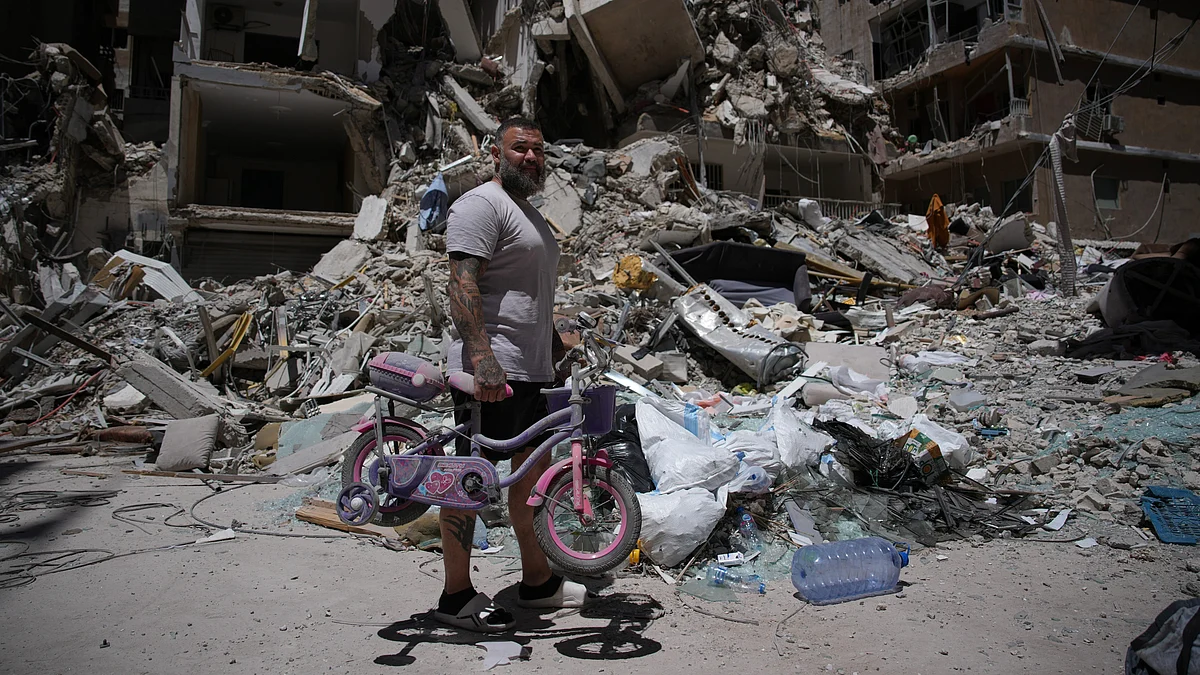


Israeli strikes killed at least 10 people in Lebanon on Saturday, hours after a truce came into effect, with Israel saying it was responding to attacks by Hezbollah and the Iran-backed group declaring that it would not allow Israel "freedom of movement" inside Lebanese territory.
The violence has cast uncertainty over efforts to launch 60 days of US-Iran talks aimed at resolving disputes over Iran’s nuclear programme and other issues central to a broader agreement to reopen the Strait of Hormuz and stabilise global energy supplies.
Wednesday's interim US-Iran agreement requires both countries and their allies to halt military operations across all fronts, including Lebanon. However, Israel, which was not part of the negotiations, has stated that it is not bound by the deal and will maintain its forces in parts of southern Lebanon currently under its control.
A US official said the truce took effect at 4 pm on Friday. Israeli and Hezbollah sources separately confirmed the arrangement to Reuters.
Israel says strikes were in response to Hezbollah fire
Lebanon's National News Agency reported that Israeli warplanes and drones struck several locations across southern Lebanon and the Bekaa Valley, areas regarded as Hezbollah strongholds.
An Israeli military official said Hezbollah had launched more than 50 projectiles at Israeli forces in southern Lebanon overnight and that Israel had carried out retaliatory strikes against what it described as Hezbollah targets.
Hezbollah did not immediately claim responsibility for the attacks. However, a senior Hezbollah official told Reuters that the group would not permit Israeli forces unrestricted movement in Lebanese territory and would not accept a return to the situation that existed before 2 March.
One of the deadliest strikes hit a three-storey residential building in the town of Barish in the Tyre district, killing a father, mother and their two children, according to a local official.
The Lebanese army also said an Israeli strike killed one of its soldiers on the Kfarrumman-Nabatieh road.
Israel's Arabic-language military spokesperson said calm and stability could only be achieved if Hezbollah ended what Israel described as hostile activities and violations of existing agreements.
She said Israel's military presence in Lebanon was intended to eliminate threats and dismantle Hezbollah infrastructure rather than target civilians.
According to Lebanon's health ministry, 3,912 people have been killed in Israeli attacks since 2 March, including women, children and medical personnel. Israel says 32 of its soldiers and four civilians have been killed during the same period.
Iran-US talks remain uncertain
As fighting continued in Lebanon, uncertainty remained over whether substantive talks would begin soon between Washington and Tehran to transform this week's interim 14-point agreement into a lasting settlement.
Pakistan Interior Minister Mohsin Naqvi, whose country has played a mediating role in the conflict, was in Tehran for talks with Iranian Foreign Minister Abbas Araghchi, according to Iran's ISNA news agency.
Reports that US special envoy Steve Witkoff and Jared Kushner could travel to Switzerland for discussions with Iranian officials were not confirmed by the White House.
Swiss authorities met Qatari officials on Friday at the Buergenstock resort near Lucerne as diplomatic efforts continued behind the scenes.
The conflict, which began on 28 February, has killed at least 8,000 people, most of them in Iran and Lebanon, while also fuelling volatility in global energy markets.
The interim agreement envisages sanctions relief for Iran, the release of frozen assets worth tens of billions of dollars and waivers allowing Iranian oil exports. It also includes provisions for a reconstruction fund and other economic incentives.
US President Donald Trump defended the agreement on Friday amid criticism from some Republican allies who argue that Washington made excessive concessions.
"The War has diminished Iran!" Trump wrote on social media. "We didn't meet out of desperation, Iran did. They are FINISHED! We'll play out the 60 days. They get no money, not 10 cents!"
Join our official telegram channel (@nationalherald) and stay updated with the latest headlines