


US envoys go to meet Putin at Kremlin following Ukraine talks in Abu Dhabi
Witkoff and Kushner seek Putin’s backing for European participation in talks as Moscow resists broader involvement
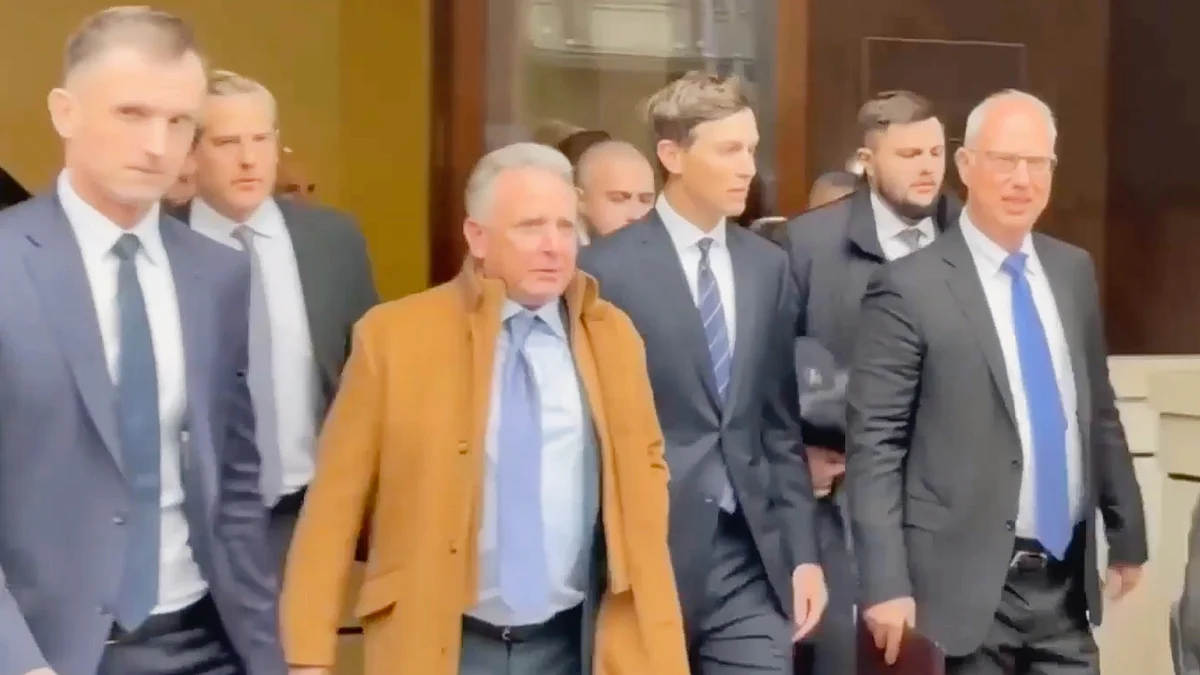


US envoys Witkoff and Kushner meet Putin after Russia-Ukraine talks in Abu Dhabi yield prisoner-swap agreement.
Washington and Kyiv seek European representation in negotiations, but Moscow resists proposal.
Territorial disputes and post-war security guarantees remain major obstacles to peace settlement.
US President Donald Trump’s special envoys arrived at the Kremlin on Thursday, 12 November for talks with Russian President Vladimir Putin, as Washington sought to inject fresh momentum into peace efforts following two days of US-mediated negotiations between Russian and Ukrainian delegations.
Steve Witkoff and Jared Kushner — Trump’s son-in-law — had brokered the discussions in Abu Dhabi, capital of the United Arab Emirates. The talks marked the first direct engagement between Russian and Ukrainian officials in nine months, as efforts to secure a peace agreement remained deadlocked.
The negotiations concluded on Wednesday with an agreement in principle on a major prisoner exchange, although the exact number of detainees to be released is yet to be finalised.
There was, however, no visible breakthrough on ending nearly five years of large-scale hostilities, which began on 24 February 2022, following the initial outbreak of fighting in eastern Ukraine in 2014.
Kushner and Witkoff appeared keen to build on the limited progress in Abu Dhabi, travelling directly to Moscow for discussions with Putin. Kushner said one of the objectives of the meeting was to secure the Russian president’s approval for European representatives to participate in the negotiations, which also seek to address the continent’s wider security arrangements.
Washington and Ukrainian President Volodymyr Zelenskyy want European countries to nominate a single representative to negotiate with Moscow.
Russia, however, remains opposed to European governments participating directly in the talks. Moscow accuses European countries, which have expressed deep concerns over Russia’s conduct and ambitions on the continent, of prolonging the conflict by providing Ukraine with financial assistance and military supplies.
For many European governments, Russia’s inclusion in discussions on the continent’s security architecture would itself amount to an unwelcome concession to Putin. The Russian president has repeatedly described NATO’s eastward expansion as a major security threat and demanded that the alliance withdraw its troops from positions close to Russia’s borders.
Some analysts believe negotiators could be considering concessions to Moscow over NATO’s future strategy in exchange for an agreement to end the war in Ukraine. The possibility has alarmed European governments, wary of any arrangement that could undermine the continent’s security architecture.
Following his meeting with Putin, Kushner said he and Witkoff would travel to Dublin, Ireland, to meet Zelenskyy later on Thursday. The Ukrainian president is attending a gathering of more than 40 European countries, which also includes NATO secretary-general Mark Rutte.
Zelenskyy, meanwhile, has suggested that political changes on both sides of the Atlantic could create fresh opportunities for a peace agreement. He pointed to the prospect of Democrats taking control of the US Congress in January following the midterm elections, as well as elections in France next year.
"The political landscape in Europe could change in 2027... we also see changes already taking place in the United States," Zelenskyy said in Dublin late on Wednesday. "So today there really is this opportunity, this window of opportunity, when all those involved in the negotiating process genuinely want to achieve a result before 2027."
While describing the proposed prisoner exchange as a positive development, Zelenskyy reiterated that Ukraine would not agree to surrender territory occupied by Russia as a condition for peace.
Expectations of a major breakthrough in Abu Dhabi had been low from the outset. Russia and Ukraine have periodically exchanged prisoners, but their positions remain far apart on the terms of any comprehensive settlement.
Apart from security guarantees for both countries in the aftermath of the conflict, the future of Ukrainian territories occupied by Russia remains one of the biggest stumbling blocks to an agreement.
Fighting continues along the 1,200-km front line, with negotiators warning that the road to peace is likely to be long.
Despite its numerical superiority, Russia's military continues to face stiff Ukrainian resistance on the battlefield. Meanwhile, Moscow's strategic bombing campaign has targeted infrastructure critical to civilian access to heating, electricity and running water, seeking to erode public morale. Kyiv has described the strategy as the 'weaponisation of winter'.
Both sides continue to trade long-range missile and drone attacks.
Russia's defence ministry said its air defence systems had intercepted 71 Ukrainian drones overnight. The ministry also claimed that Russian forces had struck a drone manufacturing plant in Kyiv and three other facilities producing missile fuel and drone components in the surrounding region. Other targets, it said, included power substations in Zhytomyr and a bulk carrier bound for the Black Sea port of Odesa with cargo intended for the Ukrainian armed forces.
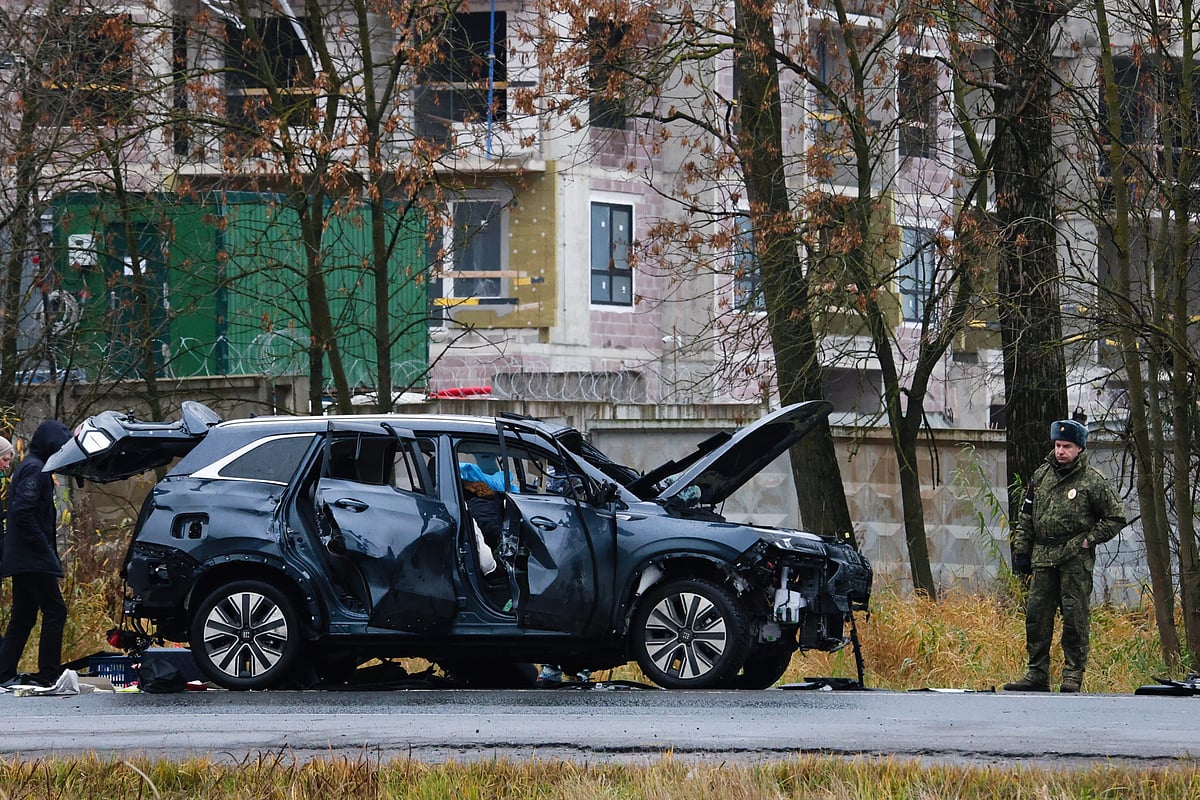
Separately, a Russian serviceman was killed in St Petersburg early on Thursday after his vehicle exploded, according to the country's Investigative Committee, the principal agency responsible for criminal investigations. The committee did not identify the victim or indicate who might have been behind the explosion.
Russian news outlet Fontanka reported that the victim was a colonel and that an explosive device planted in his car detonated as he drove away.
Several senior Russian military officers have been killed in bombings and other attacks that Moscow has blamed on Ukraine. Kyiv has claimed responsibility for some of the attacks carried out on Russian territory.
With AP/PTI inputs