


Trump orders US Navy to ‘shoot and kill’ Iranian boats as Hormuz crisis deepens
Tehran tightens grip on key oil route, seizes ships and defies US amid stalled talks
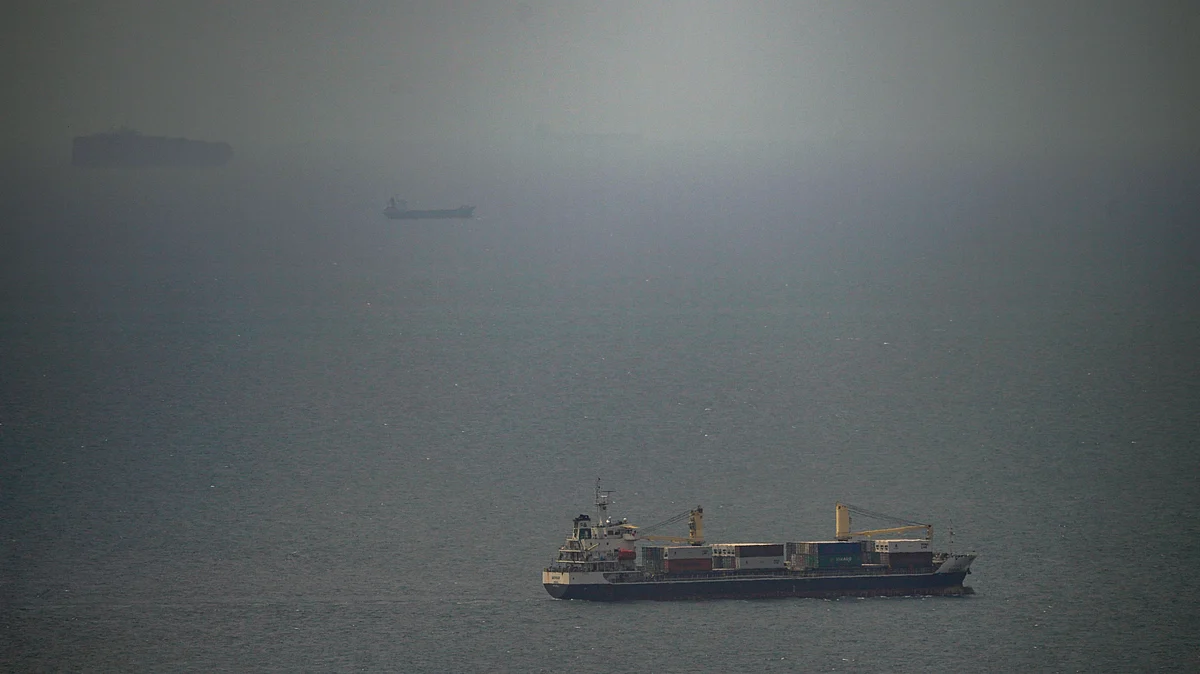


US President Donald Trump on Thursday ordered the US military to “shoot and kill” Iranian small boats allegedly laying mines in the Strait of Hormuz, sharply escalating tensions in the world’s most critical oil transit corridor.
In a morning social media post, Trump said US naval forces would act without hesitation. “I have ordered the United States Navy to shoot and kill any boat, small boats though they may be... that is putting mines in the waters of the Strait of Hormuz,” he posted. “There is to be no hesitation. Additionally, our mine ‘sweepers’ are clearing the Strait right now. I am hereby ordering that activity to continue, but at a tripled up level!”
The order comes as Iran has moved to consolidate control over the strait following the collapse of peace talks earlier this week.
State television broadcast footage overnight of masked Iranian commandos storming a cargo ship, Reuters reported, showing troops approaching in a grey speedboat, climbing a rope ladder onto the MSC Francesca and entering through a hull door with rifles drawn. The footage, presented with an action-movie-style soundtrack and no commentary, also showed another vessel, the Epaminondas. Iran claimed both ships were captured on Wednesday for attempting to cross the strait without permits.
Iranian officials signalled a further tightening of control, Reuters reported. Vice-speaker of Parliament Hamidreza Hajibabaei said revenue from a newly imposed toll on ships using the strait had been transferred to the central bank, without disclosing details. Judiciary chief Gholamhossein Mohseni-Ejei said the vessels had “faced the law”, while Iranian speedboats and marine drones were reported to be sheltering in sea caves near the mouth of the strait to keep US naval forces at bay.
Iran has effectively blocked the strait to most shipping since the United States and Israel launched military operations in February, and now appears to be in control of the waterway after last-ditch peace talks collapsed on Tuesday, hours before a two-week ceasefire expired, according to Reuters.
Tehran has said it will not reopen the strait—normally the route for about a fifth of global oil and liquefied natural gas—until Washington lifts a blockade on Iranian shipping imposed during the ceasefire, which it describes as a violation of the truce, Reuters said.
Shipping and security sources said US forces have intercepted at least three Iranian-flagged tankers in Asian waters and redirected them away from positions near India, Malaysia and Sri Lanka, Reuters reported.
Although Trump stepped back from threats to resume direct attacks on Iran in the final hours of the ceasefire on Tuesday, he has refused to lift the blockade. There has been no formal extension of the truce and no fresh talks have been scheduled.
Pakistan, which hosted earlier negotiations and was preparing for a second round before they were called off, remains in contact with both sides, Reuters reported. However, Iranian officials have declined to commit to sending a delegation, citing the blockade and shifting US demands.
“Yesterday, diplomats from various countries met different Pakistani authorities and asked about the expected dates for the next round of talks, but they could not give them any timeframe, clearly,” a Pakistani government source said.
Iran has maintained it is open to talks in principle. “You did not achieve your goals through military aggression and you will not achieve them by bullying either,” Parliament speaker Mohammad Baqer Qalibaf, who heads Iran’s negotiating team, wrote on social media. “The only way is recognizing the Iranian people's rights.”
On the ground, uncertainty continues to weigh heavily. “In a situation that is neither peace nor war, things are somewhat frightening. At every moment, you think that Israel or the US might launch an attack,” said Arash, a 35-year-old government employee in Tehran. “You cannot make decisions about the future in such a situation,” he told Reuters.
The wider regional situation remains volatile. Israeli strikes in Lebanon killed five people, including a journalist, on Wednesday — the deadliest day since a US-brokered ceasefire there took effect last week, Reuters reported. Iran has said maintaining the Lebanon ceasefire is a precondition for broader negotiations.
In Washington, the crisis has already triggered internal fallout. US Navy secretary John Phelan was removed from his post late on Wednesday amid disagreements over shipbuilding and tensions with senior defence officials, including defence secretary Pete Hegseth, two sources told Reuters.
Markets have reacted nervously to the standoff. Oil prices rose again, with Brent crude climbing more than 1.5 per cent to $103.50 a barrel, while global equities showed mixed movements amid uncertainty over the trajectory of the conflict.
Despite weeks of conflict, the United States has yet to achieve its stated objectives of curbing Iran’s regional military capabilities, dismantling its nuclear programme or weakening its leadership. Iran retains missile and drone capabilities, along with a stockpile of highly enriched uranium estimated at more than 400 kg, according to the UN nuclear watchdog, and has faced no organised internal opposition since the war began, Reuters reported.
The latest escalation comes against the backdrop of increasingly blunt rhetoric from Trump, who earlier this month posted: “Open the Fuckin' Strait, you crazy bastards, or you'll be living in Hell - JUST WATCH!”
Join our official telegram channel (@nationalherald) and stay updated with the latest headlines
Published: 23 Apr 2026, 7:02 PM