


Trump’s push to ramp up Venezuelan oil output would be ‘terrible for climate’, experts warn
Critics say plan to expand drilling after Maduro’s removal risks boosting emissions and undermining global climate goals
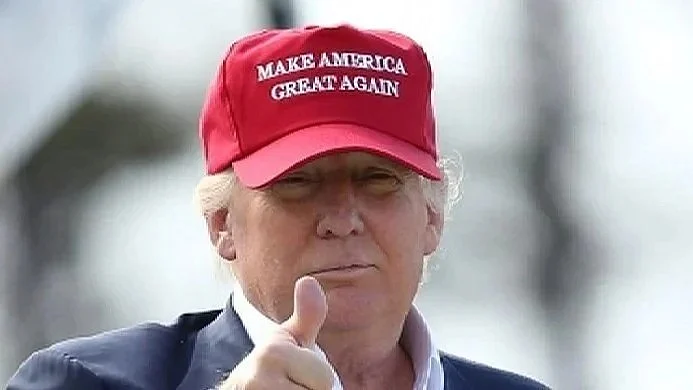


Climate and energy experts have warned that President Donald Trump’s push to dramatically expand oil production in Venezuela after the removal of President Nicolás Maduro would have severe consequences for the global climate, even as the White House promotes the move as part of a broader strategy to boost fossil fuel output.
Trump, who has repeatedly championed the slogan “drill, baby, drill”, has signalled that US oil companies should move into Venezuela — home to the world’s largest proven oil reserves — to revive production and extract profits, following the capture of Maduro and his wife Cilia Flores.
“The oil companies are going to go in, they are going to spend money, we are going to take back the oil,” Trump said after Maduro’s removal from Caracas. “A lot of money is coming out of the ground, we are going to be reimbursed for everything we spend.”
Venezuela’s reserves are estimated at around 300 billion barrels, according to the Energy Institute, making it the single largest holder of oil globally.
Climate costs of higher output
Energy analysts warn that any major expansion of Venezuelan oil production would sharply increase carbon emissions at a time when the world is already close to breaching agreed limits on global warming.
Even a modest increase in production from about 1 million barrels a day to 1.5 million barrels a day would generate roughly 550 million tonnes of carbon dioxide annually when burned — more than the yearly emissions of countries such as the United Kingdom and Brazil, according to Paasha Mahdavi, associate professor at the University of California, Santa Barbara.
“If there are millions of barrels a day of new oil, that will add quite a lot of carbon dioxide to the atmosphere and the people of Earth can’t afford that,” said John Sterman, a climate and economics expert at the Massachusetts Institute of Technology.
The environmental impact is expected to be especially severe because Venezuela’s oil is among the most carbon-intensive in the world. Much of it is extra-heavy crude, which requires more energy to extract, process and refine, producing higher emissions than lighter grades.
Sterman said that ramping up Venezuelan production would also lower global oil prices, slowing the transition to renewable energy and electric vehicles.
“If oil production goes up, climate change will get worse sooner, and everybody loses, including the people of Venezuela,” he said.
Economic and political risks
Trump has said US companies will spend billions of dollars to rebuild Venezuela’s decaying oil infrastructure, while pressing the country’s interim leadership to repeal a law requiring the state to own at least half of all oil projects.
However, major US oil firms such as ExxonMobil and Chevron have so far remained silent on whether they are willing to make the large and long-term investments required.
Analysts say reviving Venezuelan output will not be easy:
Restoring production to even 2 million barrels a day by the early 2030s would require around $110 billion in investment, according to consultancy Rystad Energy.
Boosting output by 500,000 barrels a day alone could cost $10 billion and take about two years, estimates from Energy Aspects suggest.
Returning to 1970s peak levels of 3.7 million barrels a day would require development of the Orinoco Belt, where heavy, sulphur-rich crude is more costly and difficult to extract.
“The political risk and project risk are enormous,” Sterman said. “It seems very tricky.”
Accusations of ‘fossil fuel imperialism’
Critics have accused the Trump administration of pursuing a form of fossil fuel-driven imperialism, arguing that Washington is treating Latin America as a resource colony.
“The US must stop treating Latin America as a resource colony,” said Elizabeth Bast, executive director of Oil Change International. “The Venezuelan people, not US oil executives, must shape their country’s future.”
Patrick Galey, head of fossil fuel investigations at Global Witness, said Trump’s actions in Venezuela amounted to “yet another conflict fuelled by fossil fuels”.
“So long as governments continue to rely on fossil fuels in energy systems, their constituents will be hostage to the whims of autocrats,” he said.
Trump has dismissed renewable energy as a “scam” and has repeatedly argued that the world must continue to rely on fossil fuels. Critics point to his recent rhetoric about Canada and Greenland, both rich in natural resources, as further evidence of a strategy centred on expanding US control over energy and minerals.
A complicated future for Venezuelan oil
Venezuela’s oil production has collapsed from its historic highs, falling to around 1.3 million barrels a day by 2018, due to a combination of mismanagement and US sanctions imposed during the Obama administration and tightened under Trump.
While the White House says US companies can revive the sector and be “reimbursed” for their investment, experts doubt whether the economics are attractive enough.
Galey said increasing Venezuelan production could also undercut US domestic producers, particularly those in the Gulf Coast region, who had previously supported sanctions on Venezuelan crude.
Some analysts believe Chevron, currently the only US oil major operating in Venezuela, could scale up more quickly than others, while ExxonMobil, heavily invested in neighbouring Guyana, may benefit strategically from Maduro’s removal.
Still, the overall response of US oil companies remains uncertain.
What is far clearer, climate experts say, is the environmental cost.
“Any expansion of Venezuelan oil production would be terrible for the climate and terrible for the environment,” Mahdavi said, warning that the long-term damage would far outweigh any short-term economic gains.
Join our official telegram channel (@nationalherald) and stay updated with the latest headlines