


UAE intercepts Iranian drone as US-Iran fighting resumes after month-long lull
Incident comes as Brent tops $90 and renewed US-Iran strikes threaten shipping through Strait of Hormuz and wider Gulf region
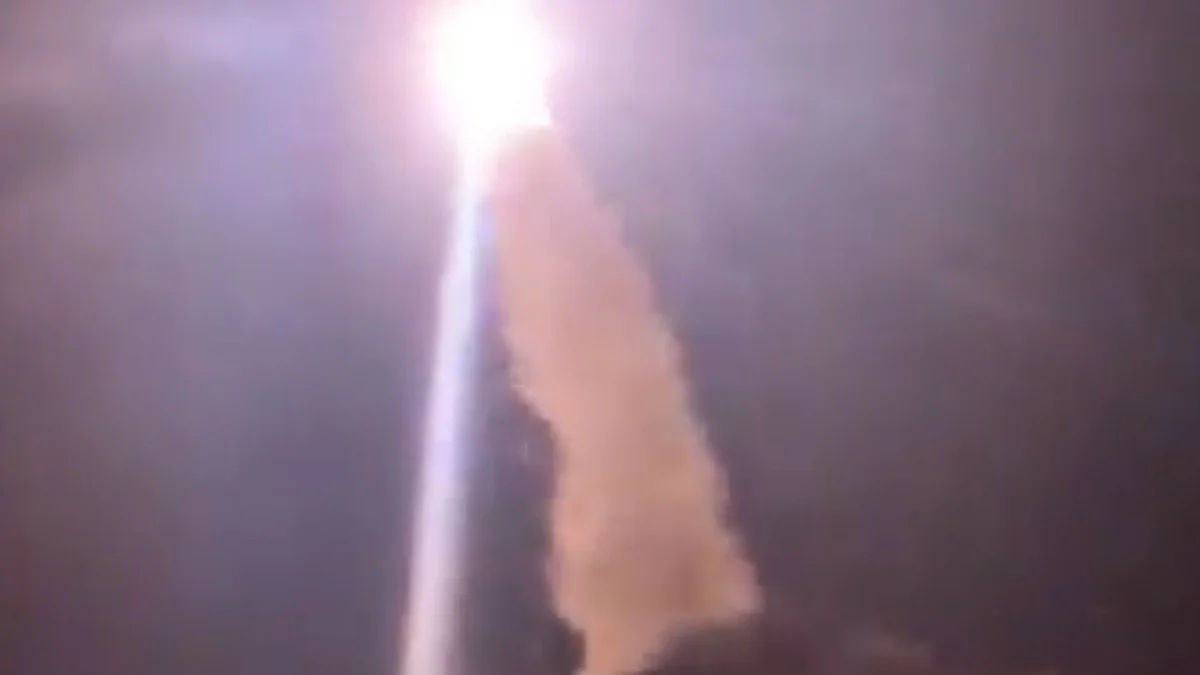


The United Arab Emirates said on Monday, 31 August it had intercepted an Iranian drone over its territorial waters, describing the incident as a "dangerous escalation" as direct fighting between the United States and Iran resumed after a month-long lull.
Iranian officials said two people were killed and several others injured in a US strike on Larak Island in the Strait of Hormuz on Sunday night. Iran retaliated by firing missiles towards US military sites in Jordan, eight of which were intercepted, according to Jordanian authorities.
The renewed exchanges come after weeks in which Washington had relied increasingly on economic pressure in an effort to force concessions from Tehran, including the reopening of the Strait of Hormuz to international shipping.
The strategic waterway has remained at the centre of the conflict since the US and Israel attacked Iran on 28 February. Iran subsequently established a chokehold over the strait, through which about a fifth of the world's oil traded by sea passed in peacetime, reducing shipping traffic to a trickle.
The disruption has rattled the global economy, pushing up prices for energy and other goods. With fighting now resuming, Brent crude, the international benchmark, rose above $90 a barrel on Monday, about 25 per cent higher than at the start of the war.
The surge presents an increasing economic and political challenge for US President Donald Trump ahead of the midterm elections.
A return to sustained hostilities also threatens to widen the conflict across the Gulf, where Iran has targeted US military bases and infrastructure since the war began.
UAE calls drone incident 'dangerous escalation'
In a brief statement, the UAE defence ministry said it had 'dealt with' an Iranian drone detected over its territorial waters after approaching from Iran. No damage was reported.
The UAE foreign ministry described the incident as a "dangerous escalation", calling it a "blatant violation" of the country's sovereignty, security and stability and a direct threat to its citizens and residents.
The defence ministry later denied an Iranian army claim that the Al Minhad Air Base in Dubai had been targeted, calling the allegation false.
Iran's foreign ministry, meanwhile, said Tehran would "not hesitate to exercise the inherent right of legitimate defence" and would respond "decisively to any military aggression".
Iranian President Masoud Pezeshkian, who has advocated a negotiated end to the conflict, also stressed that Tehran was not seeking war before travelling to Kyrgyzstan for the Shanghai Cooperation Organization summit with foreign minister Abbas Araghchi. "But," Pezeshkian said, "we will respond decisively to aggressors."
The summit brings together a grouping that has sought to position itself as a counterweight to US global influence. Chinese President Xi Jinping, Russian President Vladimir Putin and Indian Prime Minister Narendra Modi are among the leaders attending. Pezeshkian was due to meet Putin on the sidelines on Tuesday.
US economic pressure on Iran intensifies
The latest military exchange follows an escalation in Washington's economic campaign against Tehran.
US treasury secretary Scott Bessent was due to host meetings of Group of 20 finance ministers in North Carolina on Monday and Tuesday, as Washington presses other countries to help economically isolate Iran.
The strategy increasingly relies on threats of penalties against countries and entities that continue doing business with Tehran. Two weeks ago, the UAE suspended all trade with Iran after saying it had come under renewed Iranian fire, with two missiles fired towards shipping traffic landing harmlessly in the Persian Gulf. Iran denied responsibility for the incident.
Bessent subsequently suggested that pressure from Washington had contributed to the UAE's decision. Trump said last week that he was "not in a hurry" to bring Iran back to the negotiating table and has continued to portray the Iranian leadership as being under severe pressure.
But Tehran's recent appointments to senior security positions have signalled continued defiance, with Iran's leadership having weathered decades of sanctions and maintained a hard line against dissent at home.
Join our official telegram channel (@nationalherald) and stay updated with the latest headlines