


UN chief Guterres calls for Security Council reform in final UNGA address
UN chief says Council must reflect today’s geopolitical realities, warning that global institutions still mirror an outdated world order
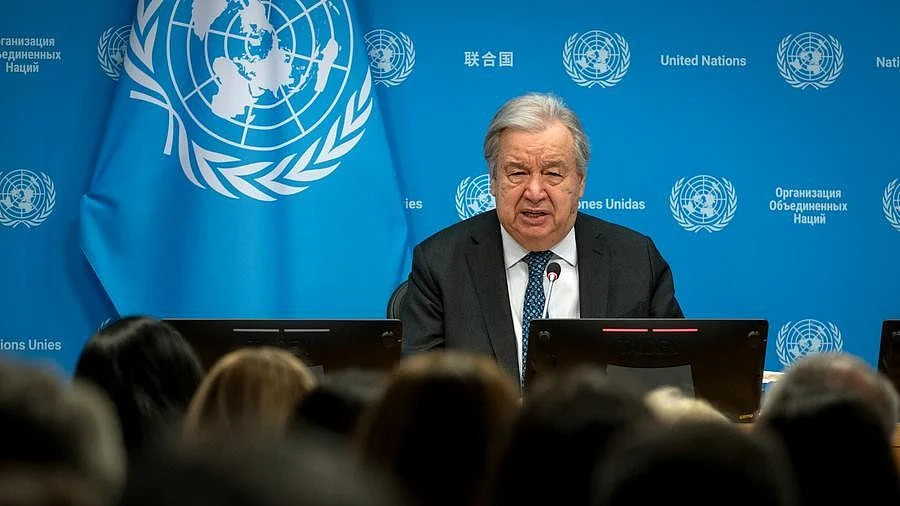


UN chief Antonio Guterres calls for Security Council reform in his final UNGA address
He says Africa’s lack of a permanent seat is “unjust and indefensible”
Guterres warns that global institutions still reflect an outdated power structure despite the emergence of new centres of influence
UN Secretary-General Antonio Guterres on Tuesday called for reform of the Security Council, saying the 15-member body must reflect today’s geopolitical realities and have the legitimacy and effectiveness to address current global challenges.
Delivering his final high-level UN General Assembly address as UN chief, Guterres said the Security Council was created in the aftermath of World War II but had failed to reflect the fundamental changes in the world since then.
He singled out Africa’s absence from the Council’s permanent membership.
“When the UN was founded, most of Africa was still under colonial rule. Today, Africa still has no permanent seat on the Council,” Guterres said. “A 21st-century Security Council without permanent African representation is unjust and indefensible. This must change.”
Guterres, whose second five-year term ends in December, received a standing ovation from world leaders, foreign ministers, diplomats and senior UN officials after his nearly 35-minute address.
He warned that global governance institutions continued to reflect the power structures of a largely bygone era even as the world faced an overlapping set of geopolitical, climate and technological challenges.
Guterres said the world was moving towards a multipolar system and that this shift was “irreversible”. He warned, however, that multipolarity could result either in greater fragmentation and rivalry or in a more interconnected system based on international law and shared rules.
“A world built on interdependence” could allow multiple centres of influence to coexist within a common framework, he said, arguing that such an approach could prevent the emergence of rival blocs.
Guterres also cautioned that military, economic and technological power had limits, saying none of them alone could guarantee peace, stability or security.
His call for Security Council reform comes as the body remains divided over several major conflicts, with its five permanent members — China, France, Russia, the UK and the US — holding veto powers.
India has for years advocated expansion of the Security Council in both permanent and non-permanent categories. New Delhi is also seeking a non-permanent seat for the 2028–29 term, with elections scheduled for June next year. The UN’s intergovernmental negotiations on Council reform are continuing.
Guterres also highlighted climate change and artificial intelligence as major forces reshaping global affairs, arguing that governance systems needed to adapt to changing economic, political and technological realities.
Join our official telegram channel (@nationalherald) and stay updated with the latest headlines