


US Homeland Security funds crisis: Democrats reject White House ICE offer
Party leaders call proposal “incomplete and insufficient”, push curbs on enforcement tactics ahead of funding deadline
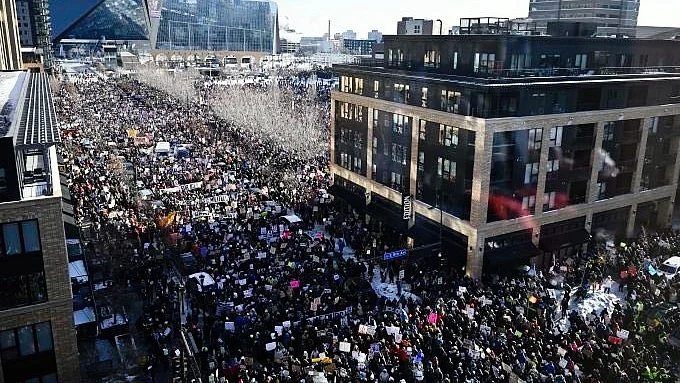


Senior Democratic leaders have rebuffed a White House proposal tied to immigration enforcement, intensifying a confrontation over Immigration and Customs Enforcement (ICE) practices that threatens to derail funding for the US Department of Homeland Security (DHS).
Senate leader Chuck Schumer and House leader Hakeem Jeffries said late on Monday that the administration’s response to their demands lacked substance, arguing it “included neither details nor legislative text” and failed to address “the concerns Americans have about ICE’s lawless conduct”. Their criticism comes as lawmakers scramble to avert a shutdown that could begin this weekend if negotiations collapse.
The White House proposal has not been released publicly. Democrats are pressing for stricter oversight of immigration enforcement — including judicial warrants, clearer identification for officers, tougher use-of-force rules and prohibitions on racial profiling — following fatal shootings of US citizens by federal agents in Minneapolis that fuelled nationwide protests and demands for reform.
Republicans and administration officials have indicated some willingness to negotiate, but dismissed parts of the Democratic agenda as unrealistic. The dispute is unfolding against a tight timetable after President Donald Trump agreed to separate DHS funding from a broader spending measure, extending support only briefly while talks continue.
Earlier, Senate majority leader John Thune had struck a cautiously upbeat tone, saying there was “forward progress” in the unusual exchanges between the two sides and expressing hope they might reach compromise. But rank-and-file lawmakers in both parties remain sceptical, underscoring the depth of division surrounding immigration policy.
Republicans have resisted many Democratic demands and are advancing their own priorities, including legislation requiring proof of citizenship for voter registration and tougher action against cities accused of insufficient cooperation with immigration enforcement. Meanwhile, anger among many Democrats over the scope of ICE operations has hardened into a funding standoff.
“Dramatic changes are needed at the Department of Homeland Security before a DHS funding bill moves forward,” Jeffries said. “Period. Full stop.”
Congress reopened negotiations after Trump accepted a Democratic request to carve DHS funding out of a larger appropriations package, creating a narrow negotiating window. That extension now expires within days, heightening pressure on both parties to bridge their differences.
Democrats’ push for restrictions intensified after the deaths of two individuals — Renee Good and Alex Pretti — shot by federal agents in Minneapolis, incidents that triggered protests across several cities and sharpened scrutiny of enforcement tactics.
While Trump agreed to separate the funding bill, he has not publicly responded to the specific reform proposals. White House press secretary Karoline Leavitt signalled selective openness to discussion, stating the administration was prepared to examine certain suggestions but that “others don’t seem like they are grounded in any common sense, and they are nonstarters for this administration”.
Schumer and Jeffries have outlined an extensive list of conditions, including removing masks from immigration officers, requiring visible identification, strengthening coordination with local authorities, imposing stricter force guidelines, enhancing detainee protections and banning the use of body-camera footage to track protesters.
They also want Congress to end indiscriminate arrests, “improve warrant procedures and standards”, and ensure agents cannot enter private property without judicial approval, alongside verification of citizenship before detention.
Republicans support limited steps such as mandating body-worn cameras — language already present in earlier legislation — but reject broader restrictions. House Speaker Mike Johnson argued anonymity is necessary for officer safety.
“Taking the masks off ICE officers and agents, the reason we can’t do that is that it would subject them to great harm, their families at great risk because people are doxing them and targeting them,” he said. “We’ve got to talk about things that are reasonable and achievable.”
Tennessee Senator Bill Hagerty accused Democrats of political grandstanding, saying they are “trying to motivate a radical left base”.
“The left has gone completely overboard, and they’re threatening the safety and security of our agents so they cannot do their job,” he added.
The DHS budget covers immigration enforcement as well as disaster response and aviation security, including FEMA and the Transportation Security Administration. A shutdown could disrupt travel and emergency preparedness nationwide, underscoring the high stakes of the dispute.
Some lawmakers have floated splitting out ICE and border-enforcement funding from the broader Bill, but Republican leaders favour another temporary extension while negotiations continue. Democratic leaders, however, have signalled reluctance to prolong talks without concessions — leaving the outcome uncertain.
For now, both sides remain dug in, with the burden of progress squarely contested. “The ball is in the Republicans’ court,” Jeffries said.
With agency inputs
Join our official telegram channel (@nationalherald) and stay updated with the latest headlines