


US renews threat of military action as Iran, Russia announce naval drills
Abbas Araghchi says the sides agree on “guiding principles” for a deal, but J.D. Vance says Tehran has yet to accept Washington’s red lines
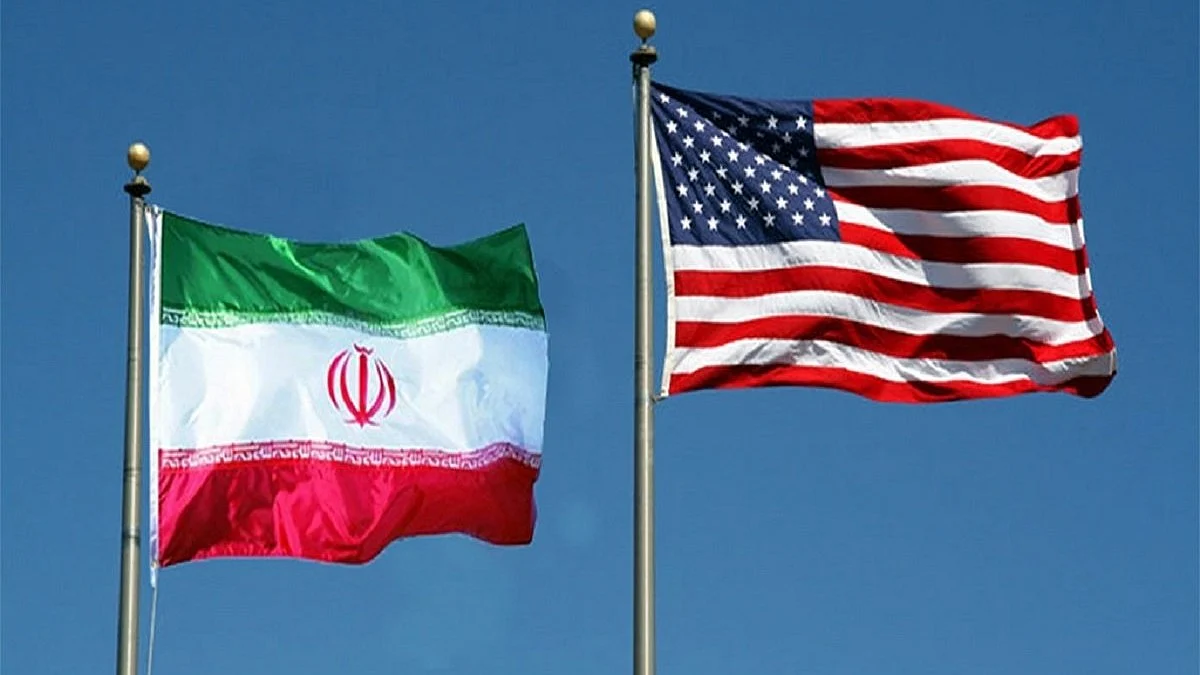


The fragile choreography of diplomacy between Washington and Tehran has given way once more to the drumbeat of deterrence.
After a second round of indirect nuclear talks in Geneva ended without a breakthrough, the United States sharpened its warnings, even as Iran signalled defiance through fresh military manoeuvres alongside Russia in the waters of the Sea of Oman, the Al Jazeera reported.
From the White House podium, press secretary Karoline Leavitt delivered a pointed message: Iran “would be very wise to make a deal” with President Donald Trump. Though she acknowledged that Tuesday’s discussions in Geneva yielded modest progress, she conceded that the two sides remain “very apart on some issues” — a diplomatic understatement for a gulf that still yawns wide, the Al Jazeera reported.
President Trump, meanwhile, amplified the pressure in characteristically forceful language on social media, warning that if Tehran refuses an agreement, the United States may consider using an Indian Ocean air base in the Chagos Islands “to eradicate a potential attack by a highly unstable and dangerous regime.” His rhetoric comes against the backdrop of a substantial US military buildup in the Gulf, including the deployment of two aircraft carrier strike groups and thousands of troops.
The shadow of past confrontation looms heavily over the present talks. A previous negotiating effort collapsed last year when Israel launched strikes on Iran, igniting a 12-day war that drew in Washington, which bombed three Iranian nuclear facilities at Fordow, Natanz and Isfahan. Since then, each diplomatic overture has been shadowed by the possibility of renewed conflict.
In January, Trump renewed threats of military action following a deadly crackdown on anti-government protesters in Iran. Tehran responded with its own warnings — threatening to close the Strait of Hormuz, a chokepoint through which much of the world’s oil flows, and to target US bases across the region. Alarmed Gulf states, including Oman, Qatar and Saudi Arabia, moved swiftly to calm tensions, wary of a wider conflagration.
The latest diplomatic track began in Oman on 6 February before shifting to Geneva this week. Iran’s foreign minister Abbas Araghchi said the sides had agreed on “guiding principles” for a potential deal. Yet US vice-president J.D. Vance countered that Tehran has yet to acknowledge Washington’s red lines.
The United States is pressing Iran to abandon uranium enrichment on its own soil and is seeking to expand negotiations to include Tehran’s ballistic missile programme. Iran insists its nuclear ambitions are peaceful and rejects any demand for zero enrichment, arguing that meaningful limits must be paired with sanctions relief. It has flatly refused to discuss its missile arsenal.
Even as negotiators speak, warships move.
Satellite imagery shows the USS Abraham Lincoln and its nearly 80 aircraft positioned roughly 700 kilometres from Iran’s coast, with a second carrier group en route. American officials say full force deployment will be completed by mid-March. Inside the White House Situation Room, top national security advisers have reviewed contingency plans amid the escalating posture.
Tehran, too, has staged its own display of resolve. The Islamic Revolutionary Guard Corps conducted war games in the Strait of Hormuz earlier this week, rehearsing responses to what it called “potential security and military threats.” On Wednesday, Iran announced joint naval drills with Russia in the Sea of Oman, describing them as a message of “peace and friendship” — but also as a deterrent against “unilateral action” in regional waters.
Iranian authorities issued notices of planned rocket launches across parts of the country’s south, underscoring the tense atmosphere. Moscow added its voice to the chorus of caution. Russian Foreign Minister Sergei Lavrov warned that any new US strike on Iran would carry grave consequences, noting that previous attacks on nuclear sites under International Atomic Energy Agency supervision had risked a dangerous nuclear incident. “No one wants an increase in tension,” he said. “This is playing with fire.”
Behind closed doors in Geneva, however, there were tentative gestures. According to Reuters, Iran agreed to submit a written proposal addressing US concerns — a slender thread of possibility amid mounting distrust.
Diplomatic traffic continues elsewhere. US Secretary of State Marco Rubio is scheduled to meet Israeli Prime Minister Benjamin Netanyahu later this month to discuss Iran, while Israeli media report that Jerusalem is preparing for the possibility that Washington could authorise strikes on Iran’s ballistic missile systems.
Analysts warn that the current moment is precarious. Barbara Slavin of the Stimson Center said she expects further attacks by the US or Israel may be possible in the near term, questioning whether any escalation could be contained. The talks, she observed, were brief and far from comprehensive. “Frankly, I do not see a basis for an agreement yet,” she said, noting the contrast between the limited diplomatic engagement and the massive military buildup underway.
For now, the region waits — suspended between negotiation and confrontation, between guiding principles and guided missiles. In capitals from Tehran to Washington, and across the oil-laced waters of the Gulf, officials and civilians alike find themselves watching the horizon, wary of what may come next.
Join our official telegram channel (@nationalherald) and stay updated with the latest headlines