


Venezuela oil squeeze ripples across Caribbean as Cuba’s economy falters
US move to choke off Venezuelan crude hits Havana’s fuel supplies; regional aviation shifts after Maduro’s ouster


The tightening US squeeze on Venezuelan oil exports is beginning to bite far beyond Caracas — with Cuba’s vital tourism industry emerging as an early casualty.
Cuba’s Varadero peninsula still looks like a tropical postcard — turquoise waters, white sand and swaying palms — but the beaches have begun to empty. The turning point came on 8 February, when Havana announced it was running out of jet fuel.
According to a Reuters survey of airlines, hotels and tourism workers, the shortage has paralysed virtually every link in the travel chain. What might once have seemed a logistical hiccup now threatens to become a systemic shock for one of the island’s few remaining sources of hard currency.
Three major Canadian carriers — Air Canada, WestJet and Air Transat — have suspended flights to Cuba, Reuters reported. Canada is Cuba’s single largest source of visitors. Aviation analytics firm Cirium estimates up to 1,709 flights could be cancelled through April, potentially wiping out hundreds of thousands of peak winter arrivals.
Russia, Cuba’s third-largest tourism market, is also pulling back. The aviation regulator Rosaviatsia said Russian carriers would evacuate tourists and suspend operations until fuel supplies stabilise.
Hotel operators are retrenching. Spain’s NH Hotel Group has shuttered all its Cuban properties, while Meliá Hotels International, the largest foreign hotel operator on the island, has closed three of its 30 hotels and begun consolidating guests in higher-occupancy resorts.
“There is just total uncertainty,” Alejandro Morejon, a veteran Varadero tour guide, told Reuters. “Everything is beginning to fall apart.”
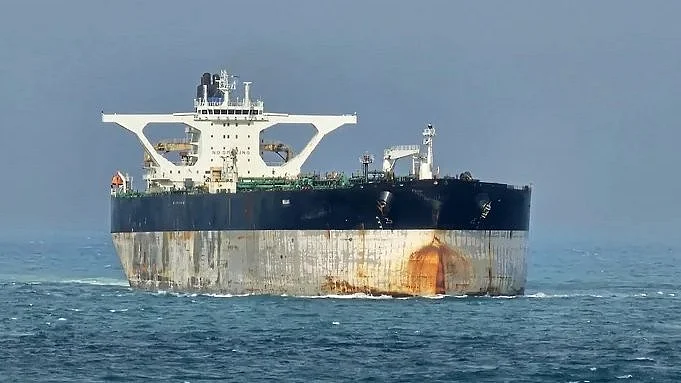
At the centre of Cuba’s fuel crunch lies the sharp disruption in Venezuelan crude shipments — long the island’s energy lifeline. The Trump administration has labelled Cuba “an unusual and extraordinary threat” to US national security and intensified efforts to block oil flows from Venezuela. Washington has also warned it could impose tariffs on countries supplying fuel to Havana.
For Cuba’s government, the timing could not be worse. Tourism generated $1.3 billion in foreign exchange in 2024 — roughly 10 per cent of export earnings, according to official data cited by Reuters. Alongside medical service exports and remittances, it forms one of the pillars of the country’s fragile balance of payments.
Economist Paolo Spadoni of Augusta University told Reuters that a total collapse in tourism would create “an unsustainable situation” for the Cuban economy.
Visitor numbers were already sliding. Cuba drew 1.8 million tourists in 2025, down from 2.2 million the previous year — the weakest performance in more than two decades. The fuel squeeze now threatens to turn a slow recovery from the pandemic into a structural contraction.
The regional aviation landscape is also shifting in Venezuela itself following the dramatic US operation that toppled Nicolás Maduro and led to his capture in early January.
On Tuesday, 17 February, a Boeing 787-9 Dreamliner operated by Air Europa landed at Simón Bolívar International Airport, marking the first European commercial flight to arrive since the United States warned of military action in late November. That warning — followed by the 3 January raid — had prompted a wave of flight suspensions.
Since Maduro’s removal, US President Donald Trump has forged a cooperative relationship with interim president Delcy Rodríguez. Late last month, he publicly called for international flights to resume.
European carriers are cautiously recalibrating. Iberia is reportedly reviewing security guarantees before announcing a return. Portugal’s TAP Air Portugal has said it will resume services. Regional operators Avianca and Copa Airlines have already restarted flights.
Washington has also lifted a 2019 ban on US airlines flying to Venezuela, in what appears to be an effort to normalise travel links under the new political arrangement.
The contrast is striking: as Venezuela’s aviation sector cautiously reopens under new political circumstances, Cuba — heavily dependent on subsidised Venezuelan crude — is confronting the immediate fallout of an oil supply shock. For Havana, the squeeze is no longer abstract geopolitics. It is visible on empty runways — and increasingly deserted beaches.
With media inputs
Join our official telegram channel (@nationalherald) and stay updated with the latest headlines