


Why the US ‘blockade of Iran’s blockade’ in Hormuz may prove futile
Trump's reckless moves has also drawn sharp criticism from the US allies and international maritime authorities
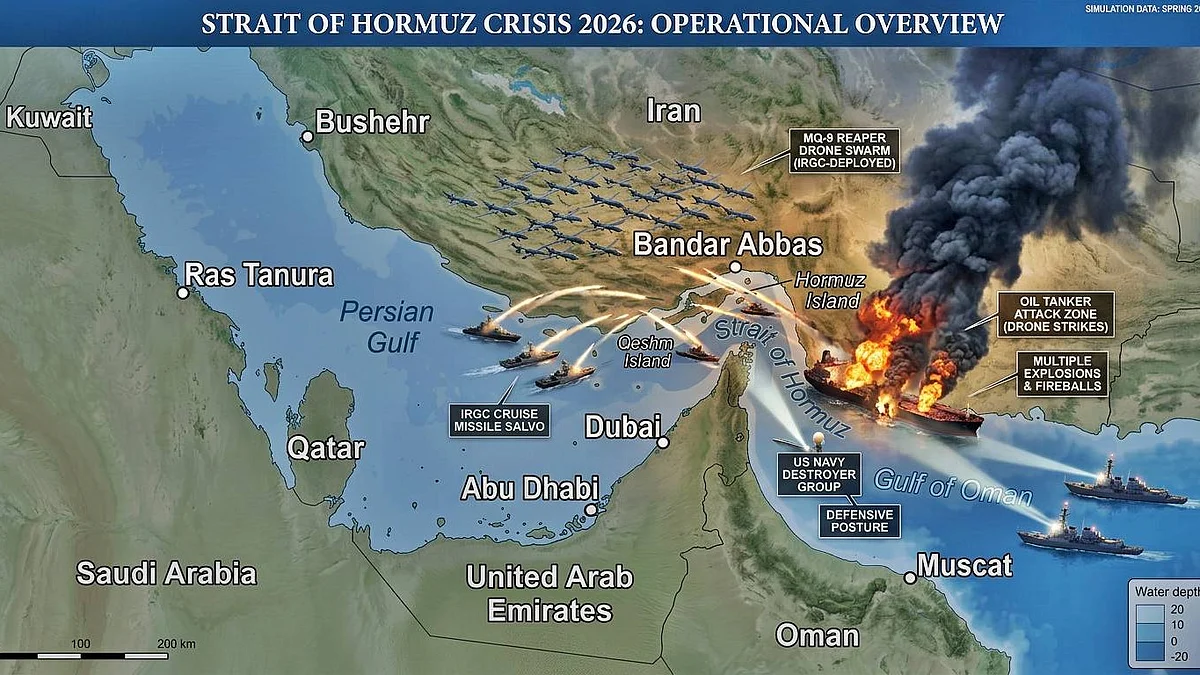


The idea of “blocking a blockade” is not new. From medieval naval warfare to modern geopolitics, it has been used as a coercive strategy to break an adversary’s control over critical trade routes.
Following the collapse of talks in Islamabad, US President Donald Trump, who has repeatedly vowed regime change in Iran, and failed, announced a dramatic escalation.
Declaring that Washington would counter Tehran’s blockade by imposing one of its own, Trump warned on Truth Social that any Iranian warships approaching US forces would be destroyed. He further asserted that no oil-carrying vessel would be allowed passage without US naval approval.
Yet, even as the rhetoric hardened, the action itself remained ambiguous. Soon after T rump’s, United States Central Command issued a more restrained clarification.
It stated that the US would target maritime traffic linked specifically to Iranian ports, while allowing freedom of navigation for vessels merely transiting Hormuz to non-Iranian destinations.
The contradiction between Trump’s sweeping threat and the US military’s statement, revealed a lack of coherence.
After the announcement, a tanker linked to China transporting methanol passed through the strait unhindered.
This further exposed futility of Trump’s plan of blocking the blockade.
Notably, the Chinese tanker that had passed the Hormuz was put under the sanction list by the USA. It was neither intercepted nor challenged by the US Navy, and safely reached the Gulf of Oman. The episode has reinforced perceptions that the blockade is more declaratory than enforceable.
For Iran, which exports nearly 90 per cent of its oil to China, such announcement hardly matters. But undoubtly, dilute the intended economic pressure.
The reckless move has also drawn sharp criticism from the US allies and international maritime authorities. The UK has refused to join the blockade.
Although the International Maritime Organization has reiterated that no country has the legal authority to obstruct transit through international straits—stressing that international law does not permit blockades of key global waterways, even during conflict—Iran has described the US action as a violation of its sovereignty.
In a striking rhetorical reversal, US Vice President JD Vance, who was leading the US delegation in the Islamabad talks described Iran’s earlier blockade as “economic terrorism,” underscoring the escalating war of narratives.
As per commentators, at the heart of the issue lies a deeper contradiction. The United States is attempting to balance two competing objectives: maintaining stability in global oil supplies while simultaneously choking Iran’s revenue streams.
If Washington enforces the blockade strictly, it risks triggering a spike in global oil prices and disrupting energy flows particularly affecting key partners Like Japan and South Korea. If it applies the rules selectively, Iran continues to generate revenue through transit tolls and oil exports.
US seems to be entangled again between bad and worse.
Reports suggest that regional players such as Saudi Arabia have urged restraint, fearing Iranian retaliation in other critical chokepoints like the Bab el-Mandeb.
Any escalation there could jeopardize Red Sea shipping and further destabilize global energy markets.
From US point of view, Such contradictions weaken deterrence. They signal not strength, but strategic uncertainty.
The US attempt to “block the blockade” risks becoming a case study in overreach without execution. Without clear rules of engagement, consistent enforcement, and international legal backing, the strategy is unlikely to achieve its stated objectives.
Instead of isolating Iran, it may expose the limits of American power.
If current trends hold, the blockade may not just fail it may underscore the widening gap between American intent and its ability to shape outcomes on the ground
Join our official telegram channel (@nationalherald) and stay updated with the latest headlines