


Xi urges immediate end to West Asia conflict as he meets Putin amid escalating regional crisis
Chinese President warns against wider Gulf war; Beijing and Moscow push for negotiations as energy and trade disruptions deepen
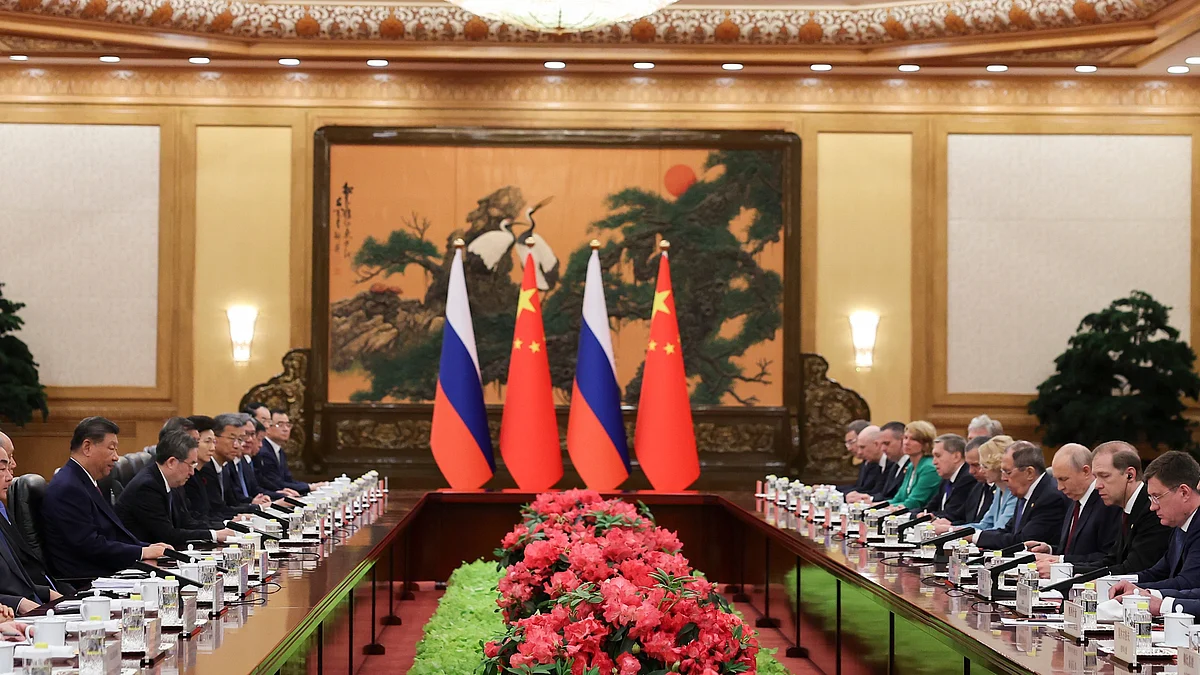


Chinese President Xi Jinping on Wednesday called for an immediate end to hostilities in West Asia, warning that the situation had reached a “critical juncture”, as he held high-level talks with Russian President Vladimir Putin in Beijing against the backdrop of mounting regional tensions and a worsening global energy crisis.
Welcoming Putin at the Great Hall of the People, Xi stressed the need to prevent a broader regional conflict and urged all parties to return to negotiations.
“An early end to the conflict” would help stabilise global energy markets, industrial supply chains and international trade, Xi said, amid continuing disruptions linked to tensions in the Gulf region and the closure of key maritime routes.
The meeting came days after US President Donald Trump visited China for talks focused on the Iran-Israel conflict, the Strait of Hormuz crisis and broader geopolitical tensions.
China, Russia seek greater coordination
The Xi-Putin talks are being closely watched internationally, with both China and Russia maintaining close strategic, economic and military ties with Iran and potentially wielding influence over developments in the ongoing crisis.
Describing the international environment as increasingly unstable, Xi appeared to criticise unilateral approaches to global affairs.
“Unilateralism and hegemonism are resurging,” he said, while adding that peace, development and international cooperation remained the prevailing aspirations of people worldwide.
Calling for stronger coordination between Beijing and Moscow, Xi said the two countries should work together to make global governance structures “more just and reasonable”.
“As permanent members of the UN Security Council and important major countries in the world, China and Russia should take a strategic and long-term perspective,” he said, advocating deeper cooperation across political, economic and security spheres.
Putin highlights strategic partnership
Putin, making his 25th visit to China, described Xi as a “dear friend” and underscored the close relationship between the two countries.
Quoting a Chinese saying that “one day apart feels like three autumns”, the Russian leader said the two sides maintained constant coordination through direct engagement and regular consultations.
The Kremlin has indicated that nearly 40 agreements could be signed during the visit, covering areas ranging from trade and investment to technology and strategic cooperation.
The two leaders also agreed to further extend the China-Russia Treaty of Good-Neighbourliness and Friendly Cooperation, which marks its 25th anniversary this year.
Xi said the agreement had provided the institutional foundation for long-term friendship and comprehensive strategic coordination, helping bilateral ties achieve what he described as “leapfrog development”.
Trade, BRICS and global stability
Ahead of the visit, Putin said China-Russia relations had reached an “unprecedented level”, noting that bilateral trade had surpassed USD 200 billion, with an increasing share of transactions conducted in roubles and yuan rather than Western currencies.
He also highlighted coordination through multilateral platforms including the United Nations, Shanghai Cooperation Organisation and BRICS.
Putin’s visit comes as concerns grow over the economic impact of instability in West Asia. China remains one of the largest importers of Iranian oil despite Western sanctions, while both Beijing and Moscow continue to maintain close strategic relations with Tehran.
Analysts view the summit as a significant demonstration of China-Russia alignment on major geopolitical issues, including the West Asia conflict, global governance reforms and efforts to promote a more multipolar international order.
Join our official telegram channel (@nationalherald) and stay updated with the latest headlines