


Zohran Mamdani sworn in as New York City’s first Muslim mayor at historic subway station
Immigrant-born progressive takes office after defeating Andrew Cuomo, pledges focus on affordability and inclusive governance
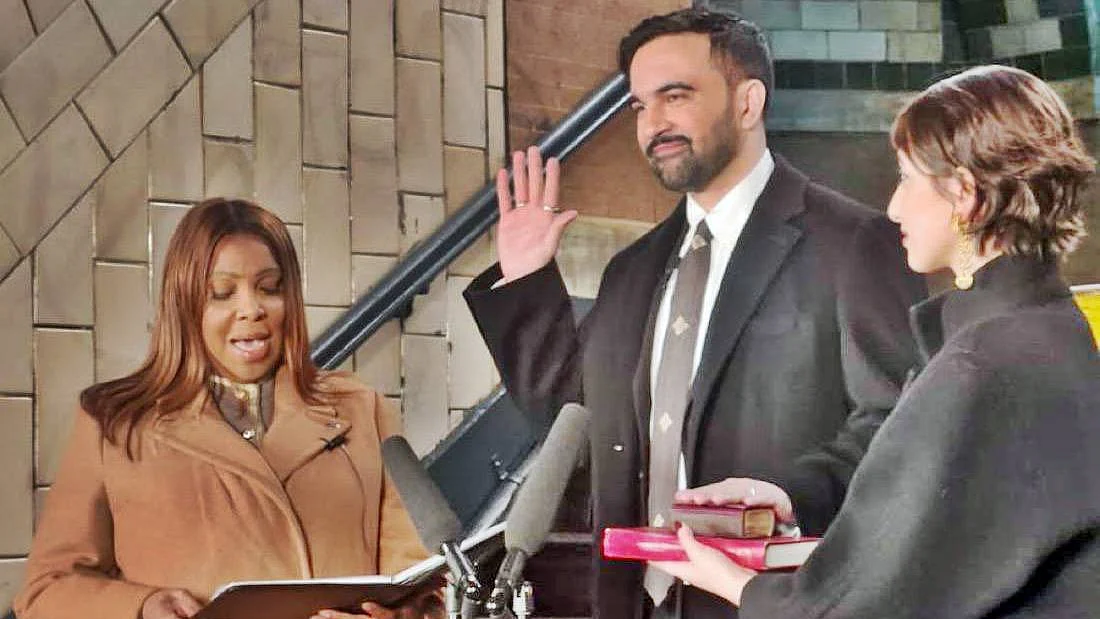


Zohran Kwame Mamdani was sworn in just after midnight on New Year’s Day as New York City’s first Muslim mayor in a low-key ceremony held at the historic City Hall subway station in Manhattan, marking a dramatic political ascent for the progressive leader.
The oath of office was administered by New York State Attorney General Letitia James, a close ally, in the subterranean station beneath City Hall. “Congratulations, Mr. Mayor,” James said, drawing cheers from those present.
“Thank you so much to everyone for being here, Happy New Year to New Yorkers,” Mamdani said after taking oath. “This is truly the honour and privilege of a lifetime.”
A larger public swearing-in ceremony is scheduled later on New Year’s Day on the steps of City Hall, where Vermont Senator Bernie Sanders and New York Representative Alexandria Ocasio-Cortez, both prominent progressive figures and Mamdani allies, are expected to attend.
Mamdani’s rise over the past year has been swift and unexpected. Until recently a backbench New York State lawmaker, he surged to prominence during the 2025 mayoral race, ultimately defeating former governor Andrew Cuomo by nearly 10 percentage points in the general election.
Born in Uganda to parents of Indian origin, Mamdani’s victory came amid a charged national debate on immigration, with former president Donald Trump and his allies pushing for sharp curbs, particularly affecting Muslims and migrants from Africa. During the campaign, Trump labelled Mamdani a “communist” and warned his leadership would be “a disaster waiting to happen,” claims Mamdani repeatedly dismissed.
Criticism also came from within the Democratic Party over Mamdani’s membership of the Democratic Socialists of America and his outspoken criticism of Israel’s war in Gaza. Despite this, he built a broad coalition, attracting significant youth support and securing endorsements from several influential Jewish leaders in New York.
In his victory speech in November, Mamdani said, “In this moment of political darkness, New York will be the light.”
His campaign centred on affordability and everyday economic concerns, with promises including free bus services, universal childcare, government-run grocery stores, and a rent freeze on regulated apartments. While ambitious, many of these proposals depend on tax increases on the wealthy and require backing from New York State legislators in Albany.
Governor Kathy Hochul has already expressed support for universal childcare, signalling potential cooperation. Mamdani has also sought to reassure moderates by retaining experienced officials, including NYPD Commissioner Jessica Tisch, in his administration.
However, his transition has not been without controversy. Last month, a senior appointee withdrew after old social media posts surfaced that were widely criticised as insensitive and antisemitic.
Despite earlier attacks, Trump later struck a conciliatory note after Mamdani’s election, saying he expected to “help him, not hurt him,” and adding, “I want New York City to be great.”
As Mamdani begins his term, he faces the challenge of translating progressive promises into policy while navigating a politically divided state and nation.
Join our official telegram channel (@nationalherald) and stay updated with the latest headlines