


NCERT academicians approach SC: 'Mention of corruption in judiciary was collective effort'
Court to hear pleas in two weeks; Centre forms panel to review content on judiciary
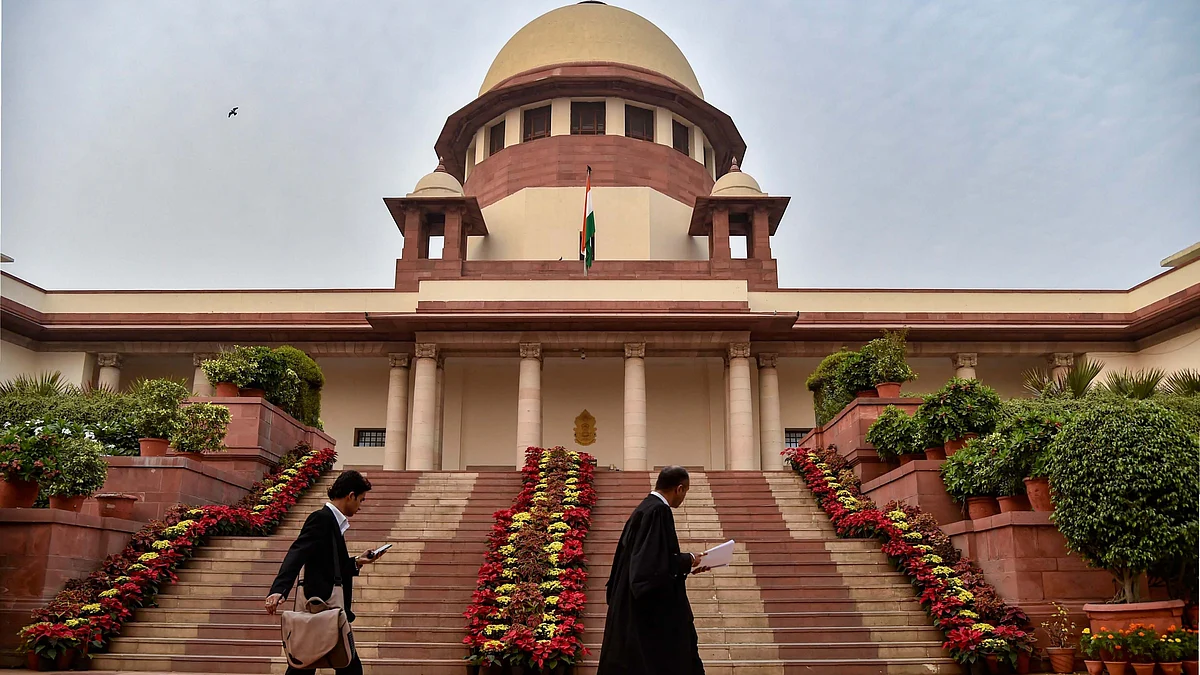


The court recorded submissions by Additional Solicitor General K.M. Nataraj that the Centre has constituted a high-level committee to review the revised chapter.
The panel includes former Supreme Court judge Justice Indu Malhotra, former attorney general K.K. Venugopal and academician Prakash Singh. It will work in coordination with the National Judicial Academy headed by Justice Aniruddha Bose.
The court also noted that the National Council of Educational Research and Training (NCERT) has reconstituted its National Syllabus and Teaching Learning Material Committee (NSTC), with M.C. Pant as chairman.
Background of controversy
On 11 March, the apex court had taken strong exception to the inclusion of content on alleged corruption in the judiciary in a Class 8 social science textbook.
It had directed the Centre and all states to disassociate from the three academicians and barred them from being involved in curriculum preparation funded by public money.
The court had also ordered a “complete blanket ban” on further publication, reprinting or digital dissemination of the textbook, describing the content as damaging to the institution.
Scope for reconsideration
However, the court had left room for reconsideration, allowing the academicians to approach it with explanations or applications for modification of the order.
The latest plea is part of that process, with the court now set to examine their submissions in detail.
The court also noted that NCERT Director Professor Dinesh Prasad Saklani had filed an affidavit tendering an unconditional apology for the inclusion of the controversial content.
The matter has been listed for further hearing after two weeks.
Three academicians barred earlier over a controversy surrounding an NCERT textbook chapter on alleged corruption in the judiciary moved the Supreme Court on 6 April, seeking to place their stand on record and asserting that the content was prepared through a collective process.
A bench led by Chief Justice Surya Kant and Justice Joymalya Bagchi took note of submissions made on behalf of the experts and agreed to hear their applications after two weeks.
Academicians defend role
The three experts — Professor Michel Danion, Suparna Diwakar and Alok Prasanna Kumar — approached the court stating that no single individual had exclusive authority over drafting the controversial chapter.
Senior advocate Gopal Sankaranarayanan, appearing for Kumar, said the earlier observations of the court had caused “great prejudice” to the academicians, prompting them to seek an opportunity to explain their position.
“These are not fly-by-night persons… they are academicians with a lot of credibility,” he submitted.
Senior advocate J Sai Deepak, appearing for Diwakar, told the bench that the “sum and substance” of their application was that the chapter was a result of a collective drafting process.
Court questions, seeks clarity
During the hearing, the Chief Justice asked whether the academicians were defending their actions.
Counsel responded that they were attempting to provide context, including changes in pedagogy under the National Education Policy (NEP), and to demonstrate that textbooks across classes also address issues concerning other institutions such as the legislature and executive.
Join our official telegram channel (@nationalherald) and stay updated with the latest headlines