


After Emergency, NCERT adds SIR to Class 9 textbooks, revisits judiciary
The revised Class 9 text introduces SIR and the Emergency while praising the ECI and judiciary
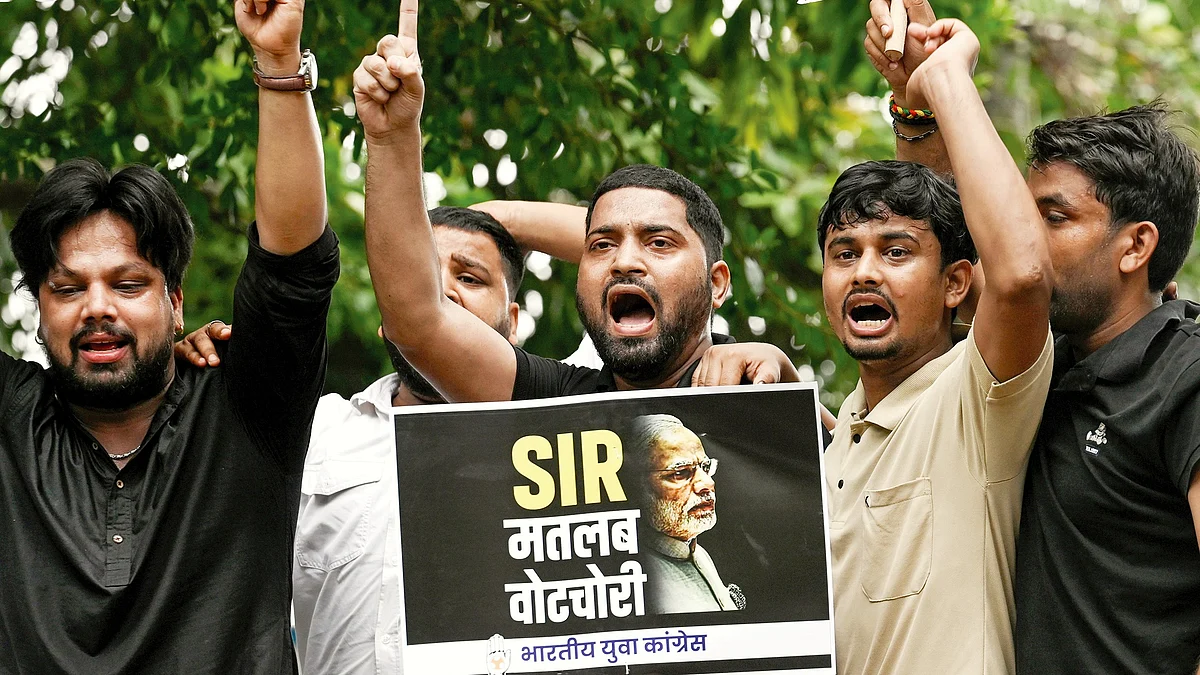


The National Council of Educational Research and Training (NCERT) has introduced the Election Commission's controversial Special Intensive Revision (SIR) of electoral rolls into its new Class 9 Social Science textbook, presenting the exercise as a mechanism to ensure clean voter lists without mentioning the political and legal controversy that has surrounded it for the past year.
The revised textbook, Understanding Society: India and Beyond, says the SIR is conducted to ensure "that no eligible citizen is left out and no ineligible person is included" in the electoral rolls. It also praises the Election Commission of India (ECI) for conducting elections 'impartially' despite challenges such as 'fake news, misinformation and intimidation'.
The inclusion comes even as the SIR remains one of the most contentious electoral exercises in recent years. Launched as a pilot in Bihar on 24 June last year ahead of the Assembly elections, it has since been expanded to 19 states and Union territories and resulted in the deletion of nearly 6 crore names from electoral rolls, several among them valid voters who are even now fighting their cases in court.
The exercise has been repeatedly challenged by Opposition parties and civil society groups, which allege that stringent documentation requirements have disenfranchised genuine voters and disproportionately affected marginalised communities. The ECI has rejected those allegations, maintaining that the exercise is aimed solely at improving the accuracy of electoral rolls.
The textbook, however, makes no reference to those criticisms. Instead, it says the SIR updates, verifies and corrects electoral rolls, facilitates the enrolment of young voters turning 18, and removes names in cases of death, change of residence, duplicate enrolment or where a voter is permanently untraceable.
'EC gives time to raise claims or objections against the revised electoral roll and settles these claims and objections before publishing the final electoral roll,' it says, in a significant departure from reality.
The previous Class 9 textbook merely noted that electoral rolls undergo a comprehensive revision every five years to remain up to date.
Emergency chapter
The textbook also introduces, for the first time at the secondary-school level, a dedicated section on the 1975-77 Emergency, describing it as 'one of the major challenges to democracy in India'.
The chapter attributes the Emergency to growing public dissatisfaction with the Indira Gandhi government over unemployment, inflation and allegations of misgovernance. It states that the proclamation led to the suspension of Fundamental Rights, censorship of the press, arrests of political leaders and activists, and severe strain on democratic institutions.
The inclusion has itself become politically contentious. Union education minister Dharmendra Pradhan — under prolonged fire of late thanks to his ministry's botched handling of exams ranging from CBSE to NEET-UG — welcomed the decision, saying future generations should learn about the "dark deeds" committed during the Emergency. The Congress, however, accused the BJP-led government of selectively presenting history to reinforce its own political narrative.
Although the Emergency has been part of the Class 12 Political Science curriculum since 2007, this is the first time it has been included in a Class 9 Social Science textbook.
Judiciary
The revised textbook also describes the judiciary as 'an impartial and independent institution that safeguards citizens' rights and upholds the spirit of the Constitution'.
It says the judiciary reviews executive actions and constitutional amendments, can strike down unconstitutional laws, entertains public interest litigations and plays a crucial role in protecting democratic values and constitutional rights.
The chapter was prepared before a separate controversy erupted earlier this year over an NCERT Class 8 Social Science textbook that referred to 'corruption in the judiciary'. Following vehement objections from the Supreme Court, which described the content as 'offending', NCERT withdrew the textbook from circulation and issued an apology.
The latest revisions are likely to add to the broader debate over the ideological direction of school curricula under the National Education Policy. Opposition parties, academics and educationists have repeatedly accused the NCERT of increasingly reflecting the ideological priorities of the BJP-led government through the framing of historical and contemporary issues, while the Centre has maintained that the revisions are intended to update textbooks in line with the National Curriculum Framework and present content that is accurate, balanced and rooted in Indian realities.
With PTI inputs
Join our official telegram channel (@nationalherald) and stay updated with the latest headlines