


NCERT restores original ‘Dancing Girl’ image after backlash alleging 'prudery'
After sanitising a historic artefact in Class 9 textbook, NCERT reverses decision following justified backlash over distortion of cultural heritage
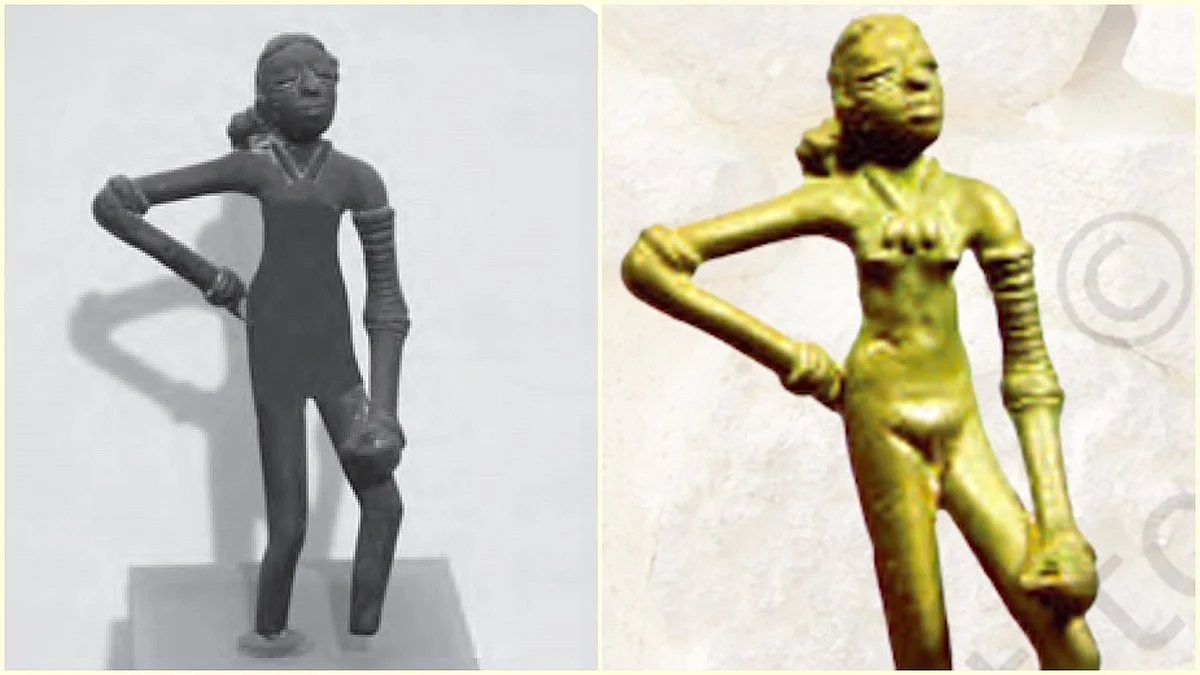


The National Council of Educational Research and Training (NCERT) decided to restore the original image of the iconic ‘Dancing Girl’ figurine from Mohenjo-daro in its Class 9 Arts textbook, reversing a controversial decision to publish a modified, clothed version. The move comes after widespread criticism from scholars and educators who labelled the altered image as a distortion of an important piece of India’s cultural heritage.
NCERT Director Dinesh Saklani confirmed to news agencies that the ‘retouched’ Madhurima will be replaced with the authentic image that reflects the original bronze figurine, dated around 2600 BCE and notable as one of the finest relics of the Indus Valley Civilisation.
The controversy erupted because the modified textbook image had shaded the figurine’s bare torso, obscuring vital anatomical details present in the original artefact. This alteration stood in stark contrast to the truthful depiction found in the NCERT Class 6 Social Science textbook, which features a version much closer to the original sculpture.
Michel Danino, who headed the textbook development committee for NCERT's new Class 6 Social Science books, said he had been told that the Dancing Girl figurine was considered "not age-appropriate".
"Our team disagreed; we even checked with teachers of Class 6 and they told us there was never a problem with the Dancing Girl," he said.
Danino said, "The notion that nudity is inappropriate is, in my opinion, an obsolete Victorian view. Yet we speak of decolonising Indian education."
Reacting to the image used in the Class 9 textbook, Danino said his first response was of "disbelief". "If the Dancing Girl cannot figure as she is, and with proper dimensions, in a chapter on Indian art, then we have a serious problem," he said.
Danino criticised the edited image as a “misrepresentation” and likened it to the historical addition of a fig leaf to Michelangelo’s statue of David—an imposition of prudish censorship that compromised artistic integrity. His comments underscore the unnecessary prudery that has plagued Indian educational content.
Danino’s shock at the sanitisation reflected broader concerns among educators that such needless censoring devalues historical artefacts and undermines educational rigor.
The textbook states that the bronze figurine from Mohenjo-daro was made using the "lost-wax technique prevalent in West Bengal, Jharkhand, and Chhattisgarh".
"This sculpture depicts a posture with one knee bent, one hand on the waist and a slightly lifted chin," it added.
The chapter includes a discussion prompt asking students what they think is portrayed by the figure's pose. Another activity asks students to mimic the posture and sketch the pose while imagining various positions of the feet.
The Dancing Girl, discovered at Mohenjo-daro, is among the most well-known artefacts associated with the Indus Valley Civilisation.
Despite the well-known status and archaeological significance, NCERT initially bowed to a misguided notion of ‘appropriateness’ rather than upholding the integrity of India’s cultural legacy.
The reversal by NCERT, while welcome, is a sign of a deeper struggle within India’s educational framework: the battle between honest history and overbearing censorship. Unless lessons are grounded in authenticity rather than prudery, educational institutions risk diluting the very knowledge they seek to impart.
(With agency inputs)
Join our official telegram channel (@nationalherald) and stay updated with the latest headlines