


Air India plans more aircraft orders despite Rs 22,000-cr loss; CEO promises another turnaround
The airline's new chief executive wants to rebalance international operations, cut costs and recover overseas market share
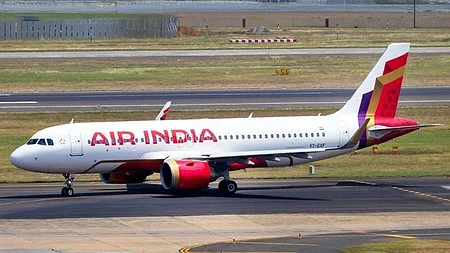


Air India is planning to order more wide-body aircraft, restructure its international network and reduce operating costs as it attempts to return to profitability after reporting losses of more than Rs 22,000 crore in 2025-26.
The broad revival blueprint was outlined by its new CEO and managing director, Tewolde Gebremariam, at the Aviation India and South Asia 2026 conference in New Delhi on Tuesday. In his first public appearance since taking charge of the Tata Group-owned airline, Gebremariam acknowledged that the carrier was “punching below its weight” but said he expected that to change.
The airline's latest strategy appears to rest on a familiar combination of fleet expansion, operational restructuring and promises of efficiency, even as its financial performance continues to raise questions about the cost and pace of its transformation.
“I am more impatient than the shareholders to turn Air India profitable,” Gebremariam said, acknowledging that profitability remained an immediate concern despite the opportunities offered by India's expanding aviation market.
More aircraft, more expansion despite mounting losses
Air India currently operates 171 aircraft, including 61 wide-body planes comprising Airbus A350s and Boeing 787s and 777s.
The airline has already placed orders for around 600 aircraft, of which approximately 540 are yet to be delivered. Nearly 70 of the outstanding orders are for wide-body planes.
Yet the new management is considering placing additional orders to expand international connectivity and capture a larger share of overseas traffic.
Gebremariam said the greater growth opportunity lay in full-service, wide-body operations, although the low-cost carrier Air India Express would also expand.
The airline is also attempting to position Air India and Air India Express to serve different customer segments while sharing corporate functions and infrastructure to improve efficiency.
The proposition raises an obvious question: how much additional capital expenditure can an airline already struggling with heavy losses absorb before its expansion begins to undermine its stated priority of financial recovery?
Pakistan airspace closure complicates international operations
Gebremariam attributed some of the airline's difficulties to external factors, including elevated fuel prices, geopolitical tensions in the Middle East and Pakistan's continued closure of its airspace to Indian carriers.
The airspace restrictions have particularly affected flights connecting Delhi with Europe and the US, increasing operational challenges for long-haul services.
“Most of our network, unfortunately, in Europe and America, has been affected by the airspace closure. So, Delhi is more affected than Mumbai,” he said.
As part of its network restructuring, Air India plans to shift some operations to Mumbai and develop Bengaluru as its third operational hub, alongside Delhi and Mumbai.
The CEO described the external pressures as short-term headwinds that the airline would have to navigate to secure its long-term growth.
Cost-cutting and another transformation promise
The airline has also established a multidisciplinary team to identify opportunities to reduce expenditure. In October, Gebremariam urged employees to adopt a culture of frugality and accountability.
Cost reduction, he said, would remain a priority, alongside better coordination between Air India and Air India Express.
The latest blueprint comes after years of restructuring under Tata ownership, including fleet orders, brand consolidation and efforts to improve operational performance.
Gebremariam said the objective was to build on the foundation of the transformation already undertaken and take the airline to its next stage. He also argued that India could become a global aviation hub if the right decisions were taken at the right time.
For now, however, the immediate challenge is less about how many aircraft Air India can order or how many hubs it can establish, and more about whether it can convert its enormous expansion plans into sustainable profits.
Join our official telegram channel (@nationalherald) and stay updated with the latest headlines