


All-party meet: Govt rejects Oppn demands for debate on new MGNREGA law, SIR in Budget Session
Rijiju says issues already discussed in Parliament; Opposition flags economy, electoral rolls, foreign policy
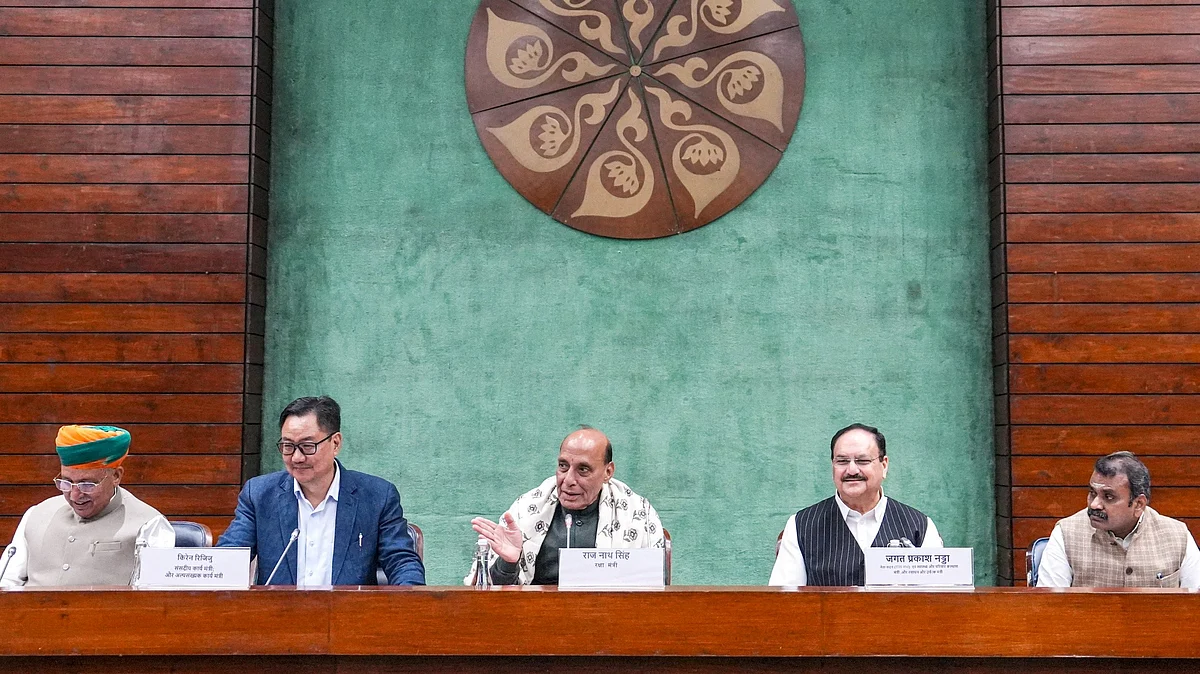


The government on Tuesday turned down the Opposition’s demand for separate discussions on the VB-GRAM (Gramin) Act, which replaced the MGNREGA scheme, and the Special Intensive Revision (SIR) of electoral rolls during the Budget Session of Parliament beginning Wednesday, saying both matters had already been debated at length.
Parliamentary Affairs Minister Kiren Rijiju made the remarks after chairing an all-party meeting convened on the eve of the session.
On the Opposition’s insistence on a discussion on the VB-GRAM (Gramin) Act, Rijiju said the legislation had been passed by Parliament during the Winter Session and was now the law of the land.
“Once a law is before the nation, we have to follow it. We cannot reverse the gear and go back,” he said.
Opposition members, including Congress leader Jairam Ramesh and CPI(M) MP John Brittas, also objected to the non-circulation of the government’s legislative business for the Budget Session. Rijiju responded that the list of business would be shared in due course, as is customary after the President’s address.
“This is the first session of the year. Normally, the list of government business is shared after the President’s address. However, I am prepared to share the list and have told officers to do so,” he said, adding that ensuring smooth functioning of Parliament remained the government’s priority.
According to sources, Opposition parties sought discussions on a range of issues, including the SIR of electoral rolls, the VB-GRAM (Gramin) law on employment guarantee, tariffs imposed by the United States on Indian goods, foreign policy challenges, air pollution, the state of the economy, and proposals to restrict social media use for young adolescents.
Responding to demands for a debate on the SIR, particularly in the context of West Bengal, Rijiju said both Houses had already held extensive discussions on electoral reforms during the previous session.
“Both Houses of Parliament had extensive discussions on electoral reforms in the last session, where this issue was also raised by the Opposition. It is uncalled for to demand another debate,” he said.
The minister said issues raised by Opposition members could be discussed during the debate on the President’s address and the general Budget.
“This is a forum where members can raise all their concerns. There is no restriction on speaking, but there should be no disruption,” Rijiju said.
Appealing for cooperation, he urged MPs to uphold parliamentary decorum.
“In our parliamentary democracy, we are elected to speak for the people. While exercising our right to speak, we must also have the duty to listen to members of other political parties,” he said.
Rijiju maintained that “marathon discussions” had already taken place on the SIR during the last session.
“All members were given ample time and parties exhausted their energy on the issue,” he said, reiterating the government’s view that reopening debates on matters already discussed would not be productive.
Join our official telegram channel (@nationalherald) and stay updated with the latest headlines