


Bengal: Austrian-made Glock 47X used to kill Suvendu Adhikari aide
Use of MHA-restricted pistol in bid to kill Suvendu Adhikari’s aide raises security concerns in Bengal
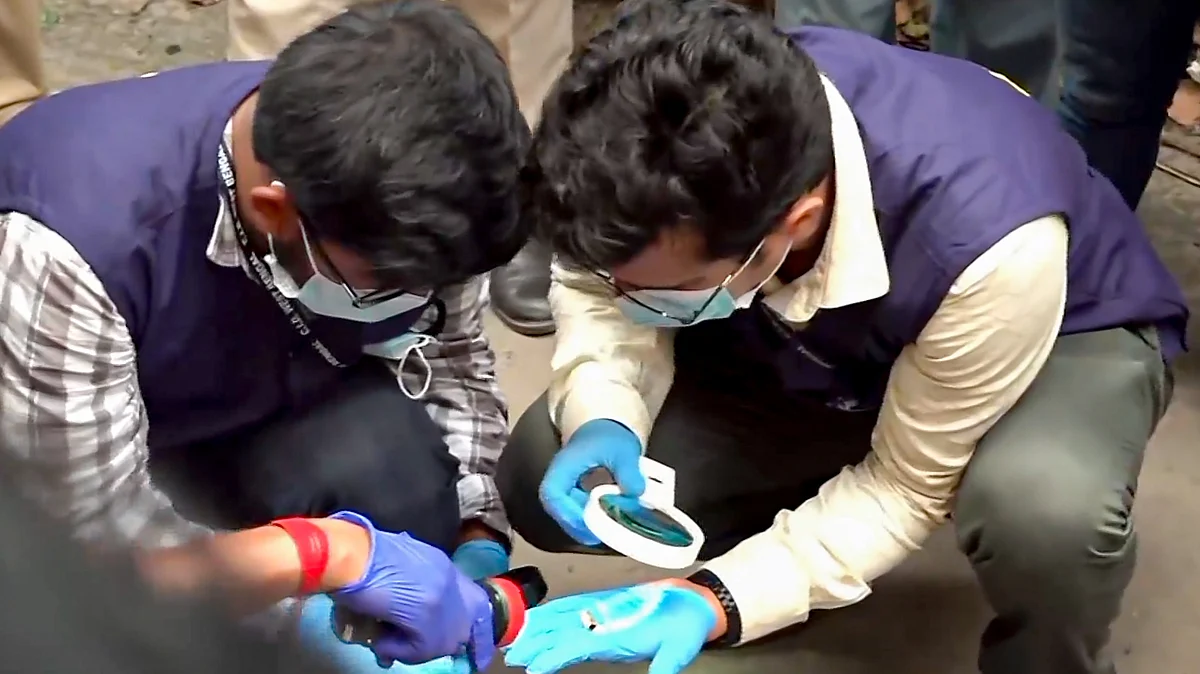


The murder of Chandranath Rath, trusted personal assistant and close confidant of West Bengal BJP leader Suvendu Adhikari, was a seemingly meticulously planned execution involving surveillance, fake number plates, stolen vehicles, professional shooters and sophisticated prohibited firearms. Rath was shot dead in Madhyamgram on Wednesday, 6 May at around 10.20 pm while returning home to Barasat, 55 km from Kolkata.
Even as police, CID officials and forensic experts continued their investigation on Thursday, the alleged use of a car with a tampered number plate to slow down and stop Rath’s vehicle, motorcycle-borne sharp shooters firing bullets through the front window, the alleged use of an expensive firearm and the assassins waiting to ascertain that Rath had died, have added to the intrigue.
While the BJP has been quick to blame Trinamool Congress and its MP Abhishek Banerjee for engineering the murder as ‘revenge’ for the TMC's defeat in the recent Assembly elections, several alleged motives have clouded the investigation.
What has added an element of mystery is the revelation that Rath is the fourth ‘close aide’ of Adhikari to have died violently and mysteriously since 2013. Motives ranging from political revenge to destruction of sensitive information, involvement of organised crime and cross-border arms trafficking are all being examined, police sources claimed.
Rath was travelling in his SUV along with his driver Buddhadev Bera and another associate named Mintu when the vehicle was intercepted on a narrow lane by another car that blocked their path.
The assailants appeared to know exactly where Rath was seated inside the vehicle, allegedly moving directly to the left side window of the SUV, pressing firearms against the glass and opening fire repeatedly at point-blank range.
Police believe Rath was the principal and possibly the sole target of the attack. The driver sustained bullet injuries because he was seated next to Rath, while Mintu, who occupied the rear seat, escaped unharmed.
After the shooting, Mintu reportedly drove the blood-splattered vehicle to a nearby hospital. Rath was declared dead shortly afterwards. Bera, who sustained multiple gunshot wounds, was shifted to a private hospital near Kolkata’s EM Bypass, where surgeons removed bullets from his body during emergency surgery. Hospital authorities stated that though his condition stabilised after the operation, he remains under intensive medical supervision.
CCTV footage collected from several locations in Madhyamgram revealed that the vehicle suspected to have been used in the operation had entered the area nearly six hours before the shooting. According to investigators, the vehicle was first seen at around 3.57 pm near the Doltala-Sahara bridge and thereafter repeatedly circled the locality. Police suspect the attackers conducted extensive reconnaissance of Rath’s movements, residence and route before carrying out the assassination.
Investigators have also found that two motorcycles and a car had been strategically positioned near the crime scene before Rath’s vehicle arrived. The police believe the four-wheeled vehicle was used specifically to block Rath’s SUV on the narrow lane so that there would be no possibility of escape. The assailants fled on motorcycles through narrow interior lanes, heading towards Rajarhat and Jessore Road. The escape route too had been planned in advance, investigators said.
The stolen vehicle used in the murder was fitted with a fake registration plate linked to a car registered in Siliguri. The actual owner of the vehicle, William Joseph, was summoned for questioning at Matigara police station. Joseph reportedly informed investigators that his car had never left Siliguri and had merely been advertised online for sale.
Police later confirmed that the number plate used by the killers was counterfeit. Even more suspiciously, the chassis number on the suspect vehicle had been deliberately scraped off, suggesting a deliberate effort to prevent identification.
The assailants are said to have used an Austrian-made 9mm Glock pistol, a semi-automatic firearm known internationally for its precision, reliability and rapid-fire capability. These weapons are widely used by military and elite law-enforcement units around the world.
Under India’s Arms Act, 1959, 9mm Glock pistols are categorised as ‘Prohibited Bore weapons’ and cannot be owned or possessed by civilians without authorisation from the Ministry of Home Affairs. The firearm has triggered concerns about possible cross-border arms trafficking networks operating along the Bengal-Bangladesh corridor.
Multiple BJP leaders voiced their suspicion about assassins being mercenary sharpshooters from Bangladesh. Intelligence agencies investigating extremist groups such as Jamaat-ul-Mujahideen Bangladesh (JMB) have warned in the past about illegal routes through which sophisticated firearms, explosives and counterfeit currency have entered parts of eastern India. Security officials, however, said there is currently no evidence directly linking Jamaat or any extremist organisation to the murder.
Join our official telegram channel (@nationalherald) and stay updated with the latest headlines