


Bombay HC pauses demolition of historic Haj rest house where Dawood once lived
Court directs all parties to maintain status quo until 25 November after BMC demolishes part of south Mumbai building
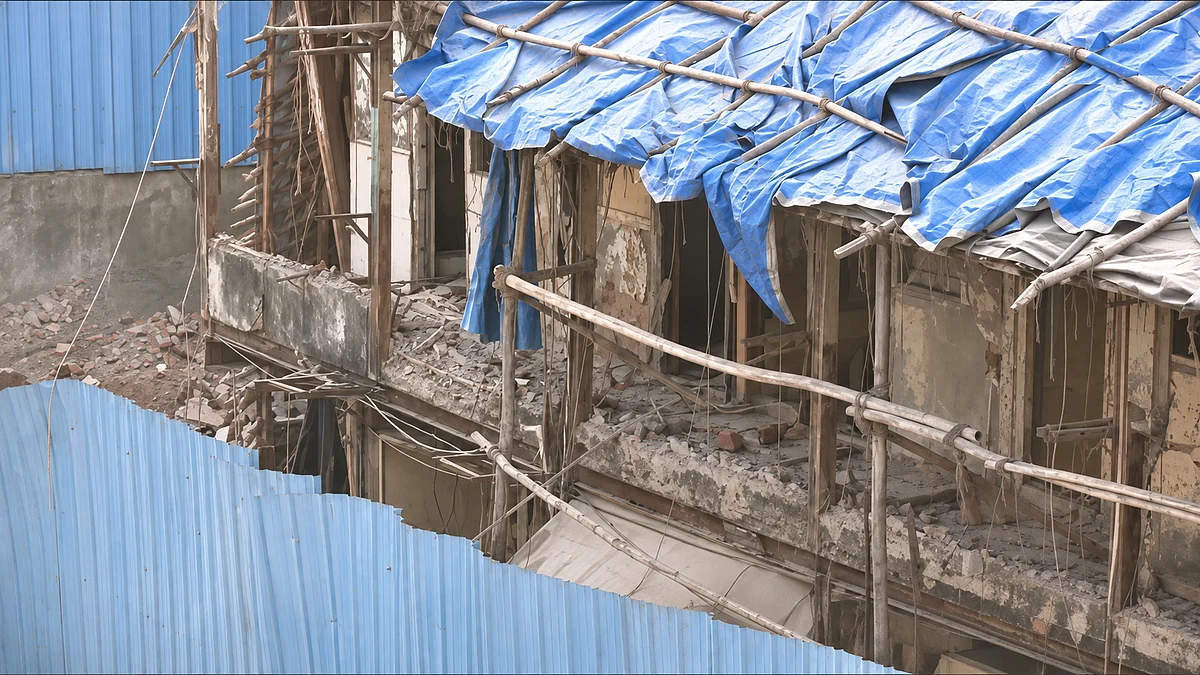


The Bombay High Court intervened on Thursday, hours after the BMC began demolishing the two-storey Musafirkhana building on Pakmodia Street
The petitioners say the building houses a mosque and a rest house dedicated to Haj pilgrims in 1864. They have challenged the demolition notice and disputed an agreement to sell the property for redevelopment
The BMC says it classified the building as dangerous and first issued a notice in 2018. The court said the disputed facts required a fuller hearing
The Bombay High Court on Thursday halted the demolition of a historic Haj pilgrims’ rest house and mosque in south Mumbai’s Bhendi Bazaar until 25 November. The Brihanmumbai Municipal Corporation (BMC) had already pulled down part of the two-storey building by the time the court intervened.
Dawood Ibrahim, accused of masterminding the 1993 Mumbai serial blasts, lived in the building with his family in the 1970s. A March 2015 memorandum between the Musafirkhana Trust and the redevelopment trust, reproduced in a 2019 Bombay High Court judgment, recorded that he occupied the entire first floor, measuring about 569 sq ft.
A bench of Chief Justice Mahesh Chandra Tripathi and Justice Advait M Sethna directed all parties to maintain the status quo until the next hearing, saying the case raised sharply contested questions of fact. The BMC’s lawyer told the court that civic personnel would need between 30 minutes and an hour to withdraw from the site.
The BMC began demolishing the Haji Ismail Haji Habib Musafirkhana building on Pakmodia Street at around 7 am after placing it in the C-1 category, which covers dangerous and dilapidated structures marked for demolition.
The interim order came on a petition by Shaikh Abdul Razak and Amirali Vazirali Panjwani, who say they are beneficiaries of the Waqf trust associated with the property. Their petition says the building contains a 148.79-square-metre Sunni Hanafi mosque on the ground floor and that the property was dedicated in October 1864 as a mosque and rest house for Haj pilgrims. It cites a marble plaque with inscriptions in Arabic and Persian as evidence of the dedication.
The petitioners objected to the BMC describing the mosque as a ‘prayer hall’ in its notice. They said the same description appeared in a disputed May 2016 agreement under which the trustees purportedly sold the property to the Saifee Burhani Upliftment Trust for Rs 1.10 crore for redevelopment.
They also said the demolition notice, dated 16 November, was posted on 17 November and gave occupants until the following day to leave. They argued that the deadline breached a Maharashtra government notification requiring at least 15 days’ notice. Demolition was initially scheduled for 18 November but was delayed after local residents objected to the short notice.
The BMC disputed the petitioners’ claims and told the court it had first issued a notice in 2018. It also said the dispute remained before the State Waqf Tribunal and that the Supreme Court had disposed of a related matter.
With agency inputs