


Centre defends restriction of entry for women in Sabarimala, stresses religious freedom
At hearing before nine-judge Bench in SC, Centre argues that the ban on women aged 10-50 falls within religious faith and denominational autonomy, is beyond judicial review
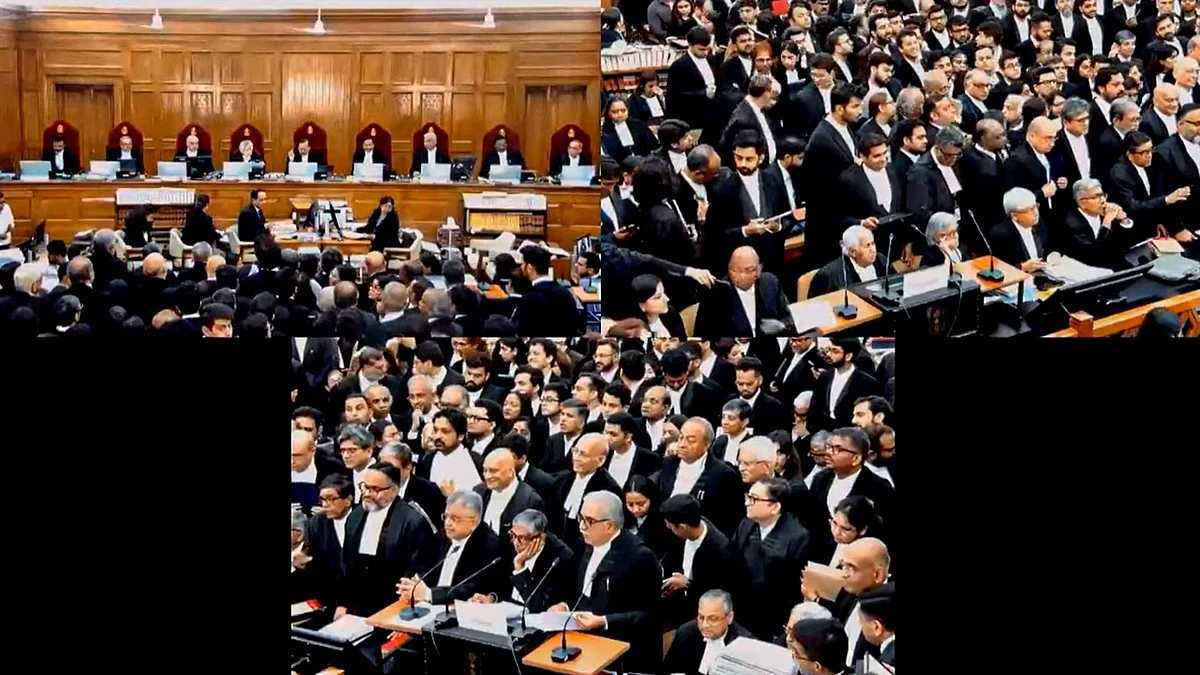


The Centre on Tuesday, 7 April, strongly defended before a nine-judge Constitution bench of the Supreme Court the restriction on entry of women aged between 10 and 50 years into Sabarimala temple in Kerala, arguing that the issue pertains to religious faith and denominational autonomy, and falls outside the scope of judicial review.
The bench, headed by Chief Justice Surya Kant and comprising eight other judges, is hearing petitions related to gender discrimination at religious places across various faiths. The proceedings have garnered significant public and political attention, especially in Kerala, where Sabarimala is a focal point ahead of crucial assembly elections.
The bench also comprises Justices B.V. Nagarathna, M.M. Sundresh, Ahsanuddin Amanullah, Aravind Kumar, Augustine George Masih, Prasanna B .Varale, R. Mahadevan and Joymalya Bagchi.
Solicitor General Tushar Mehta, representing the Centre, cited Article 25, which guarantees the right to freely profess, practice and propagate religion. He said courts could intervene only if religious practices violate “public order,” “morality,” or “health”. Mehta stressed that questions around religious faith involve spiritual understanding that may lie beyond judicial competence.
Rejecting a 2018 Supreme Court observation that characterised the ban on women’s entry as “untouchability” violating Article 17 (abolishing untouchability), Mehta said, “I have strong objection to the observation that the exclusion of women between the ages of 10 and 50 from the temple was a form of ‘untouchability’.”
Justice B.V. Nagarathna questioned this classification, stating, “A woman cannot be treated as ‘untouchable’ for three days in a month and then cease to be considered untouchable on the fourth day.” She expressed skepticism over applying Article 17 in this context.
The Centre clarified that the restriction concerns age, not menstruation. “Lord Ayyappa temples across the country and the world are open to women of all ages. It is only one temple which has this restriction. It is a sui generis case,” Mehta explained.
The Sabarimala temple traditionally prohibits women aged 10–50 from entry, citing the celibate nature of the presiding deity, Lord Ayyappa. In 2018, a five-judge Supreme Court bench, by a 4:1 majority, struck down the ban, deeming it unconstitutional and discriminatory. However, the verdict sparked widespread protests and debates across Kerala and the country on the interplay between religious rights and gender equality.
In November 2019, a five-judge bench referred broader issues—pertaining to discrimination against women at religious places—to a larger Constitution bench. The present nine-judge bench is now examining these wide-ranging questions surrounding religious freedoms, gender rights and constitutional safeguards.
Justice D.Y. Chandrachud, in earlier hearings, had remarked that excluding women from Sabarimala based on age or menstrual status amounted to “untouchability” and perpetuated “patriarchy”, undermining their dignity.
On Tuesday, Mehta urged the court not to impose “patriarchy and gender stereotypes” where they are unwarranted, highlighting India’s cultural heritage of worshipping women, from female deities to women in prominent public roles. “From the President of India to the Prime Minister, to judges of the Supreme Court, we bow before our female deities,” he said.
While acknowledging the sensitivities, Mehta argued that the doctrine of “essential religious practices,” which courts use to identify protected practices, is problematic. “How do you decide what is essential? It is a matter of faith and belief. Determining it involves a deep understanding of scriptures that courts may not be qualified to undertake.”
The bench clarified it would not revisit the merits of the 2018 Sabarimala verdict but would focus on the broader constitutional questions framed in the matter. The verdict is eagerly awaited as it may reshape the discourse on the balance between religious autonomy and women’s rights in India.
Join our official telegram channel (@nationalherald) and stay updated with the latest headlines