


China detains officials after coal mine tragedy; Xi urges stronger safety inspections
Authorities launch nationwide mining safety review as rescue operations continue in Shanxi; President Xi Jinping calls for stricter inspections and accountability
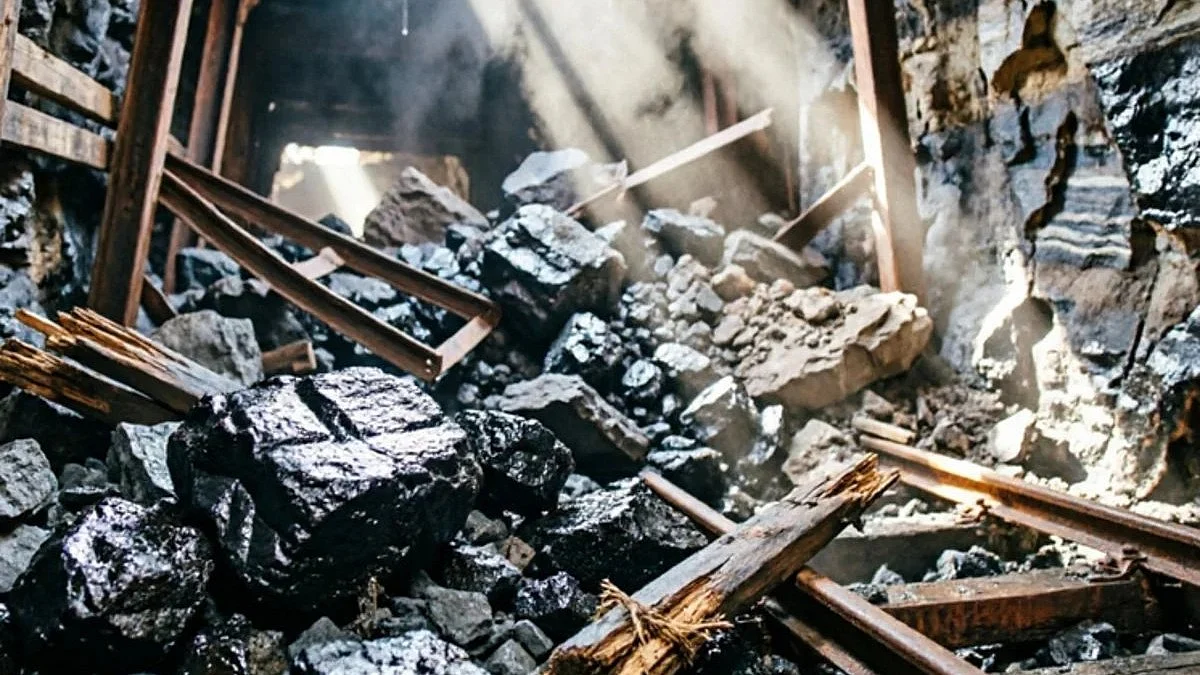


Chinese authorities have detained company officials and launched a high-level investigation after a gas explosion at a coal mine in northern China's Shanxi province killed 82 people, making it the country's deadliest mining accident since 2009.
Officials said on Saturday that the death toll had been revised downward to 82 from an earlier estimate of 90. Two miners remain missing, while 128 people have been hospitalised following Friday's explosion. Rescue operations were continuing at the site.
The blast occurred at the Liushenyu coal mine, operated by Shanxi Tongzhou Coal & Coke Group, in one of China's most important coal-producing regions.
Xi orders stricter safety oversight
Chinese President Xi Jinping called for stronger safety inspections, tighter hazard controls and heightened vigilance as the country enters a season associated with heavy rainfall and flooding.
Premier Li Qiang also directed authorities to ensure transparent disclosure of information and stricter enforcement of safety responsibilities across industries.
According to state media, a State Council investigation team has been tasked with conducting a comprehensive inquiry into the causes of the explosion.
Authorities said the investigation would determine responsibility among company executives, local authorities and industry regulators, with severe penalties promised for any violations discovered during the probe.
“The causes of the accident must be fully ascertained and responsibilities clearly established,” state media quoted investigators as saying.
Nationwide review ordered
The investigation team has also called for a nationwide review of mining safety practices and a crackdown on illegal operations.
The review will focus on issues including concealed work sites, falsified monitoring records, inaccurate worker counts and irregular subcontracting arrangements, according to official reports.
Vice Premier Zhang Guoqing was dispatched to Shanxi to supervise emergency response efforts, including rescue operations, medical treatment for victims and management of the aftermath.
He instructed local authorities to verify the number of missing workers and take measures to prevent secondary accidents during rescue operations.
Survivors describe chaos underground
China's Ministry of Emergency Management said six rescue teams comprising 345 personnel had been deployed to assist operations.
Many victims are being treated for injuries linked to blast trauma and exposure to toxic gases.
One miner interviewed by local media said he lost consciousness following the explosion and awoke in darkness before managing to crawl to safety through tunnels filled with dust and debris.
State media also reported that at least one company executive had been detained in connection with the investigation.
Pressure on coal sector
The disaster comes at a difficult time for China's coal industry.
Although mining fatalities have declined significantly over the past two decades due to stricter regulation and technological improvements, the sector continues to face pressure to maximise production to support China's energy security needs.
Authorities have encouraged record coal output in recent years to ensure stable electricity supplies and support industrial activity, while simultaneously tightening safety enforcement at mines considered vulnerable to accidents.
The Liushenyu mine has an annual production capacity of approximately 1.2 million tonnes of predominantly coking coal, a small share of Shanxi's overall annual coal output of about 1.3 billion tonnes.
Nevertheless, under Chinese regulations, the explosion has been classified as a “very serious accident”.
Deadliest accident since 2009
The incident is the worst coal mining disaster recorded in China since the 2009 explosion at the Xinxing Mine in Heilongjiang province, which killed 108 people.
The latest tragedy is expected to trigger extensive safety inspections across the country's mining sector and could temporarily affect coal production at a time when domestic demand is increasing ahead of the summer season and international coal supplies face disruption.
Despite rapid growth in renewable energy generation, coal remains central to China's energy system, providing a substantial share of electricity generation and industrial fuel requirements. It has also become increasingly important as Beijing seeks alternatives to constrained supplies of liquefied natural gas from the Persian Gulf region.
Authorities said rescue and recovery operations would continue until all missing workers are accounted for and the circumstances surrounding the explosion are fully established.
Join our official telegram channel (@nationalherald) and stay updated with the latest headlines