


Cockroach Janta Party rattles BJP, triggers familiar foreign conspiracy rhetoric
Rajeev Chandrasekhar warned that AI, bots and social media manipulation could be used to spread “fake narratives” aimed at destabilising nations
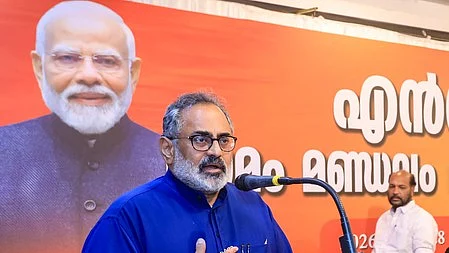


The BJP appears increasingly unsettled by the viral rise of the “Cockroach Janta Party” (CJP), with senior party leaders now portraying the satirical online campaign as part of a larger conspiracy to destabilise India through social media influence operations.
What began as a meme-driven internet movement mocking the establishment has clearly struck a nerve within the ruling party, prompting demands for a National Investigation Agency (NIA) probe and warnings about “cross-border influence operations”, bots and artificial intelligence-driven propaganda.
Kerala BJP president Rajeev Chandrasekhar on Saturday claimed that the CJP campaign was a coordinated attempt by “vested interests” to target Prime Minister Narendra Modi and weaken India. In a post on X, he described the campaign as a “classic cross-border influence operation” allegedly aided by sections of the Opposition.
But critics argue that the BJP’s reaction reveals something else entirely — a party increasingly unable to absorb criticism, satire or public anger without framing it as an anti-national conspiracy.
The rapid success of the CJP campaign appears to have exposed the BJP’s discomfort with losing control over online narratives, particularly among younger users who have embraced satire and meme culture as tools of political criticism.
Instead of countering the criticism politically, the BJP has now chosen to play the familiar “foreign hand” and “destabilisation” card, critics say.
The campaign gained traction after controversial remarks attributed to Chief Justice of India Surya Kant regarding unemployed youth triggered widespread anger online. Although the Chief Justice later clarified that his remarks referred specifically to individuals with fake degrees, the backlash quickly snowballed into a wider critique of the political and institutional establishment.
The satirical campaign reportedly launched by political communications strategist Dipke, a former AAP associate, has since exploded across social media platforms and now claims more than 21 million followers on Instagram.
Far from dismissing it as internet humour, BJP leaders have reacted with visible alarm.
Chandrasekhar warned about the dangers of AI, bots and social media manipulation, claiming such tactics were capable of creating “fake, seemingly organic narratives” aimed at destabilising nations.
His comments were echoed by BJP Rajya Sabha MP and Bar Council of India Chairman Manan Kumar Mishra, who supported calls for an NIA investigation and defended the Chief Justice’s remarks.
The BJP’s aggressive response has only intensified criticism from opponents, who accuse the party of routinely branding dissent, satire and criticism as threats to national security whenever public sentiment turns uncomfortable.
Political observers say the episode reflects a deeper anxiety within the ruling establishment over the growing unpredictability of online discourse, where carefully managed political messaging can quickly be challenged through viral satire and public mockery.
For critics, the irony is difficult to miss: a government that once prided itself on dominating social media now appears increasingly defensive when the same digital ecosystem turns against it.
With IANS inputs
Join our official telegram channel (@nationalherald) and stay updated with the latest headlines