


What 'cockroach' backlash reveals about youth anger and discontent in India
Words spoken from a Supreme Court bench resonate far beyond immediate parties involved in a case
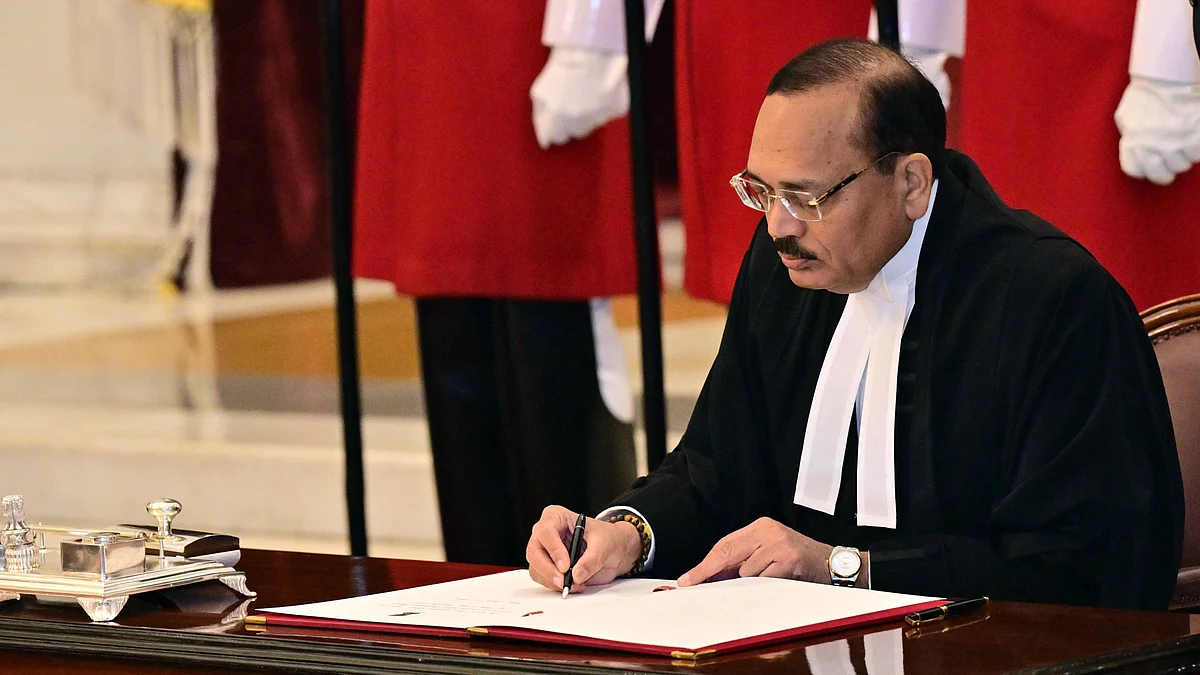


An isolated remark by Chief Justice of India Surya Kant has, in recent weeks, triggered a debate far larger than the courtroom in which it was made.
During an open court hearing, he used the words “cockroaches” and “parasites” while criticising certain individuals associated with frivolous litigation and questionable professional credentials. Although he later clarified that his remarks were directed at those entering the legal profession through fake degrees and dishonest means — not at India’s youth—the controversy had already taken on a life of its own.
What followed was not merely outrage over a judicial observation. It became a window into a deeper and more consequential reality: the growing frustration, insecurity and alienation felt by many young Indians today.
The speed with which the remarks spread across social media revealed a public mood that extends well beyond legal discourse. For a generation grappling with unemployment, economic uncertainty, rising living costs and shrinking opportunities, the controversy touched a nerve.
Many young people interpreted the comments through the lens of their own experiences — a struggle to find stable employment despite years of education, increasing competition for limited opportunities and a sense that their concerns are often misunderstood or dismissed by those in positions of authority.
Language carries particular weight when it comes from institutions that command public trust. Courts are not merely venues for legal adjudication; they are symbols of constitutional authority and democratic legitimacy. Words spoken from the bench therefore resonate far beyond the immediate parties involved in a case. Whether intended or not, remarks perceived as dismissive of social anxieties can generate reactions that reveal deeper tensions within society.
The emergence of the so-called “Cockroach Janata Party” illustrates how political expression itself is changing. Created as a satirical digital movement, it transformed a controversial label into a form of symbolic resistance. Its name is a deliberate act of political parody, using humour not simply for entertainment but as a vehicle for commentary and protest.
This reflects a broader global trend.
Younger generations increasingly communicate political dissatisfaction through memes, satire, parody accounts and viral campaigns rather than through traditional forms of activism alone. Digital culture has blurred the lines between entertainment, political messaging and social mobilisation. A meme can now travel faster than a political speech, and a satirical account can sometimes generate more engagement than an established political organisation.
In India, this phenomenon carries particular significance. Large sections of the public perceive mainstream media as increasingly aligned with political power. Whether that perception is entirely accurate is less important than its consequences. For many young citizens, social media platforms have become the primary arena for expressing dissent, debating public issues and challenging official narratives.
At the heart of this conversation lies one issue above all others: unemployment.
India possesses one of the world’s youngest populations, a demographic advantage often described as a historic opportunity. Yet the creation of quality jobs has struggled to keep pace with the aspirations of millions entering the workforce every year. Even graduates with degrees in engineering, management and other professional disciplines frequently encounter uncertain career prospects, temporary employment or wages that fall short of expectations.
For decades, Indian society promoted a simple promise: education and hard work would create pathways to upward mobility. Increasingly, however, many young people feel that this promise is becoming harder to fulfil. Rising costs of living, competitive examinations, recruitment delays and limited employment opportunities have contributed to a growing sense of insecurity.
It is this perceived breakdown of the social contract that fuels much of the frustration visible online. The anger is not simply economic; it is psychological. It stems from a feeling that effort does not always produce opportunity and that aspirations are colliding with structural realities.
When institutions appear unable — or unwilling — to recognise this frustration, the distance between citizens and authority widens further. This explains why reactions to the Chief Justice’s remarks were about more than the words themselves. Many young people viewed the controversy as a reflection of a broader experience in which their anxieties are insufficiently acknowledged.
The political context also matters. Over the past decade, politics under Prime Minister Narendra Modi has transformed public discourse in profound ways. Nationalism, identity politics and highly centralised political communication have reshaped how citizens engage with institutions and public debate. Supporters see this as an era of decisive leadership and national confidence; critics argue that it has produced greater polarisation and reduced tolerance for dissent.
Young Indians today therefore confront a dual challenge. On one hand are economic concerns — employment, incomes and opportunity. On the other are social and political divisions that increasingly shape public life. Much of the anger expressed online emerges from the intersection of these two realities.
The judiciary occupies a unique place in this landscape. For generations, Indian courts have been regarded as the final guardians of constitutional values and individual rights. Public confidence in judicial institutions depends not only on judgments but also on the perception that courts understand the concerns of ordinary citizens.
Empathy matters as much as authority. When institutions appear responsive to social realities, their legitimacy is strengthened. When they appear distant, elitist or dismissive, public trust can erode—even if such perceptions arise from misunderstanding rather than intent.
The “cockroach” controversy therefore reveals several layers of contemporary India at once: youth frustration, the challenge of unemployment, the rise of digital forms of protest, declining trust in institutions and the increasingly polarised nature of political debate.
The Cockroach Janata Party may be satire, but the anxieties that fuelled its popularity are real. Its rapid rise demonstrates how digital culture can convert humour into political expression and memes into vehicles of dissent. When large numbers of young people feel excluded from the promises of the system, satire ceases to be merely entertainment. It becomes a language of resistance.
The lasting significance of this episode will not be determined by how long a viral movement survives online. It will be determined by whether the underlying concerns it exposed — about opportunity, dignity, representation and trust — are addressed.
For beneath the jokes, the hashtags and the memes lies a question that democratic societies ignore at their peril: what happens when an entire generation begins to feel unheard?
Join our official telegram channel (@nationalherald) and stay updated with the latest headlines