


The many meanings of rice
Is crop diversification being viewed through a one-size-fits-all national lens that does not recognise regional variations?
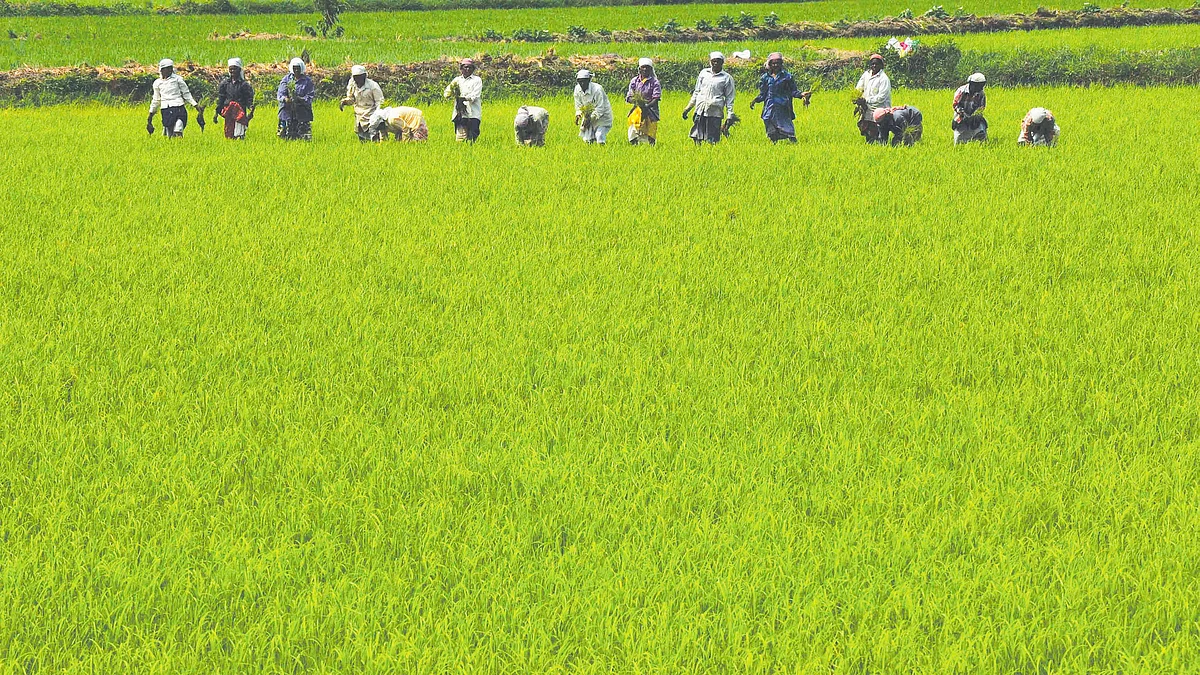


The Union government’s latest push to reduce water-intensive paddy cultivation and promote crop diversification has triggered concern across the rice belts of southern India where farming largely follows traditional practices and rice is the staple. The policy has been presented as a response to the groundwater crisis in north India, where aquifers are falling and rice cultivation is increasingly seen as ecologically unsustainable.
But in the south, as farmers and experts point out, rice is grown under very different conditions. Much of the cultivation depends on rainfall, rivers and surface water rather than intensive groundwater extraction.
From Kerala’s wetlands to the deltas of Tamil Nadu and Andhra Pradesh, from Telangana’s irrigated plains to Karnataka’s rain-fed pockets, farmers, scientists and policymakers are asking whether a policy designed to correct one ecological imbalance may unintentionally disturb another agricultural system.
The diversification push stems from a crisis concentrated in the north-west. In Punjab and Haryana, rice cultivation expanded during the Green Revolution through assured procurement, subsidised power and heavy groundwater extraction. As yields rose, ecological stress deepened.
Official assessments show that ground-water extraction in Punjab is 156 per cent above the sustainable limit and Haryana 136 per cent above — far higher than the national average. Large areas are classified as over-exploited, drawing water faster than can be naturally recharged.
Tube wells run continuously through the cultivation season and borewells go deeper each year — a cycle that experts say is unsustainable without structural change. Diversification is the proposed fix, with the Centre urging a shift to millets, pulses and oilseeds to cut paddy acreage in water-stressed regions and enable ecological recovery.
But agriculture in India does not follow one pattern. In the south, water flows across the land instead of being pulled from under it.
Farmers and scientists say this distinction is central to understanding why an anxiety shaped by experience is moving quietly through cooperative meetings, farmer discussions and local agricultural circles.
Also Read: Brace yourself for a deluge of GM crops
Kerala: Farming with water
Kerala’s rice bowl Kuttanad rests below sea level. Fields stretch like mirrors under the sky. Farmers walk along narrow bunds while pumps hum softly in the background.
Bhadran Bhaskaran, whose family has cultivated rice for generations, points towards the flooded field when asked about water-intensive farming. “The water is already here,” he says. “We do not drill borewells. We manage the water that the land gives us.”
Kuttanad’s paddy fields form part of a wetland system where cultivation helps regulate water levels and maintain ecological balance. When cultivation declines, salinity and stagnation become more likely.
S. Usha, a Thiruvananthapuram-based agricultural scientist, says the national conversation often misses this difference. “Paddy is a crop suited to our landscape and rainfall patterns. It supports ground-water recharge rather than depleting it. Now is the time to strengthen paddy cultivation economically, technologically and socially. Decisions like this from the central government are unscientific and against democratic principles.”
Tamil Nadu: The pulse of the delta
Move east into Tamil Nadu’s Cauvery delta and another logic is at work. Here, canals carry river water across flat plains. Farmers wait for releases from upstream reservoirs and begin planting together when the canals fill. The delta’s irrigation system is collective, with farmers relying more on canal networks than individual groundwater pumping.
“Our crop depends on the river, mainly Cauvery,” says the president of the Cauvery Delta Farmers Welfare Association, G. Kanagasabhai, from Thanjavur. “When water comes, we grow rice. When it does not, we wait. Everything depends on the monsoon, and in recent years good monsoons have helped us.”
Tamil Nadu’s farmers say diversification is not unfamiliar to them, but the ecological debate must distinguish between groundwater-intensive systems and river-fed agriculture.
According to P.R. Pandian, general secretary of the Tamil Nadu Cauvery Farmers Protection Association, policies discouraging groundwater exploitation are welcome but must not penalise rice cultivators.
Also Read: Bitter harvest for India’s paddy farmers
Andhra Pradesh Rice as an economy
Along the Godavari and Krishna deltas in Andhra Pradesh, paddy fields stretch to the horizon, broken by canals and village roads lined with rice mills.
“Rice keeps everyone employed,” says Ramesh Reddy, a farmer near Vijayawada. “Farmers, mill workers, transport people, labourers. Everything depends on this crop.”
Water comes largely through river-fed irrigation and monsoon rainfall. Groundwater exists but does not define the delta model.
“We meet the rice needs of many states like Kerala. Compared to polluting industries and cash crops, rice cultivation here causes very little environmental damage,” says Ramesh. “Rice is integral to food security, and discouraging it will have far-reaching implications for people’s health and wellbeing.”
Cyclone damage, flooding, salinity intrusion and periodic water-release disputes disrupt cropping schedules, while rising mechanisation costs and pest incidence add pressure. Shifting away from rice remains difficult because paddy has established procurement systems, milling infrastructure and market linkages that alternative crops lack.
Telangana: Growth built on assurance
Telangana’s rice story is more recent but equally significant. Large irrigation projects and tank restoration have expanded paddy cultivation rapidly over the past decade.
“Rice is predictable,” says B. Prabhakar Reddy, president of the Telangana Rythu Sangham. “There is a system for rice. Procurement, transport, mills. We know where it goes.”
Though groundwater plays a role in some areas, reservoirs and surface irrigation have transformed cultivation patterns. Farmers say diversification can succeed only if alternative crops offer similar market assurance.
Karnataka: Where rain decides
In Karnataka, rice cultivation survives in pockets where rainfall or reservoir irrigation naturally supports it. Coastal districts and command areas sustain paddy, while dryland regions grow other crops.
“This land holds moisture,” says K. Srikrishna Upadhyaya, a farmer leader from coastal Karnataka. “Rice fits the land.”
Despite low profitability, rice cultivation continues mainly along the coast, the Malnad region and select command areas as an ecological and cultural practice, sustained by farmers who believe abandoning it would alter both landscape and food systems.
****
Beyond ecology lies food culture. Southern India consumes rice in ways that differ sharply from northern dietary patterns. Rice appears at breakfast, lunch and dinner. Idli, dosa, puttu, appam and rice meals define everyday eating habits.
Household consumption surveys show rice dominates cereal intake across southern states, while wheat consumption remains comparatively low. As an elderly farmer in Kerala says, “We grew up eating rice three times daily. That is our food.”
Any policy that influences rice production therefore affects not only farmers but food habits, markets and public distribution systems across the region. Southern states already depend partly on rice supplied from elsewhere. If local cultivation declines while consumption remains high, dependence on external supply chains could deepen.
Climate uncertainty adds another layer of risk. If production becomes concentrated in fewer regions, extreme weather events could trigger price volatility and supply disruptions.
An agricultural economist sums up the debate clearly: “Rice grown through groundwater extraction is one environmental problem. Rice grown in rain-fed wetlands or river deltas is a completely different story.”
Back in Kuttanad, afternoon light settles over flooded fields. Farmers move slowly, adjusting water levels and checking seedlings. Bhadran Bhaskaran says farmers are not opposed to change. They have adapted repeatedly to floods, market shifts and labour shortages. What worries them is lack of clarity.
“If we change crops, there must be a market,” he says. “Rice at least has a system.”
As evening falls, the fields grow quiet. The policy debate rages on, but here the crop remains rooted in landscapes that have fed generations, waiting to see whether future decisions will understand the many meanings of rice.
Join our official telegram channel (@nationalherald) and stay updated with the latest headlines