


Delhi's AQI settles at 348 in 'very poor' category, likely to worsen
Missing readings at 45 of capital's 59 monitoring stations during Diwali raise questions over official pollution figures
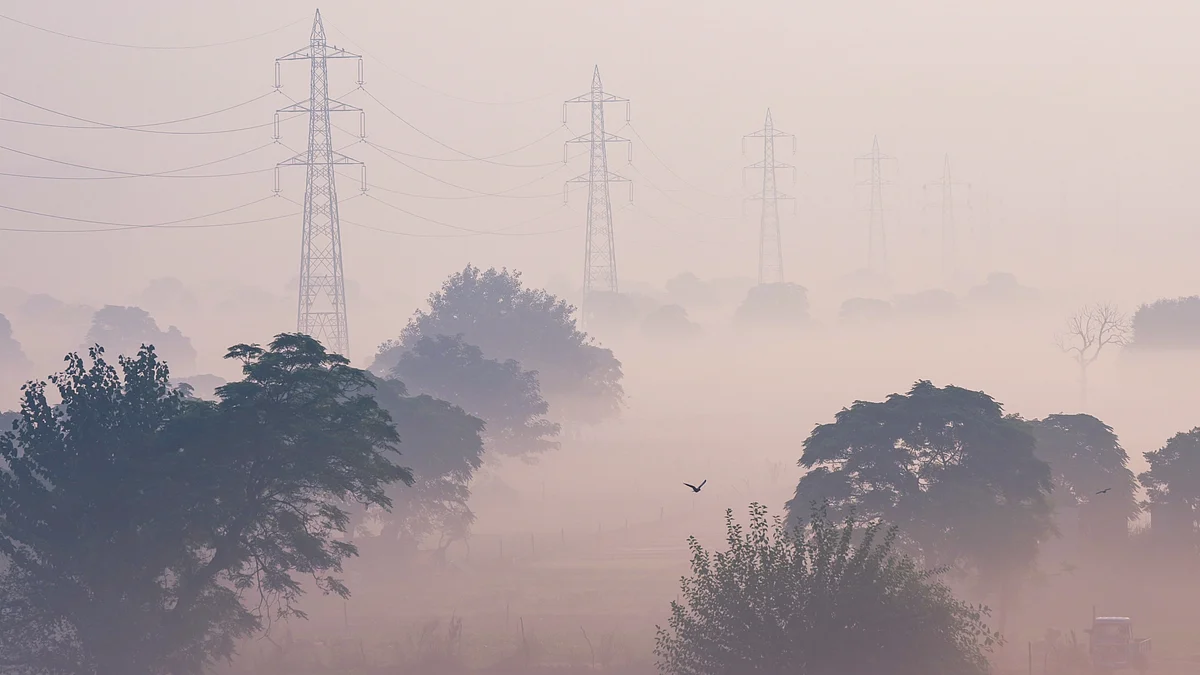


Delhi records an AQI of 348, with seven monitoring stations in the severe category.
IQAir ranks Delhi ahead of Lahore as the world's most polluted major city.
Missing readings at 45 monitoring stations trigger scrutiny of official pollution data.
Delhi continued to choke under toxic air on Saturday, 14 November, with the air quality index (AQI) remaining in the 'very poor' category and forecasts pointing to further deterioration over the coming days. The worsening pollution comes amid mounting questions over the reliability of official air quality data, following the discovery of significant gaps in monitoring records during peak pollution hours around Diwali.
The capital recorded an AQI of 348 at 9.00 am on Saturday, compared with the 24-hour average of 373 at 4.00 pm on Friday, according to the Central Pollution Control Board (CPCB). Seven of Delhi's 59 air quality monitoring stations were in the 'severe' category on Saturday morning.
The readings came a day after Delhi overtook Pakistan's Lahore to become the world's most polluted major city, according to Swiss air quality monitoring organisation IQAir. Its real-time ranking put Delhi's AQI at 334 on Friday, in the 'hazardous' category. India's official CPCB reading was considerably higher at 403, classified as 'severe'.
The two readings are not directly comparable, as IQAir and the CPCB follow different AQI scales and methodologies. According to IQAir's hourly readings, Delhi had dropped to 208 by 11.00 am on Friday, while Lahore had fallen to seventh place among the world's most polluted major cities, with an AQI of 155. Lahore had occupied the top position for several days before Delhi overtook it.
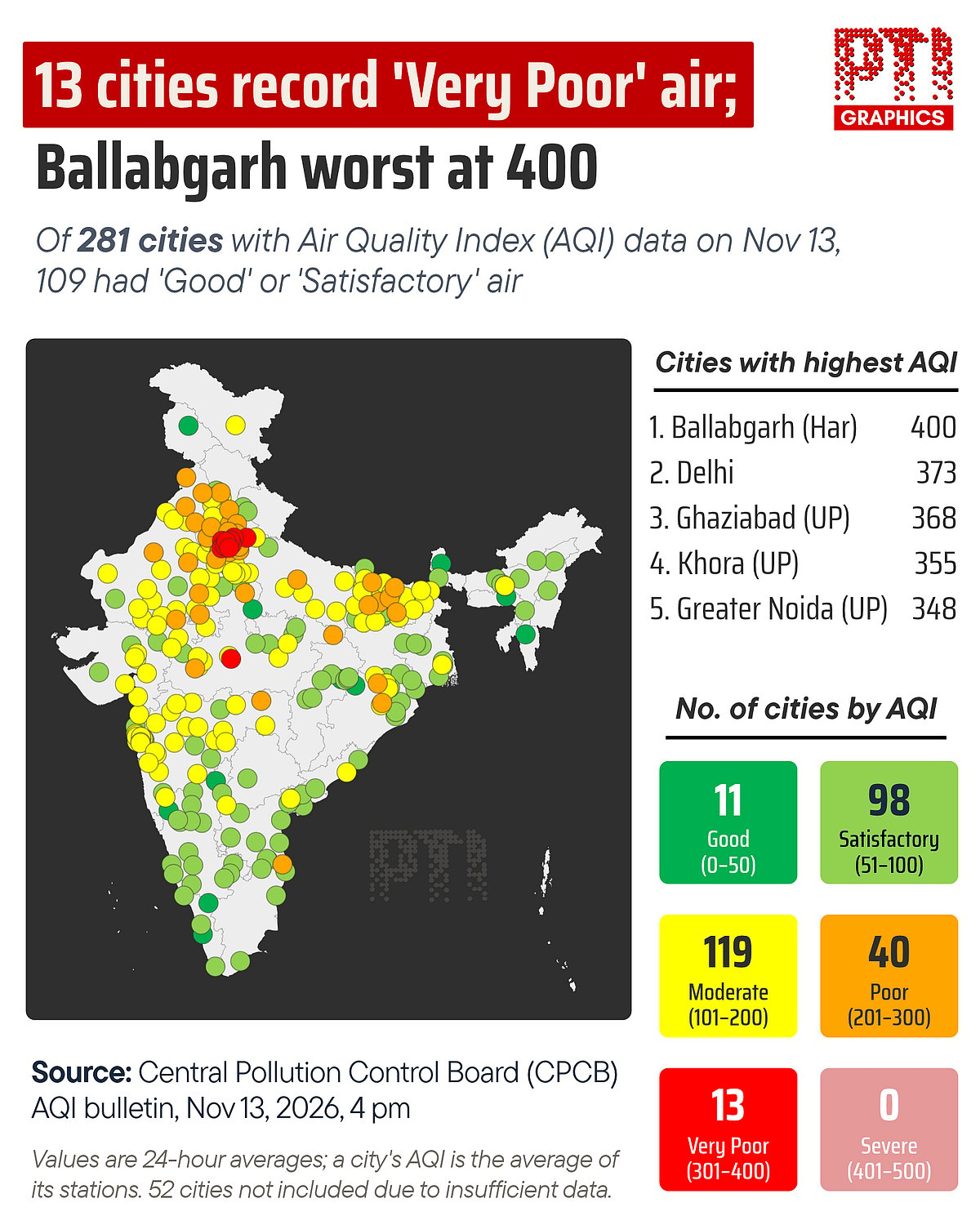
CPCB classifies AQI readings of 0-50 as 'good', 51-100 as 'satisfactory', 101-200 as 'moderate', 201-300 as 'poor', 301-400 as 'very poor' and 401-500 as 'severe'.
The seasonal pollution crisis across northern India and neighbouring Pakistan is exacerbated by colder, stagnant air, which traps vehicle emissions, construction dust, industrial pollutants and smoke from agricultural burning closer to the ground.
Questions over missing AQI readings
The latest pollution spike has brought renewed scrutiny of the country's air quality monitoring system. An investigation by the Indian Express found that 45 of Delhi's 59 monitoring stations had missing hourly readings for at least one pollutant on Diwali night (8 November), even as the city recorded its worst festival-day air quality in five years. Only 14 stations reported complete data.
The gaps were particularly concerning because they coincided with a sharp rise in particulate pollution. While CPCB's online dashboard showed blank readings when concentrations exceeded 1,000 micrograms per cubic metre, data from the Delhi Pollution Control Committee (DPCC) recorded substantially higher levels at several locations during the same hours.
The DPCC recorded PM2.5 concentrations of 3,744 micrograms per cubic metre at Mundka, 3,425 at Ashok Vihar, 4,697 at Punjabi Bagh and 4,985 at Jahangirpuri, while the corresponding CPCB records showed gaps.
The discrepancy prompted concerns that the official AQI may have understated the extent of pollution to which residents were exposed during the worst hours of Diwali celebrations.
CPCB subsequently acknowledged the data gaps, attributing them to the technical limitations of its monitoring equipment. In a clarification issued on 10 November, the pollution watchdog said its particulate matter analysers were designed to measure concentrations only up to 1,000 micrograms per cubic metre. Readings beyond this threshold were treated as outside the instruments' designed measurement range and consequently did not enter the calculation of the 24-hour average.
The board said such gaps could occur during extreme pollution episodes, including Diwali firecracker bursts. It also said internal deliberations and consultations were under way on processing data beyond the existing system's design range.
However, the explanation has not dispelled concerns about the transparency and reliability of official pollution reporting. Environmental experts have warned that excluding readings during periods of exceptionally high pollution could result in an underestimation of actual exposure.
The issue is significant because official AQI readings inform public health advisories and decisions on emergency pollution-control measures under the Graded Response Action Plan (GRAP). Incomplete data during the most polluted hours could therefore affect not only the assessment of exposure but also the evaluation of the effectiveness of measures taken to combat the crisis.
Winter pollution and the road ahead
Meanwhile, weather conditions are expected to remain unfavourable for the dispersal of pollutants. The Safdarjung weather station, considered representative of Delhi's weather, recorded a minimum temperature of 16.4°C on Saturday, 2.9 degrees above normal and 0.2 degrees higher than Friday.
The Air Quality Early Warning System for Delhi has forecast a further deterioration in air quality over the coming days. As temperatures fall and atmospheric conditions become increasingly stagnant, pollutants are likely to remain trapped closer to the surface.