


DUSU poll rules flouted as pamphlets and vehicle rallies dominate campuses
Delhi High Court bars victory processions, warns candidates and student organisations of collective penalties for violating electoral norms
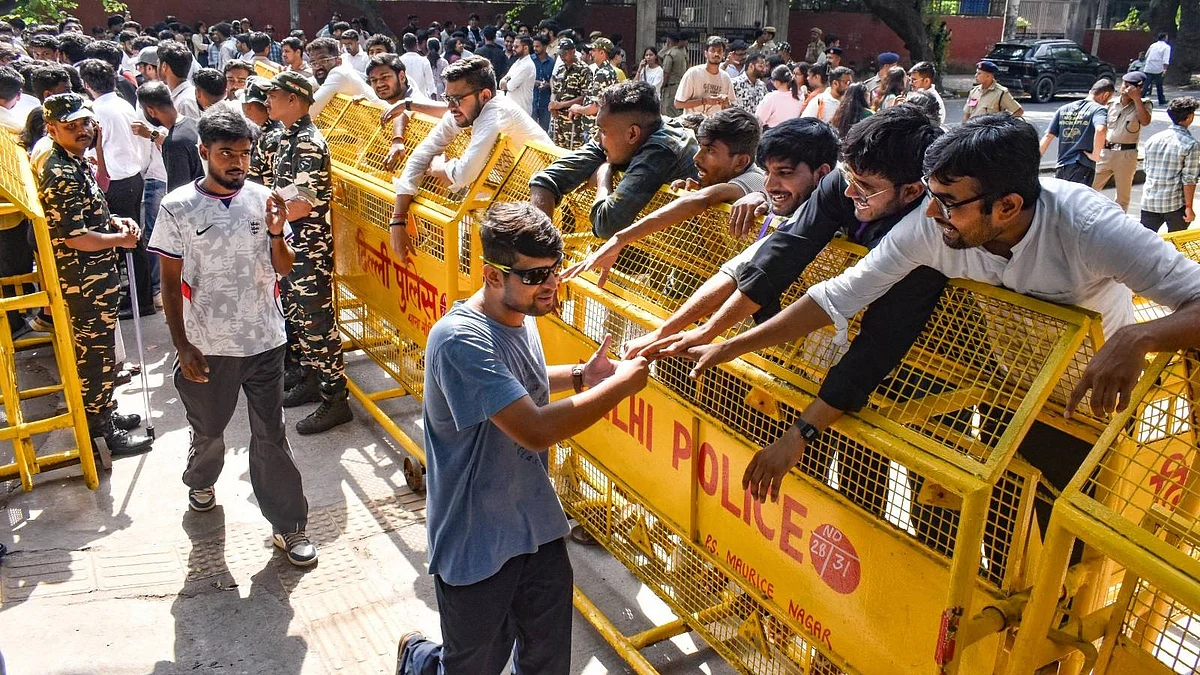


Printed pamphlets, vehicle rallies and other campaign materials were seen around Delhi University campuses despite rules restricting their use in student elections.
The Delhi High Court proposed collective damages against candidates and student organisations violating the Lyngdoh Committee guidelines and barred victory processions.
Four people were arrested, vehicles were impounded and criminal cases were registered over election-related violations, the court was told.
Printed pamphlets littered roads, campaign cards were distributed from motorcycles and vehicle rallies moved around Delhi University campuses on Friday despite rules restricting such activities during the students’ union elections.
Pamphlets bearing candidates’ names were scattered across roads and footpaths in North Campus, particularly around Chhatra Marg and near Kirori Mal and Hansraj colleges.
People travelling in vehicles were seen throwing campaign material, while students on motorcycles distributed candidate cards as they travelled between colleges.
The Delhi High Court on Friday took note of repeated breaches of the Lyngdoh Committee recommendations during the Delhi University Students’ Union elections and proposed imposing collective damages on offenders.
“Having noted frequent violations on the part of the students, candidates and student organisations, we propose to impose collective damages not only on the students found violating the norms but also the student organisations,” a bench of Chief Justice D.K. Upadhyaya and Justice Tejas Karia said.
The court also prohibited victory processions following the declaration of results and warned that further action could be taken over violations.
The Lyngdoh Committee guidelines prohibit candidates from using printed posters, pamphlets and other printed material for canvassing. Only handmade posters displayed at designated locations are permitted.
The recommendations also restrict processions and public meetings outside campuses and prohibit candidates and supporters from defacing university property.
Delhi University had separately introduced a paperless campaign framework for the 2026 elections, barring printed posters, banners and other promotional materials on campuses and in surrounding areas.
Several students alleged that candidates backed by most major political parties had also breached the prescribed campaign expenditure limit of Rs 5,000.
The high court was informed that challans had been issued during the election period, several vehicles had been impounded and criminal cases registered over poll-related violations. Four people were arrested, according to information presented before the bench.
The court also questioned how large groups of campaign vehicles, including some without registration plates, had been permitted to travel around the university.
Political tensions surfaced online as the Akhil Bharatiya Vidyarthi Parishad alleged that the National Students’ Union of India had placed the ABVP’s name alongside its own on voting chits. It described the alleged action as a sign of desperation. The claim could not be independently verified.
The campaign period was also marked by violence. Two Satyawati College students were injured and two vehicles damaged during a clash between two groups in northwest Delhi’s Bharat Nagar.
Police said the confrontation occurred during the college election campaign and involved reports of gunfire and assault.
With PTI inputs
Join our official telegram channel (@nationalherald) and stay updated with the latest headlines