


EC asserts authority to examine citizenship, tells SC it's decision is binding on President
Poll panel defends Special Intensive Revision as constitutional mandate to exclude non-citizens from voter lists, distinguishing it clearly from NRC process
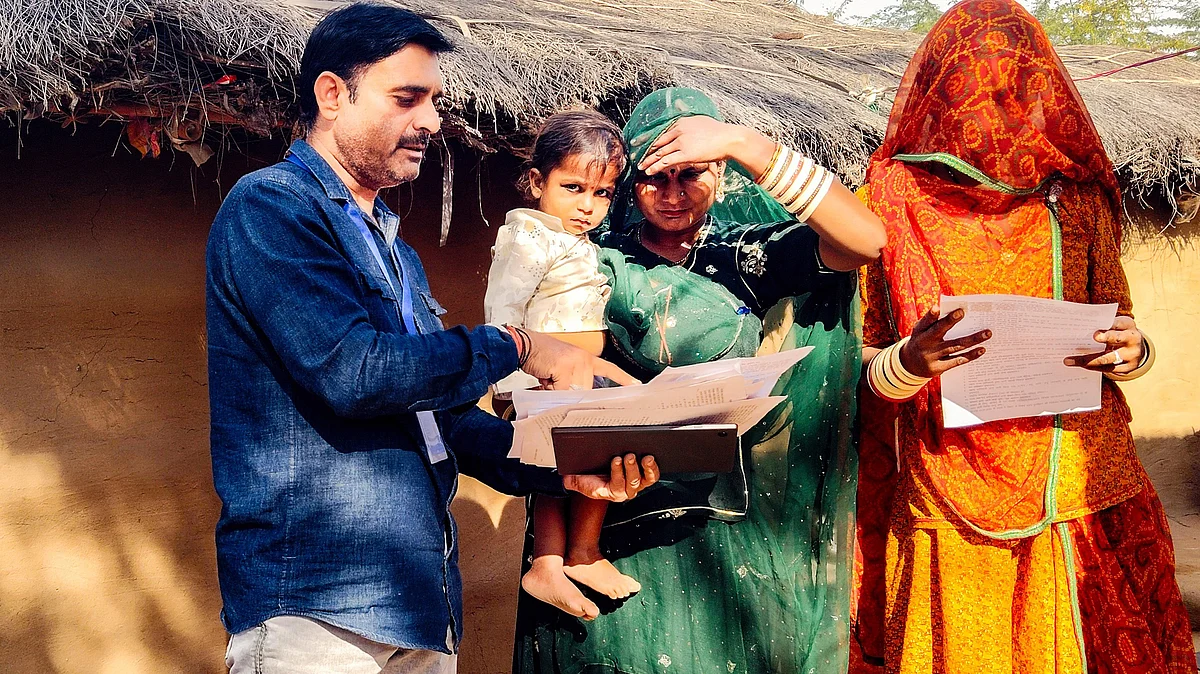


The Election Commission of India (EC) informed the Supreme Court on Tuesday, 13 January, that it is the original authority empowered to examine citizenship matters for electoral purposes and that its opinion on such issues is binding on the President.
The submission was made by senior advocate Rakesh Dwivedi before a bench headed by Chief Justice Surya Kant and Justice Joymalya Bagchi, which is hearing petitions challenging the EC’s decision to undertake the Special Intensive Revision (SIR) of electoral rolls in several states. The exercise raises constitutional questions about the scope of the poll panel’s powers, citizenship and voting rights.
Dwivedi stressed that the SIR is within the EC’s constitutional and statutory mandate and rejected the contention that it amounts to a parallel citizenship determination process similar to the National Register of Citizens (NRC).
He stated, “If a person acquires, or is alleged to have acquired, the citizenship of another country, it is ultimately the Election Commission which examines the issue for electoral purposes, and its opinion is binding on the President.” The EC’s scrutiny is limited to electoral eligibility and does not affect a person’s citizenship status outside that context.
Dwivedi clarified, “The consequence of an adverse finding during the SIR would only be exclusion of the person’s name from the electoral roll. It does not ipso facto result in deportation.” In appropriate cases, issues may be referred to the central government for further action under the Citizenship Act and related laws.
The lawyer emphasized that citizenship can be examined by various regulatory authorities as a prerequisite for statutory benefits such as mining leases. “The electoral roll is fundamentally different from the NRC. The NRC includes all persons, whereas the electoral roll includes only citizens above the age of 18 who are otherwise qualified,” he said.
Under Article 326 of the Constitution, only citizens can vote, and the EC has the constitutional duty to ensure foreigners are not registered as voters. “Even if there are 10 or thousands of foreigners on the rolls, they have to be excluded. This is not a political judgment but a constitutional obligation,” Dwivedi submitted.
Justice Bagchi noted the evolution of citizenship laws, observing, “We have funnelled our citizenship. First, it was birth plus one parent had to be Indian. Now, the birth plus two parents have to be Indians.” Dwivedi responded by highlighting the historical context of citizenship provisions post-independence.
When asked whether a person’s voting rights could be suspended while citizenship matters are pending with the central government, Dwivedi clarified the limitation: exclusion pertains solely to electoral roll eligibility, while questions of stay or deportation fall within the government’s domain.
The hearing will resume on Thursday, 15 January.
(With PTI inputs)
Also Read: SIR questions that don’t go away
Join our official telegram channel (@nationalherald) and stay updated with the latest headlines