


Fears grow over Centre's plan to reshape Indian Statistical Institute
Teachers, students and alumni warn proposed law could erode premier institute's autonomy, academic freedom, tradition of free education
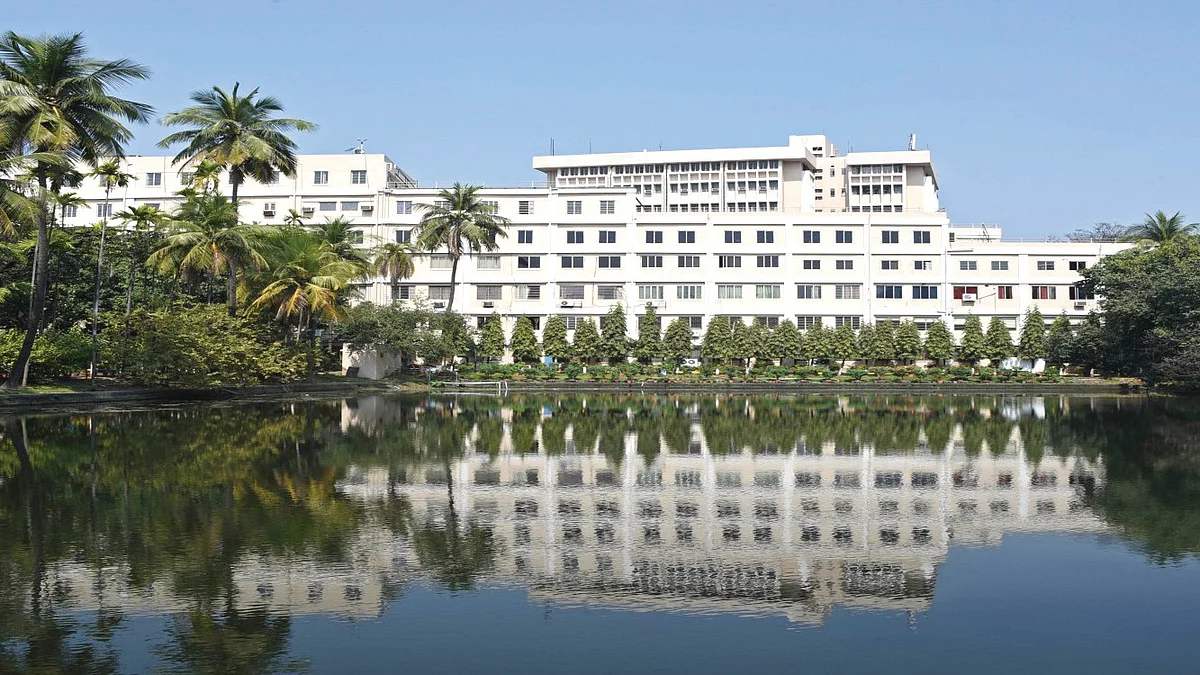


The Central government is preparing to introduce a controversial Bill in the current session of Parliament that would fundamentally alter the structure and governance of the Indian Statistical Institute (ISI), drawing sharp opposition from teachers, students, alumni, former directors and staff. Critics argue that the proposed legislation threatens the institute's autonomy, academic excellence and long-standing tradition of providing free education.
Founded in 1931 at Presidency College by renowned statistician Prasanta Chandra Mahalanobis before moving to its historic Baranagar campus in Kolkata, the ISI has operated as a registered Society throughout its history. Even after Parliament passed the ISI Act in 1959, granting it the status of an Institute of National Importance, its Society structure remained unchanged.
The new Bill seeks to abolish that model entirely. Instead of being governed by a 33-member council comprising elected representatives alongside government nominees, the institute would be managed by a board of governors largely appointed by the Central government. The director would also become the institute's chief executive officer (CEO), a move critics say reflects a shift towards corporate-style governance.
Teachers and former directors believe the proposal goes far beyond Professor Raghunath Anant Mashelkar's recommendations. Faculty members argued that "the amendment bill deviates significantly from Prof. Mashelkar's recommendations" and instead proposes "a complete structural overhaul" that was never discussed with the ISI Society.
Professor Arijit Bishnu, one of the leading voices opposing the legislation, warned that the draft Bill fails to guarantee that the institute's headquarters will remain in Baranagar. He said, "The 1959 Act clearly states that Kolkata is the headquarters of the ISI. The new Bill makes no such mention."
Also Read: Why do babus want control over the ISI?
Their concern stems from the Bill's proposal to create multiple autonomous ISI centres, each with its own director and management council. The legislation also allows the institute to establish centres overseas, either independently or through joint ventures. Critics fear the original Baranagar campus, established by Mahalanobis, could eventually become just one among many centres rather than remaining the institution's recognised headquarters.
Faculty members have also questioned the manner in which the legislation has been prepared. They said, "The Bill should not be passed without consultation. Even the director was not consulted during its drafting." According to teachers, the ISI Society, the ISI Council and the Academic Council all requested discussions with the government, but their concerns have not been addressed.
Opponents say the proposed governance structure would significantly increase government control over the institute. The board of governors is to be headed by a chairperson appointed by the President of India on the advice of the Centre. The board will include three Central officials, four nominated statisticians and four professors from the institute, including the director.
Teachers fear that reducing the powers of the Academic Council could open the door to political influence over research. Some expressed concern that "the Central government could manipulate data and reports to suit its own agenda", particularly on sensitive issues such as unemployment and poverty.
The proposed legislation has also raised concerns about access to education. At present, students pay no tuition fees for undergraduate and postgraduate programmes and receive monthly stipends ranging from Rs 5,000 to Rs 10,000. The new Bill contains provisions enabling the institute to generate revenue, including through student fees.
Faculty members warn that such changes could make it harder for talented students from poorer backgrounds to study at ISI. They note that studying at IITs and NITs often costs more than Rs 100,000 per semester, something ISI has historically avoided through its commitment to free education.
Opposition to the Bill has been building since the draft legislation was released last year. During the institute's convocation ceremony in February, students wore protest badges while collecting their PhD degrees and called for the rejection of the ISI Bill 2025. A mass signature campaign demanding the withdrawal of the legislation has also been organised.
Teachers argue that while legislation governing many higher education institutions has been updated over time, their traditions have been preserved. "Why should the ISI alone have its existing Act completely repealed?" they asked.
The ISI counts among its alumni and faculty some of India's most distinguished statisticians and mathematicians, including Professor C.R. Rao, recipient of the International Prize in Statistics, and S.R.S. Varadhan, widely regarded as one of the world's greatest mathematicians. Faculty members insist that the institute's academic standards speak for themselves. "There is no room to question the quality of the current system," they said.
Appeals have now been made to BJP MPs from West Bengal and to ISI alumnus and NITI Aayog vice-chairperson Ashok Lahiri to oppose the legislation. Faculty members have also warned that if their concerns continue to be ignored, they will launch a wider public campaign.
Join our official telegram channel (@nationalherald) and stay updated with the latest headlines