


Fresh snowfall greets New Year in Kashmir, weather to improve by evening
Gulmarg, Pahalgam and Sonamarg receive overnight snow; valley witnesses warmer-than-normal Chilla-e-Kalan
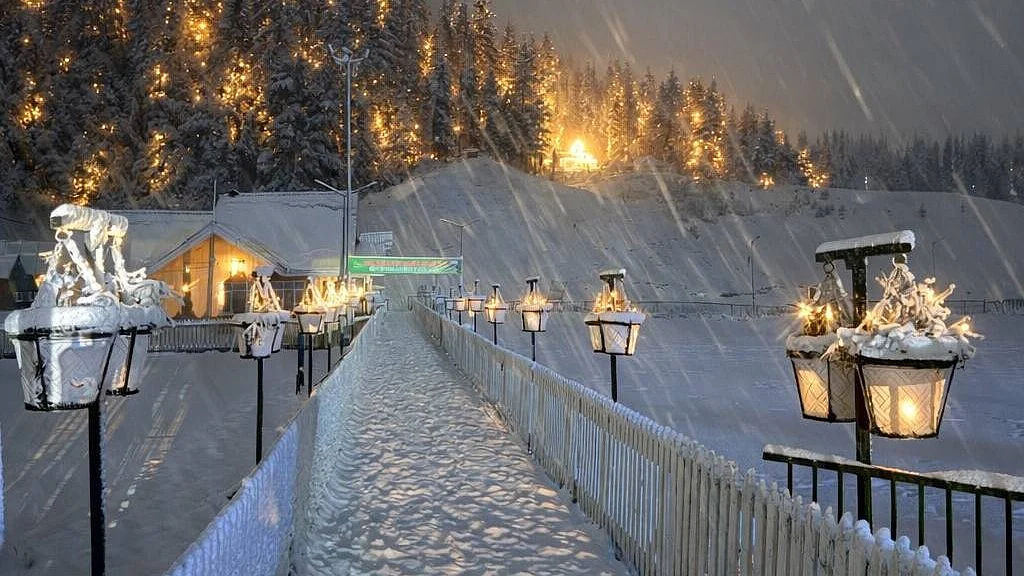


Kashmir ushered in the New Year amid fresh snowfall at popular tourist destinations and higher reaches of the valley, even as the meteorological department forecast a gradual improvement in weather conditions later in the day, officials said on Thursday.
Tourist resorts such as Gulmarg, Pahalgam and Sonamarg received overnight snowfall that continued till Thursday morning, attracting large numbers of visitors celebrating the New Year. Several high-altitude areas also recorded fresh snow, including Tulail Valley in Gurez, Razdan Top in Bandipora, Macchil and Sadhna Top in Kupwara, and the strategic Zojila Pass.
Officials said the snowfall was linked to a western disturbance affecting the region. As its trailing part moves away by Thursday evening, weather conditions are expected to improve gradually. However, they added that a brief spell of light rain or snowfall could still occur at isolated places on Friday.
Due to persistent cloud cover, night temperatures across the valley remained higher than the seasonal average, settling above the freezing point at most places. Despite the fresh snowfall in upper reaches, Kashmir continues to experience an unusually warm winter, with temperatures hovering between 1.2 degrees Celsius and 6.3 degrees Celsius above normal.
Srinagar recorded a minimum temperature of 2.2 degrees Celsius on Wednesday night, which was 4.6 degrees Celsius above the average for this time of year, officials said. Gulmarg, the coldest place in the region, saw the mercury dip to minus 5.5 degrees Celsius, around 2.5 degrees lower than the previous night.
In south Kashmir, Pahalgam recorded a minimum temperature of minus 0.4 degrees Celsius, which was 6.3 degrees above the normal, while Qazigund, the gateway town to the valley, recorded a low of 2 degrees Celsius, nearly five degrees above the seasonal average.
The region is currently observing Chilla-e-Kalan, the harshest 40-day winter period marked by extreme cold and frequent snowfall. Traditionally, night temperatures during this phase drop several degrees below freezing, and snowfall is most frequent and intense.
However, officials noted that the plains of the valley have not received any snowfall so far this season, highlighting a marked departure from typical winter patterns during Chilla-e-Kalan.
Join our official telegram channel (@nationalherald) and stay updated with the latest headlines