


Govt Bill seeks overhaul of civil nuclear laws, opens sector to private participation
Proposed 2025 Bill seeks to repeal existing nuclear laws, revise liability norms and enable greater private participation in the sector
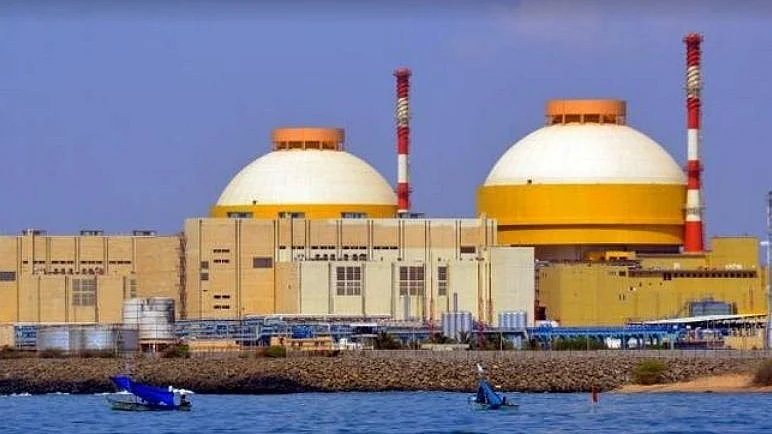


A new government Bill proposes a sweeping overhaul of India’s civil nuclear framework, opening the sector to private participation and introducing a revised nuclear liability regime to address long-standing concerns of industry partners.
The Sustainable Harnessing and Advancement of Nuclear Energy for Transforming India Bill, 2025 seeks to repeal two cornerstone laws — the Atomic Energy Act, 1962 and the Civil Liability for Nuclear Damage Act, 2010 — and replace them with a single, consolidated legal framework governing nuclear energy in the country.
Introducing the Bill, Minister of State in the Prime Minister’s Office Jitendra Singh said the proposed legislation aims to “provide for a pragmatic civil liability regime for nuclear damage” while conferring statutory status on the AERB (Atomic Energy Regulatory Board), which currently functions as an executive body.
The Bill outlines a revised liability structure that places primary responsibility on the operator of a nuclear installation for damages arising from a nuclear incident. However, it exempts operators from liability in cases involving “a grave natural disaster of an exceptional character”, acts of armed conflict, hostility, civil war, insurrection or terrorism.
Significantly, the legislation also limits liability in relation to damage to the nuclear installation itself, including facilities under construction, other nuclear installations located on the same site, property used in connection with such installations, and the means of transport carrying nuclear material at the time of an incident.
These provisions are aimed at reducing the financial exposure of operators, a key concern that has deterred private and foreign investment in the sector.
The Bill caps the maximum liability for each nuclear incident at the rupee equivalent of 300 million SDRs (Special Drawing Rights), a unit of account defined by the International Monetary Fund.
It also allows the central government to notify a higher liability amount if deemed necessary.
According to the government, the proposed legislation is aligned with India’s broader energy and climate goals. Singh said the Bill seeks to increase the share of nuclear power in India’s overall energy mix, promote innovation in nuclear science and technology, and expand the use of nuclear applications beyond electricity generation, while continuing to uphold India’s commitments to nuclear safety, security and international safeguards.
The Bill also proposes the establishment of an Atomic Energy Redressal Advisory Council to provide a dedicated mechanism for dispute resolution in matters relating to nuclear damage and liability.
If enacted, the legislation would mark a major shift in India’s nuclear policy, potentially paving the way for greater private sector involvement in nuclear power generation, while recalibrating the liability framework that has remained a contentious issue since the 2010 law was enacted in the aftermath of the Fukushima nuclear disaster in Japan.
Join our official telegram channel (@nationalherald) and stay updated with the latest headlines