


Is Champat Rai being made the fall guy in the Ram Mandir donation row?
Fresh disclosures raise questions over whether the Ram Mandir donation row extends far beyond two resignations


When Champat Rai resigned as general-secretary of the Shri Ram Janmabhoomi Teerth Kshetra Trust on 27 June, accepting 'moral responsibility' for the Ram Mandir donation controversy, it marked the biggest act of accountability yet in the scandal. Trustee Anil Mishra also resigned the same day.
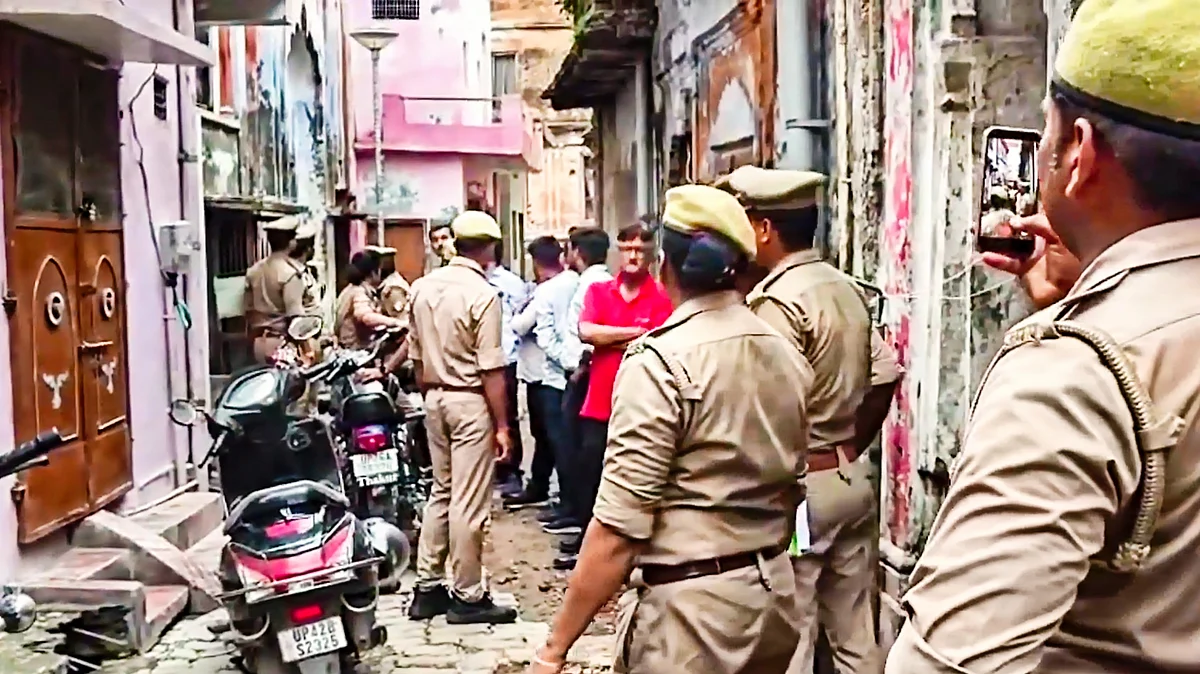
Three days later, on 30 June, Uttar Pradesh Police recorded Rai's statement as part of the Special Investigation Team's (SIT) probe into the alleged embezzlement of temple donations.
Those developments have made Rai the unmistakable public face of the controversy. But as the investigation unfolds, a broader question is beginning to emerge: has the focus on Champat Rai and Anil Mishra overshadowed larger questions about how the Ram Mandir's donation system was managed and who was ultimately responsible for overseeing it?
The question gained prominence on 30 June when Shankaracharya Swami Avimukteshwaranand Saraswati argued that the trust's treasurer Govind Dev Giri should bear primary responsibility for explaining how the alleged irregularities occurred, followed by trustee Anil Mishra, with the general secretary's responsibility coming thereafter. "The primary responsibility lies with the treasurer, followed by Anil Mishra. Champat Rai's responsibility comes third. Yet, you are placing Champat Rai at number one; what kind of justice is this?" he asked.
Whether or not one agrees with that assessment, his remarks shift the debate from individual culpability to institutional accountability.
The questions have only grown sharper as more details about the alleged irregularities have emerged.
A Hindustan Times report published on Tuesday, 30 June said six of the eight people arrested in the case were employees of a Varanasi-based security agency rather than direct employees of the trust. The agency's proprietor told the newspaper that it had been engaged by the State Bank of India's Naya Ghat branch to provide manpower for counting donations and that the bank had recommended the personnel deployed for the work. Only one of the arrested, Ram Shankar Yadav alias Tinnu, was reportedly employed directly by the trust as an aide to Rai.
Those disclosures complicate what initially appeared to be a straightforward case of wrongdoing within the trust. If outsourced personnel were responsible for much of the counting process, where did operational responsibility lie? Who supervised the counting? Who verified the figures before donations were deposited? And if the process involved multiple agencies, can accountability realistically be reduced to two resignations?
The trust's own oversight mechanisms also remain under scrutiny. Before the controversy escalated, trust representatives had maintained that internal audits found no discrepancies in the donation process. Yet the SIT's preliminary findings reportedly point to security lapses and violations of standard operating procedures.
If both are true, another question naturally follows: how did the alleged irregularities escape the audit process?
There are other unresolved issues. Reports have pointed to missing CCTV footage and surveillance blind spots in areas where donations were handled. Investigators have not yet publicly explained whether these resulted from technical failures, administrative lapses or deliberate tampering.
Questions have also been raised about the investigation itself. While the Uttar Pradesh government constituted the SIT earlier this month and senior IAS and IPS officers are leading the probe, relatively little has been disclosed publicly about its wider composition or whether specialists in forensic accounting, banking and financial auditing are assisting the inquiry.
Given that the case involves not just alleged theft but also governance, financial controls and institutional oversight, greater transparency about the probe's scope could help answer whether it is examining systemic failures alongside individual criminal liability.
None of this necessarily diminishes Champat Rai's responsibility. As the trust's former general-secretary and its most recognisable public face, he may ultimately be held accountable for failures of oversight even if investigators conclude he played no direct role in the alleged embezzlement. The same may apply to Mishra, who also resigned on moral grounds.
But 'moral responsibility' is not the same as legal culpability. That is precisely what the SIT should be tasked with determining.
Join our official telegram channel (@nationalherald) and stay updated with the latest headlines