


J&K flash floods kill over 20 as cloudbursts devastate Poonch, Rajouri
Rescue teams race to trace the missing as widespread destruction, damaged homes and disrupted infrastructure leave hundreds affected across the twin districts
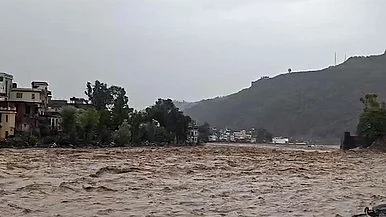


The death toll from devastating flash floods triggered by multiple cloudbursts in Jammu and Kashmir's Poonch and Rajouri districts has crossed 20, while dozens remain missing as rescue teams continue intensive search operations amid fears that more bodies remain buried under debris.
The disaster, which struck in the early hours of Sunday, unleashed widespread destruction across the twin districts, sweeping away homes, vehicles and livestock, while damaging public infrastructure and forcing hundreds of residents to flee to safer areas.
Lieutenant governor Manoj Sinha reviewed the situation, while chief minister Omar Abdullah chaired a high-level meeting with senior officials in Jammu, directing all departments to intensify relief and rehabilitation efforts. Officials said the chief minister remained in constant touch with the administration, seeking regular updates and assuring affected residents that the government would provide all possible assistance.
The worst devastation was reported from the Surankote area of Poonch district, where flash floods and landslides triggered by cloudbursts swept away families and flattened homes. Rescue teams comprising the Army, police, State Disaster Response Force (SDRF), civil administration and local volunteers have been searching relentlessly for those missing.
Officials said several people were washed away or trapped beneath debris after floodwaters tore through villages. Numerous houses, water mills and other structures were either destroyed or severely damaged, while dozens of cattle also perished.
In one of the worst-hit incidents, a house in Marrah village was washed away, leaving eight members of a family missing. Rescue teams have recovered some of the bodies, while efforts to locate the remaining victims continue. Another family suffered similar losses after a house in Sangla village was swept away.
Elsewhere in Poonch, a mud house collapsed in the Haveli area, killing a woman and seriously injuring her husband, who was later referred to Government Medical College, Rajouri, for specialised treatment.
Authorities said more than 30 people stranded near rivers and flood-hit areas in Poonch were rescued during emergency operations.
Rajouri district also witnessed extensive destruction after torrential rain caused rivers and seasonal streams to overflow before dawn on Sunday. Floodwaters inundated low-lying neighbourhoods, damaging homes, shops, roads, farmland and public utilities.
A woman died after being swept away by floodwaters, while a daily-wage employee of the Jal Shakti Department remains missing.
The Bela Colony area emerged as the worst affected in Rajouri after floodwaters breached a river protection wall and entered the New Bela Bus Stand and adjoining residential localities. Around 20 vehicles parked at the bus stand were washed away, while many more suffered extensive damage.
Several commercial establishments and workshops were destroyed, and slum settlements near Abdullah Bridge and Tariq Bridge were submerged, leaving more than 50 families homeless.
Residents described the flooding as among the worst witnessed in Rajouri in decades. Some blamed poor urban planning and alleged encroachments along riverbanks for worsening the impact of the disaster.
Power infrastructure also suffered significant damage, with electricity poles and transformers washed away, disrupting supply across several parts of Rajouri and Poonch.
Rescue and relief operations involving the Army, SDRF, police, Civil Defence and district administration continued through Monday, while officials began assessing the scale of damage to homes, infrastructure, agriculture and livelihoods.
The India Meteorological Department has warned of continued heavy rainfall and the possibility of further flash floods in the region. Authorities have advised residents living near rivers and seasonal streams to remain vigilant and move to safer locations if required.
With IANS inputs
Join our official telegram channel (@nationalherald) and stay updated with the latest headlines