


Just for publicity: SC on PIL over Lyngdoh Committee norms for student polls
Court says Lyngdoh norms already binding law, flags misuse of PIL even as campus polls continue to spark political flashpoints
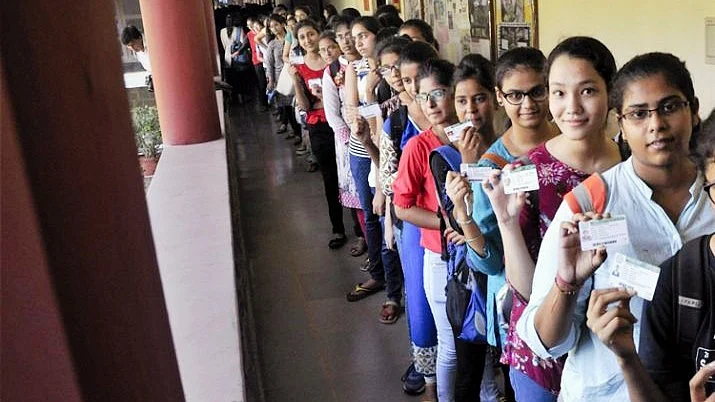


The Supreme Court on Tuesday, 6 January summarily rejected a petition seeking what it described as the “implementation” of the 2006 Lyngdoh Committee report on student union elections, with Chief Justice of India Surya Kant sharply remarking that the plea appeared to be aimed more at publicity than any genuine legal grievance.
A Bench comprising CJI Surya Kant and Justice Joymalya Bagchi declined to entertain the petition filed by Shiv Kumar Tripathi, observing that it lacked substantive merit. Indeed, the CJI dismissed the case at the threshold, characterising it as a “publicity interest litigation”.
“You just want to go out and address others — the media. Only for publicity,” the CJI told the petitioner’s counsel, before formally dismissing the plea.
The petition had sought directions to enforce the recommendations of the Lyngdoh Committee, which was constituted by the Union government in 2005 on the Supreme Court’s own directions amid growing concerns over the criminalisation, escalating expenditure and disruption associated with campus politics.
Headed by former Chief Election Commissioner J.M. Lyngdoh, the committee submitted its report in 2006, proposing a detailed regulatory framework to curb the use of “money and muscle power” in student elections while safeguarding academic discipline.
Crucially, the court itself had accepted the committee’s recommendations soon after the report was submitted, making them binding on universities and colleges across the country. Over the years, the guidelines have been repeatedly reaffirmed by the Supreme Court and various high courts, even as their implementation has varied widely across institutions and states.
Among its key prescriptions, the Lyngdoh Committee fixed strict age limits for candidates — 17 to 22 years for undergraduate students and 24 to 25 years for postgraduate candidates — and barred students with criminal records from contesting elections. It also imposed ceilings on campaign expenditure, prohibited the use of printed posters and vehicles, and restricted campaigning to designated periods and spaces on campus.
During Tuesday’s brief hearing, Tripathi’s counsel argued that the plea was intended to ensure “free and fair” student elections by enforcing these norms. The Bench, however, noted that the legal position was already settled, since the recommendations had long ago been accepted and declared mandatory by the court itself.
With that, the Supreme Court declined to reopen the issue, making it clear that a plea seeking enforcement of an already binding framework — without pointing to any specific violation or institutional failure — did not warrant the court’s intervention.
The court’s dismissal comes against the backdrop of recurring controversies around student union elections and campus politics, which continue to draw national attention despite the existence of the Lyngdoh framework.
In recent years, campuses such as Jawaharlal Nehru University and Delhi University have witnessed politically charged student union campaigns, protests and post-election confrontations that frequently spill beyond campus boundaries.
At JNU, student union-led demonstrations — often linked to national political developments, court verdicts or ideological disputes — have repeatedly triggered demands for disciplinary action, FIRs and administrative crackdowns, renewing debates over the limits of dissent within universities.
Similarly, elections to the Delhi University Students’ Union (DUSU) have remained contentious despite formal adherence to Lyngdoh norms, with disputes over candidate eligibility, campaign practices, the role of national political parties’ student wings, and the increasing bureaucratisation of the election process itself.
Student groups have accused university authorities of selectively invoking the guidelines to disqualify candidates or curb mobilisation, while administrators argue they are enforcing Supreme Court-mandated discipline.
Elsewhere, prolonged delays in holding student elections — often justified by authorities citing law-and-order concerns or academic disruptions — have sparked protests in several state and central universities. At institutions such as Panjab University, student movements have framed such delays as an erosion of campus democracy, while administrations have countered that unregulated elections risk violence and politicisation.
Legal observers note that these recurring flashpoints underline a paradox at the heart of student politics: while the Lyngdoh Committee sought to depoliticise and sanitise campus elections, student unions have increasingly become arenas for broader ideological and national political contestation. This tension, they argue, explains the persistence of litigation and demands for “implementation”, even though the Supreme Court has consistently maintained that the regulatory framework is already settled law.
With PTI inputs
Join our official telegram channel (@nationalherald) and stay updated with the latest headlines