


Maharashtra: Unpaid bills, broken promises, rising deaths
Delayed government payments have pushed contractors in the state to the brink
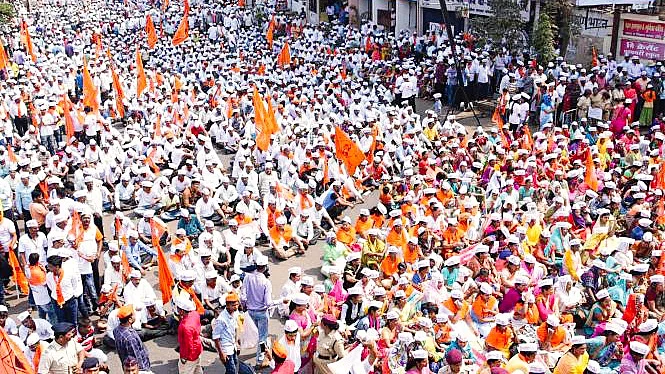


On 19 October, contractors in Amravati, about 150 km from Nagpur, performed a mock funeral of the Maharashtra government. On 2 November, they returned to the PWD office to perform a symbolic terhvi (the 13th-day ritual). Their grievance: non-payment of work completed two or three years back. The Maharashtra State Contractors Association (MSCA) claims over one lakh contractors are awaiting dues of Rs 90,000 crore to Rs 1 lakh crore.
Amravati is the latest in a long list. For over a year, the MSCA and its branches have protested — in Kolhapur, Nagpur and other towns in August 2025; in Mumbai in April this year.
Contractors say they are drowning under loans, machines lie idle, workers remain unpaid and suppliers refuse further credit. Driven by debt, at least nine contractors have reportedly died by suicide in the past 18 months.
The latest protest has been triggered by the suicide of Sunil Wagadre, a 52-year-old contractor from Jarud in Amravati district. His family says he was owed nearly Rs 2.5 crore for work completed in 2023-24. In his suicide note, Sunil reportedly asked his nephew to sell part of his property and repay loans. His wife Varsha told the Indian Express that repeated requests for payment yielded nothing. “Now, I just want the government to return my husband.”
Wagadre’s death is not isolated. In September 2025, Nagpur-based contractor P.V. Verma took his life. His pending dues: Rs 40 crore. In July 2025, Sangli’s Harshal Patil died by suicide. His family said nearly Rs 60 lakh remained unpaid. In August 2026, after Navi Mumbai contractor Gajanan Devkate killed himself, his family alleged officials had demanded a bribe to clear Rs 2.5 crore in outstanding payments.
The crisis raises a fundamental question: how can a government that commissions public infrastructure leave its financing to those executing the projects? Contractors are, in effect, becoming involuntary financiers and bearing the burden of debt.
Small and medium contractors are particularly vulnerable. They borrow at exorbitant interest rates. Buy cement, steel, pipes and machinery, hire labour and transport. After completing the government-contracted work, they submit bills and wait for certification and payment even as interest accumulates, suppliers and workers demand their dues, and household expenses continue. A delay of several months can hurt; two or three years can destroy.
This was evident in Harshal Patil’s case. Maharashtra water resources minister Gulabrao Patil reportedly said Patil was not registered under the relevant scheme and that no bill was pending in his name. The MSCA countered that he had executed the work as a subcontractor and depended on the principal contractor receiving payment. This bureaucratic distinction may be valid contractually, but does little to address the plight of the person who executes the work.
The dues, as per MSCA, include Rs 40,000 crore from the PWD, Rs 12,000 crore (Jal Jeevan Mission), Rs 6,000 crore (rural development), Rs 13,000 crore (water resources and conservation) and Rs 18,000 crore (for urban development). In April, contractors put outstanding dues at Rs 96,400 crore. Other reports say Rs 76,000 to Rs 86,000 crore.
The government disputes these claims. Public works minister Shivendraraje Bhosale said Rs 17,000 crore in PWD bills were pending, of which Rs 6,200 crore had been cleared. The gap between the two estimates remains unexplained, with no independent, department-wise accounting of bills submitted, certified, sanctioned and paid.
Maharashtra remains India’s largest state economy, with projected gross state domestic product (GSDP) of around Rs 54 lakh crore in 2026-27. Yet its latest budget estimates a fiscal deficit of Rs 1.50 lakh crore and a revenue deficit of Rs 40,552 crore. Outstanding liabilities are projected at 20.4 per cent of GSDP. Salaries, pensions and interest payments alone account for nearly Rs 3.38 lakh crore in committed spends. Public debt is at Rs 10 lakh crore.
The late Ajit Pawar, who held the finance portfolio, had assured contractors their bills would be cleared in stages. After his death earlier this year, the ministry is under chief minister Devendra Fadnavis. Many of the works awaiting payment were awarded by the pre-2024 Eknath Shinde government.
Contractors’ associations allege that a disproportionate number of work orders were issued ahead of the November 2024 Assembly elections, without adequate budgetary provision. Opposition leaders and contractors also allege that politically connected contractors receive preferential payments, while smaller, local contractors are made to wait.
The Jal Jeevan Mission deserves particular attention. Contractors claim tens of thousands of crores remain unpaid under the programme, jointly funded by the Union and state governments. It is essential to establish how much was allocated, how much the Centre has released, the state’s contribution, how much work has been completed and certified, and how much has been paid.
The Congress too has repeatedly sought an audit of schemes. The MSCA is demanding department-wise registers of outstanding bills, recording submission and payment dates. It also wants time-bound payments, accountability for officials sitting on certified bills, and an audit of work orders. Subcontractors want statutory protection from the consequences of payment disputes.
Jaideep Hardikar is a senior Nagpur-based journalist and author of Ramrao: The Story of India’s Farm Crisis. More by him here