


Md Irfan, the nation's unlikely conscience keeper from Jantar Mantar
A 35-year-old slum dweller suffering from depression stuns the internet with his clarity and a smile that hides the pain of an entire generation
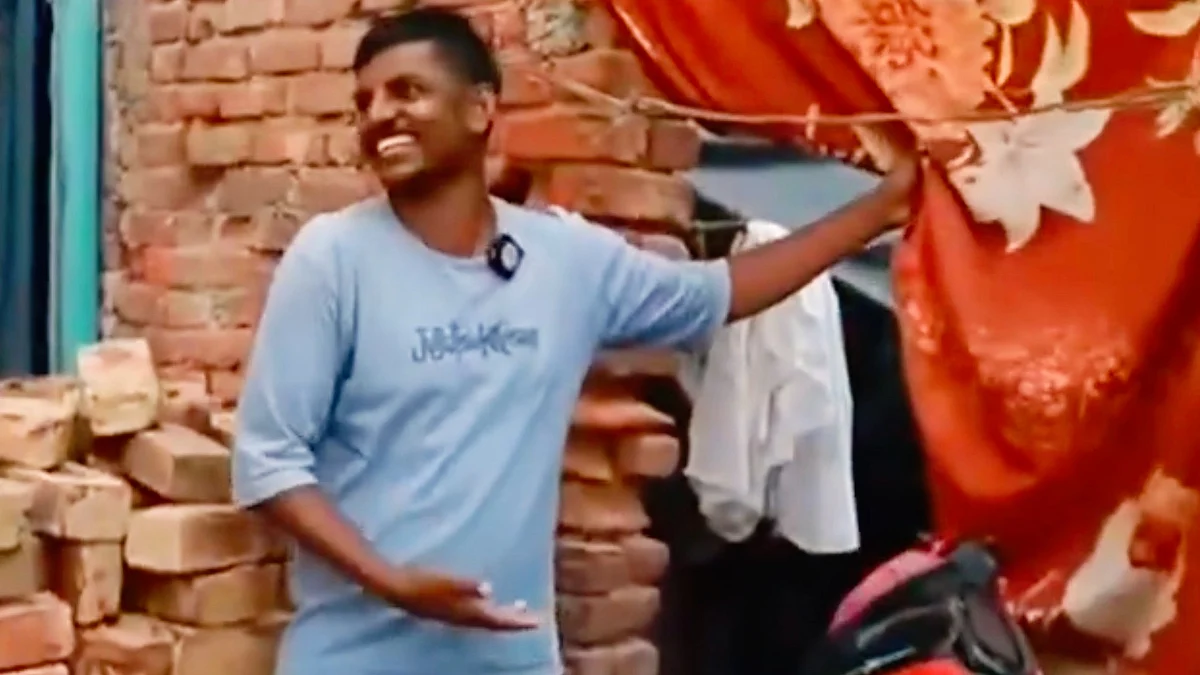


'Yes, I cried listening to him but not in helplessness — rather realising how could I lose faith when there are people like him. Such profound thoughts. And the way he expresses them. For me, he is probably one of the greatest finds of this protest. Men and women of law, you will never hear a better exposition of the Constitution than this. Breaks my heart these people not only deal with poverty but also discrimination. Being born poor in India is a crime…'. This is just one of the reactions on social media to a man whose words from the youth protest site in Delhi's Jantar Mantar are breaking the internet.
Md Irfan can neither read nor write. He has never been to school. The only ‘education’ he received was as a child at an anganwadi. He is 35, unmarried and lives with his parents and two sisters in a Delhi slum. The one-room structure they call home has no roof, just a tarpaulin sheet protecting 12 square yards of living space from the elements. Irfan sells ice slabs on the roadside for a living. “I belong to the working class, sir”, he says with his disarming smile. “Main bahut bolta hoon, sir (sir, I talk a lot)".
He is voluble alright but speaks with great clarity, his words laced with humour and punctuated with Hindi and Urdu poetry. His conversation at Jantar Mantar with journalist Rajat Pandey of Lallantop, a Hindi digital media outlet which is part of the India Today group, is being widely shared on social media. Appeals are pouring in for people to extend a helping hand to the family, with netizens saying how impressed and overwhelmed they are with Irfan’s clarity and articulation.
Asked how he remembers the Preamble to the Constitution by heart and recites poetry so effortlessly, Irfan’s startling reply is that he asks Google AI. If he is not satisfied or has doubts, he asks again if the AI tool is satisfied with the answer. He has also learnt from listening to people and by compulsively attending protests — every single one from the Lokpal agitation to Shaheen Bagh; and from the farmers’ sit-in to the dharna by female wrestlers. He also participated in Rahul Gandhi’s Bharat Jodo Yatra from Delhi to Kashmir.
Workers are being exploited in India, he points out dispassionately, and explains that they are being taken for granted because they cannot afford to lose a single day’s wages and join rallies. With an army of unemployed people waiting to join the workforce, employers pay workers less than prescribed minimum wages. If they protest, they are shown the door, the employers confident of replacing them with others. "Bharpet kha lena hi jeevan nahin hai, sir (two square meals doesn't make life)", he says, raising his voice a little.
He suffers from depression, he confides candidly, and confesses that he is on medication. It isn't really a big deal, he says, as the hospital he visited is teeming with people like him. Life is such that depression is inevitable, he philosophises. He does worry about his and his parents’ heart condition, though. He is also anxious about how to get his sisters married given his limited capacity to pay dowry. He has an 'Ayushman card' but things are not that simple, Irfan tells Pandey. Often, the Ayushman portal or Ayushman Mitra or Ayushman helpline is not functional, he says, without elaborating.
The Constitution, he says with conviction, ensures the dignity (garima) of the individual irrespective of caste, religion, education or economic status. But it is the dignity of the individual that the state violates with impunity. Religion, he says sharply, may be necessary for politics but is not necessary for governance.
Words come out in a torrent and he speaks at times like a man possessed. In democracy, there ought to be two-way communication, room for dialogue and space to remove misunderstandings. But democracy in the country is shrinking, feels Irfan. Dissent in a democracy is not a crime, he says, but dissenters are being criminalised.
“When you earn Rs 500 a day after 11-12 hours of back-breaking work, it is difficult to get educated, sir, to stay healthy and to wear clean clothes and maintain hygiene,” he says in a trembling voice. Life for most Indians in rural areas and urban slums, he says as a matter of fact, is nightmarish. To those Indians, the fact that India is (supposedly) the world's fourth largest economy means nothing, he points out.
"Yet the government does expect all of us to pay GST on goods we purchase. Look at where India and China were in 1980 and see where China is today, the distance is not between the earth and the sky; it is between the earth and the moon."
If China has been able to pull ahead and ensure a better quality of life and guarantee basic facilities for its people, why has India failed?
Join our official telegram channel (@nationalherald) and stay updated with the latest headlines
Published: 26 Jul 2026, 6:05 PM